Korea posts record car exports in 2025 despite U.S. slowdown
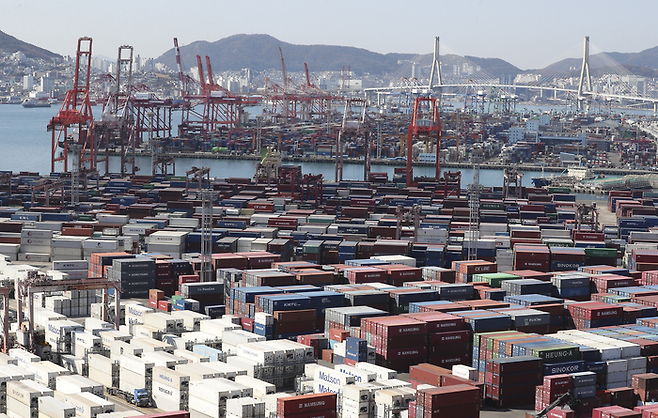
According to the Ministry of Trade, Industry and Energy on Thursday, the country’s automobile exports totaled $71.9 billion last year, up 1.7 percent from a year earlier. Exports have not exceeded $70 billion for three consecutive years.
Exports to the United States fell 13.2 percent year-on-year to $30.15 billion in 2025 as major automakers such as Hyundai Motor Co. expanded their local production in the country and the second Trump administration imposed a 25 percent tariff on automobiles.
Exports to the European Union, on the other hand, rose 20.1 percent to $9.68 billion. Shipments to Europe overall ($6.26 billion) and Asia ($7.75 billion) also surged 30.5 percent and 31.9 percent, respectively, helping to make up for weakness in the U.S. market.
Exports of eco-friendly vehicles performed well despite stagnant global demand for electric vehicles.
Eco-friendly vehicle exports reached 874,459 units last year, up 17.7 percent from a year earlier.
While electric vehicle exports edged down 0.3 percent to 261,974 units, hybrid vehicle exports jumped 30.1 percent to 561,678 units, driving the overall growth in eco-friendly vehicle exports.
Used car exports also grew significantly.
Driven by a combination of improved brand recognition for Korean vehicles and the favorable impact of high exchange rates, used car exports soared 75.1 percent year-on-year to $8.87 billion, reaching an all-time high.
The domestic market also showed signs of recovery.
Domestic automobile sales totaled 1,680,110 units last year, up 3.3 percent from the previous year.
Sales of domestically produced vehicles rose 0.8 percent to 1.36 million units, while imported vehicle sales increased 15.3 percent to 320,000 units.
In particular, sales of eco-friendly vehicles jumped 25 percent to 813,000 units, accounting for 48 percent of newly registered vehicles.
Among them, EV sales surged 52 percent year-on-year to 216,000 units.
Meanwhile, automobile exports in December last year came to $5.95 billion, down 1.5 percent from the same month a year earlier.
A ministry official noted that the decline reflected a base effect stemming from exceptionally strong performance the previous year.
“Conditions will remain challenging this year due to the spread of global protectionism, expanded local production, and intensifying competition with major countries,” the official said. “The government will continue policy support to strengthen future vehicle competitiveness and expand the export base.”
Copyright © 매일경제 & mk.co.kr. 무단 전재, 재배포 및 AI학습 이용 금지
- “주가 급등에 어닝쇼크 옵니다”…웃어야 할 기업들 등골 휘는 이유는? - 매일경제
- 호텔서 침구·전화 등 훔쳐간 절도범...잡고보니 미인대회 우승자였다 - 매일경제
- 10년 된 고장난 승마기가 30만원? 전현무, 기부 바자회 논란 - 매일경제
- “최태원 동거녀가 자녀 입사 방해” 유포한 70대 유튜버의 최후 - 매일경제
- 상가주인도 포기한 상가 …"재건축땐 입주권으로 달라" - 매일경제
- [속보] 역대최악 ‘경북산불’ 낸 50대 실화자, 징역형 집행유예 - 매일경제
- 신세계, 역삼 센터필드 매각 추진에 발끈한 이유...“랜드마크 호텔도 있는데” - 매일경제
- 평당 매맷값에 ‘억’…강남 재건축 아파트 오름폭에 ‘헉’ - 매일경제
- “비트코인, 지금이 바닥인가...18만달러까지 간다” - 매일경제
- WBSC, 프리미어12 출전팀 발표…‘4위’ 한국은 본선 직행 - MK스포츠