Korea sees limited impact from new US tariff on advanced chips
South Korea’s semiconductor industry is assessing the fallout from a new US tariff on advanced chips, though analysts say the near-term impact on Korean chipmakers is likely to be limited.
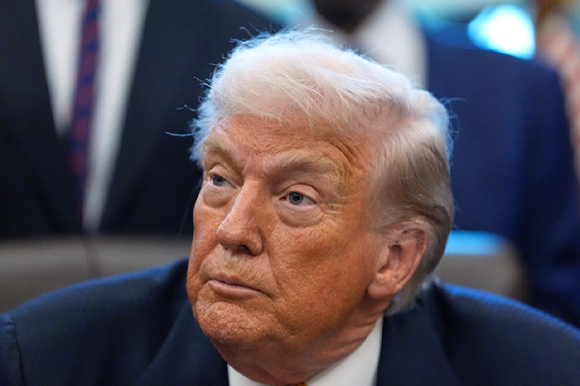
US President Donald Trump on Wednesday signed a proclamation imposing a 25 percent tariff on certain high-performance chips and related products that are imported into the US and then reexported to third countries.
While the proclamation does not name specific products, an accompanying annex sets performance thresholds based on computing power and DRAM bandwidth. Chips that meet those criteria are widely expected to include Nvidia’s H200 and AMD’s MI325X — advanced artificial intelligence accelerators typically manufactured in Taiwan, shipped to the US and then exported onward.
Industry observers say the move appears designed to tighten controls on the onward flow of advanced AI chips to China, rather than to curb supply to US-based data centers. Only a limited number of countries are capable of deploying such high-end processors.
The measure has nonetheless put Samsung Electronics and SK hynix on alert, as both companies supply high-bandwidth memory used in AI chips by Nvidia and AMD. The companies said they are closely monitoring developments.
Analysts, however, say direct exposure is limited, as most memory products shipped by Korean firms to the US — including HBM and server DRAM — are used in US-based AI servers and data centers, which are explicitly exempt under the proclamation.
The order excludes chips used for domestic data centers, research and development, repairs and replacements, startups and other applications deemed to strengthen US technology supply chains.
“HBM exported by Korean companies to the US largely goes into data centers, which should qualify for exemption,” said Ahn Ki-hyun, executive director of the Korea Semiconductor Industry Association.
Industry officials also note that the proclamation does not clarify whether components used inside AI chips, such as memory and auxiliary processors, would themselves be subject to tariffs. Applying duties at the component level would effectively amount to a global tariff on the entire AI supply chain, which officials say is unlikely.
“For now, we cannot assume any direct impact on our chip sales,” an industry official said, adding that any tariffs on AI accelerators would likely be borne by chip designers rather than memory suppliers.
Some analysts further argue that the broader market impact could be muted, noting that China has already imposed domestic restrictions on the use of advanced foreign AI chips, including Nvidia’s H200, as part of its push to build indigenous semiconductor capabilities.
Still, the White House has signaled that broader tariffs on semiconductors and products containing chips could follow, alongside a relief program for suppliers manufacturing chips within the US.
Against this backdrop, Korean chipmakers are pinning their hopes on assurances secured in tariff talks last year in November that Seoul would not face less favorable treatment than competitors in Taiwan, Japan or the EU.
Korea’s Ministry of Trade, Industry and Energy convened an emergency meeting Thursday to assess the impact of the US move. Industry Minister Kim Jung-kwan ordered officials to review response measures, communicate Seoul’s position to Washington and coordinate closely with industry.
The ministry said it would hold talks with chipmakers later in the day, while Korea’s chief trade negotiator Yeo Han-koo delayed his return from Washington as authorities continue to evaluate the proclamation’s implications.
Copyright © 코리아헤럴드. 무단전재 및 재배포 금지.