Hanwha vice chair urges clean energy marine ecosystem ahead of Davos
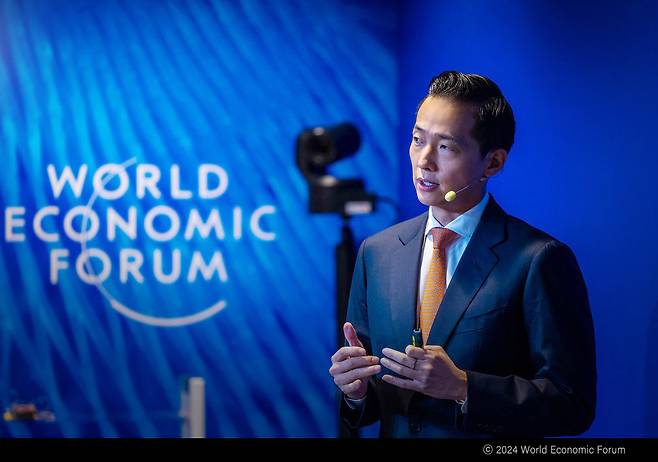
Kim Dong-kwan, vice chair of Hanwha Group, has called for a fundamental transformation of the maritime industry, urging the creation of a “clean energy marine ecosystem” centered on electric propulsion vessels.
In an opinion piece published on the World Economic Forum website ahead of its annual meeting in Davos next week, Kim argued that achieving carbon-free oceans requires more than simply building new ships. Instead, he emphasized the need for a holistic transition across the entire maritime value chain.
He outlined four key pillars for this shift: the development of electric ships, advancements in energy storage systems, the construction of port-based charging infrastructure, and the securing of decarbonized energy supplies.
This proposal builds on the vision Kim first presented at the 2024 Davos Forum, where he introduced the concept of a “net-zero propulsion gas carrier” to the global maritime industry.
Kim underscored ESS as a prerequisite for the widespread adoption of electric ships, emphasizing that infrastructure accessibility will determine scalability and commercial viability.
“Accessible battery charging and replacement infrastructure is essential, along with port power supply systems grounded in clean energy,” Kim said. He added that maritime decarbonization cannot be achieved through a single technology or policy, calling for cross-sector collaboration involving shipbuilders, port operators, energy providers and policymakers.
Kim pointed to Hanwha’s efforts to drive this transition by leveraging its dual expertise in shipbuilding and energy.
He noted that Hanwha Ocean is developing carbon-free vessels incorporating technologies such as ammonia gas turbines, while the group is also advancing ESS deployment and clean energy solutions across port and marine infrastructure to support next-generation vessels.
As a concrete step, Hanwha is currently in discussions with European port authorities on pilot projects to introduce ESS-based ship charging facilities powered by clean energy.
Concluding his remarks, Kim underscored the importance of early investment and public-private partnerships will determine leadership in the next phase of maritime transformation.
“Companies and institutions that preemptively adopt new technologies and business models will play a key role in shaping market direction,” he said. “Public-private cooperation is essential to achieving the industrial transformation required for net zero.”
Copyright © 코리아헤럴드. 무단전재 및 재배포 금지.