Malaysia's chairmanship of ASEAN 2025: Steady leadership in uncertain times
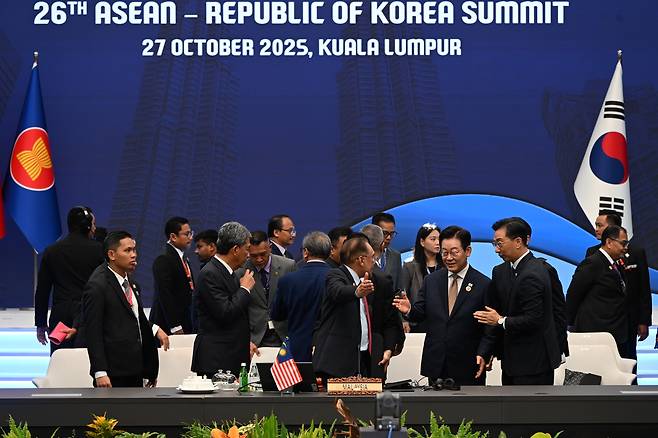
As Malaysia concluded its tenure as chair of the Association of Southeast Asian Nations on Dec. 31, 2025, the year emerged as a defining chapter of steady and principled leadership amid an increasingly complex regional and global landscape.
Anchored in the overarching theme of "inclusivity and sustainability," Malaysia steered ASEAN through heightened geopolitical uncertainty, economic headwinds and evolving regional security dynamics, reaffirming ASEAN's unity, relevance and capacity to navigate change with confidence and purpose.
For audiences in the Republic of Korea, as South Korea is formally known, ASEAN's progress and achievements in 2025 are not a distant regional story.
It is directly linked to ROK's diplomatic engagement, economic interests and long-term partnership with the regional body. ASEAN today as a bloc is ROK's second-largest trading partner, with two-way trade exceeding $200 billion annually.
The region is also a major destination for Korean investment, particularly, in manufacturing, electronics, digital services and green energy. What ASEAN achieved in 2025, therefore, matters directly to ROK's long-term economic and strategic interests.
A defining hallmark of Malaysia's chairmanship was its unwavering emphasis on ASEAN Centrality that ensured ASEAN remains the primary convener and stabilizing force in the Indo-Pacific region amid intensifying major power rivalry.
Throughout 2025, Malaysia worked tirelessly to preserve ASEAN unity while maintaining open and inclusive engagement with all partners.
This approach helped ASEAN avoid fragmentation and reinforced its credibility as a neutral platform for dialogue, an attribute valued by its dialogue partners, including the ROK that seek predictability in a volatile regional landscape.
Under the political-security pillar, Malaysia delivered several milestone outcomes that reshaped ASEAN's strategic landscape.
Most historic was the formal accession of East Timor as ASEAN's 11th member state on Oct. 26, 2025, the first ASEAN enlargement in almost three decades.
This milestone reaffirmed ASEAN's commitment to inclusivity and regional solidarity, strengthening its collective voice at a time when regional institutions worldwide face growing strain.
Equally significant was the adoption of ASEAN Community Vision 2045: Our Shared Future, a long-term road map that sets ASEAN's strategic direction for the next two decades. The vision provides clarity on political cooperation, economic integration and sociocultural development offering partners like the ROK a clear framework for long-term engagement with the regional bloc.
Towards the end of its chairmanship, Malaysia skillfully reinforced ASEAN's peace-building role by facilitating the Kuala Lumpur Peace Accord between Cambodia and Thailand, witnessed by ASEAN leaders and external partners.
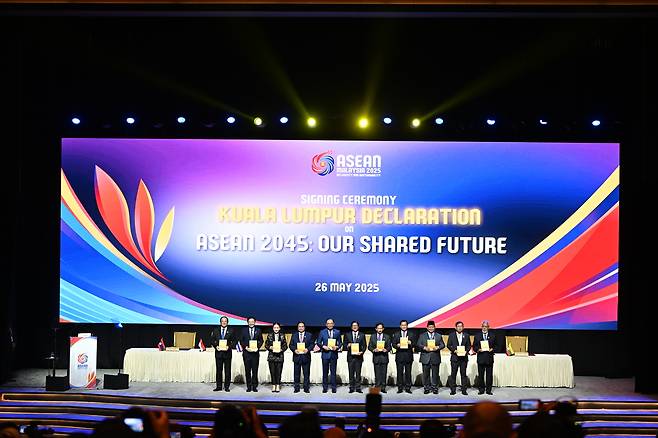
The agreement underscored ASEAN's continued relevance as a diplomatic problem-solver grounded in dialogue rather than coercion.
Meanwhile, on Myanmar, Malaysia maintained steady engagement under the Five-Point Consensus by convening multiple special envoy consultations.
While progress remained marginal, ASEAN's sustained involvement reflected a commitment to pragmatic diplomacy rather than disengagement.
Economically, Malaysia's chairmanship focused on strengthening ASEAN's resilience in the face of global uncertainty. ASEAN Leaders adopted the ASEAN Leaders' Statement on Responding to Global Economic and Trade Uncertainties reaffirming support for an open, rules-based trading system amid rising protectionism.
This collective stance aligns closely with ROK's export-oriented economy which relies on stable regional supply chains.
A major breakthrough came with the substantial conclusion of negotiations on the ASEAN Digital Economy Framework Agreement. Once implemented, DEFA is expected to streamline digital trade, strengthen data governance and unlock new growth across Southeast Asia.
For Korean firms that are already deeply embedded in ASEAN's digital ecosystem, DEFA promises lower barriers and greater regulatory coherence.
Malaysia also advanced the ASEAN power grid through the APG Financing Initiative aimed at accelerating cross-border energy connectivity. This initiative complements ROK's expertise in renewable energy, smart grids and green financing while opening new avenues for greater ASEAN-ROK cooperation in the energy transition.
ASEAN-ROK dialogue relations gained fresh momentum in 2025 when the two partners adopted a new ASEAN-ROK Plan of Action, reinforcing cooperation in trade, digital transformation, green growth and people-to-people exchanges.
Korean investment in ASEAN remains robust spanning manufacturing in the automotive, semiconductors and electronics industries, as well as infrastructure and digital services. ASEAN, in turn, benefits from Korean technology and capital while offering ROK access to a market of close to 700 million people, a young workforce and strong growth potential.
Cooperation also expanded into future-oriented areas such as artificial intelligence governance, cybersecurity and online scam prevention.
The establishment of the ASEAN AI Safe Network in Malaysia reflected ASEAN's growing focus on ethical and responsible artificial intelligence, an area where Korean innovation and regulatory experience are highly relevant.
People-to-people ties continued to underpin the partnership. Educational exchanges, youth programs and cultural cooperation ensure ASEAN-ROK relations remain resilient beyond government-to-government engagement.
These interactions help nurture mutual understanding and cultivate goodwill that sustains cooperation even during periods of political or economic uncertainty. For ASEAN, such exchanges contribute to human capital development while for the ROK, deeper societal engagement with ASEAN strengthens its long-term presence and relevance in one of the world's most dynamic regions.
Malaysia's chairmanship also elevated ASEAN's international profile. On the sidelines of the 46th ASEAN Summit in May 2025, Malaysia played host to the first ever ASEAN-Gulf Cooperation Council and ASEAN-GCC-China summits, marking a significant milestone in ASEAN's external relations by underscoring ASEAN's growing convening power and its central role in fostering cross-regional dialogue and cooperation.
In the following summit in October 2025, Malaysia invited Brazil and South Africa as chairs of BRICS and the G20, respectively, as the ASEAN chair's guests, the decision of which positioned ASEAN as a bridge between regions and global groupings, hence reinforcing ASEAN's relevance in a multipolar world.
In total, ASEAN Leaders adopted, endorsed and noted 97 outcome documents across major summits in 2025. Malaysia as the chair coordinated over 360 ASEAN-related meetings and programs, a testament to both ASEAN's institutional vitality and Malaysia's organizational leadership.
In summary, the achievements realized in 2025 have strengthened confidence in ASEAN as a credible and indispensable platform for regional cooperation, while reinforcing its enduring value to dialogue partners such as the ROK.
It is Malaysia's earnest hope that the outcomes forged during its chairmanship will provide a strong and lasting foundation for a more inclusive ASEAN, one that delivers tangible benefits to its peoples and dialogue partners alike.
As Malaysia concludes its tenure, it does so with full confidence that the agenda set in 2025 is now being entrusted to capable and experienced hands.
The Philippines, as chair of ASEAN in 2026, brings with it a deep commitment to regional unity, dialogue and forward-looking leadership.
Malaysia warmly passes the baton to the Philippines with every confidence that ASEAN's journey will continue with renewed momentum, clarity of purpose and collective resolve.
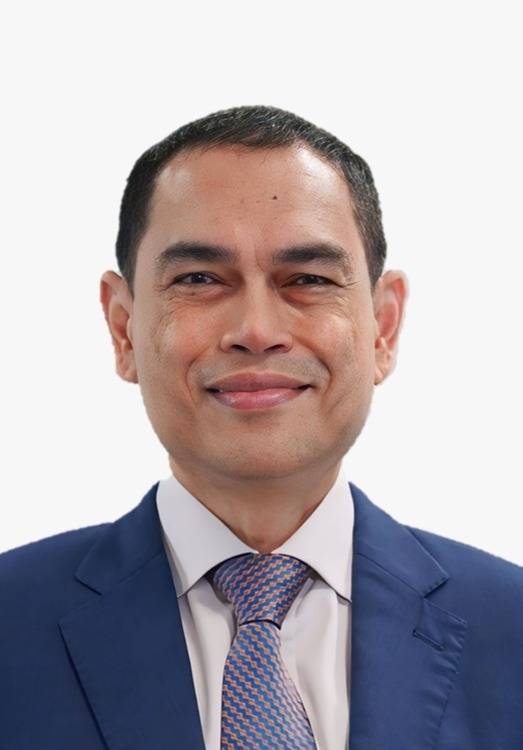
Mohd Zamruni Khalid is ambassador of Malaysia to South Korea. The views expressed here are his own. —Ed.
Copyright © 코리아헤럴드. 무단전재 및 재배포 금지.