Financial watchdog to launch governance probe into all major banking groups
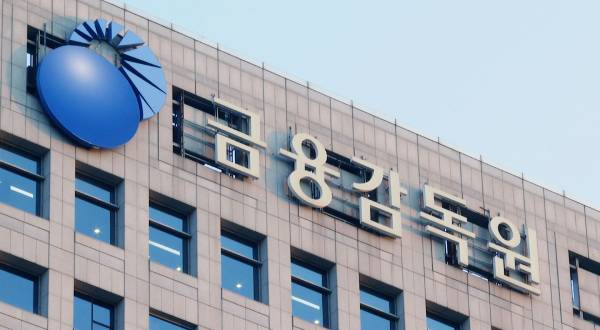
The Financial Supervisory Service said Wednesday that it plans to conduct a comprehensive review of how governance systems are actually being operated across all domestic financial holding firms. The probe will examine whether key mechanisms such as chief executive succession procedures and board independence evaluations are functioning as intended.
The inspection will cover the country’s eight major financial holding groups — KB Financial Group, Shinhan Financial Group, Hana Financial Group, Woori Financial Group, NH Financial Group, BNK Financial Group, JB Financial Group and iM Financial Group.
The watchdog said the move reflects persistent concerns that governance best practices introduced in 2023 have been followed only in form, or bypassed through procedural loopholes at the operational stage. It also cited the need to strengthen governance integrity in line with recently revised commercial laws, particularly to ensure that outside directors can represent shareholder interests in an objective and fair manner.
As part of the announcement, the FSS cited specific examples of what it described as inappropriate governance practices. At Hana Financial Group, internal governance rules were revised to specify a maximum board tenure age of 70 just before the finalization of the long list of chairperson candidates, a move the watchdog said worked in favor of incumbent Chairman Ham Young-joo. Ham subsequently secured another term, allowing him to remain in office beyond the age threshold during his tenure.
At BNK Financial Group, where Chairman Bin Dae-in’s reappointment has effectively been decided, the application window for internal and external candidates formally lasted 15 days but amounted to only five business days due to the Chuseok holiday period, raising questions about procedural fairness.
The watchdog also flagged governance issues at Shinhan Bank, which was criticized for arbitrarily interpreting its board skills matrix, a framework designed to ensure balanced expertise in areas such as consumer protection, risk management, internal controls, accounting and information technology. Shinhan grouped consumer protection and risk management into a single category, contrary to the intended structure.
At Shinhan Financial Group, the evaluation of outside directors relied solely on internal surveys without using objective benchmarks from external professional institutions. As a result, all directors under review received ratings high enough to qualify for reappointment, raising doubts about the effectiveness of the evaluation process.
The unusually detailed disclosure of governance shortcomings has heightened tension across the financial industry. One industry official said the watchdog’s move signaled that “a storm is about to sweep through financial group governance.”
Concerns have also emerged that subjective regulatory standards could infringe on management autonomy, given differences in corporate culture and governance structures among financial groups. Some observers argue that holding firms accountable under broad interpretations without clear guidelines amounts to excessive ex-post regulation.
Others view the inspection as political pressure on bank chiefs appointed under the previous administration, noting that many financial holding company chairmen who were recently reappointed or face renewal this year were named during the former government.
The Financial Supervisory Service dismissed such concerns, saying the inspection aims to strengthen board independence and verification functions and to use the findings as a basis for institutional reforms to improve governance standards across the sector.
Copyright © 매일경제 & mk.co.kr. 무단 전재, 재배포 및 AI학습 이용 금지
- [단독] 무한리필인데 1만2천원밖에 안 한다고?…‘초가성비’ 승부수 띄운 이랜드이츠 - 매일경
- 뇌졸중으로 갑자기 쓰러진 아버지…보험금 청구한 아들에 보험사 한다는 말이 - 매일경제
- “하루도 같이 산 적 없어”…‘2번 이혼’ 이지현, 의사 남편과 재혼 생활 폭로 - 매일경제
- 트럼프 “반도체에 25% 관세…AI 데이터센터용은 제외” - 매일경제
- “아빠라 불러라” 16세 9차례 성폭행한 공무원, 징역형 집행유예 - 매일경제
- 올해 들어올 ‘13월의 월급’ 얼마나 될까?…15일 ‘연말정산 서비스’ 개통 - 매일경제
- 오늘의 운세 2026년 1월 15일 木(음력 11월 27일) - 매일경제
- [단독] ‘달러 유출’ 서학개미 탓했는데…국내상장 美ETF가 진짜 주범 - 매일경제
- “오천피, 그만 얘기하세요”…환율 발목잡힌 소비재株엔 딴나라 이야기 - 매일경제
- ‘밀라노 가자!’ 김민재 향한 AC밀란 러브콜, 현실적인 시나리오 되나?…“잔류 원하는 KIM, 뮌헨