Bank household loans fall for first time in 11 months amid tough property curbs
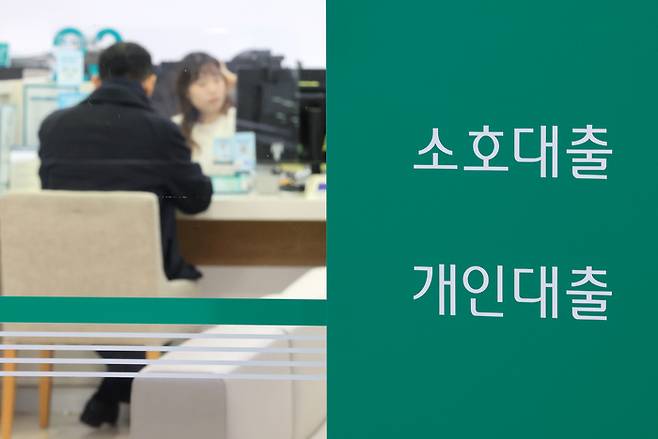
According to a report released Wednesday by the Bank of Korea, outstanding household loans at deposit-taking banks, including policy mortgage products, totaled 1,173.6 trillion won ($804 billion) at the end of December, down 2.2 trillion won from the previous month.
On a monthly basis, household loan growth had peaked at 6.2 trillion won in June last year before slowing sharply following a series of government measures, including the June 27 package. The increase narrowed to 1.9 trillion won in September and rose by 3.5 trillion won in October and 2.1 trillion won in November, but the pace of growth steadily weakened before turning negative in December.
The month-on-month decline marked the first contraction since January 2025, when household loans fell by 500 billion won. By loan type, outstanding mortgage loans dropped by 700 billion won to 935 trillion won, while other loans, including unsecured credit loans, fell by 1.5 trillion won to 237.7 trillion won. The decline in mortgage lending was the first in 34 months, following the previous contraction in February 2023.
Jeonse deposit loans, a major component of mortgage lending, also declined by 800 billion won, extending their downward trend for a third consecutive month.
According to the Financial Services Commission and other authorities, both banks’ own mortgage loans and policy mortgage products such as the Bogeumjari Loan shifted into contraction, falling by 1.3 trillion won and 300 billion won, respectively. Only Didimdol and Beotimmok-linked government support loans for housing posted a modest increase, rising to 800 billion won from 700 billion won.
“The slowdown in household loan growth continued due to the government’s real estate measures,” Park Min-cheol, deputy head of the central bank’s market operations team, said. He added that banks’ year-end loan cap management led to a contraction centered on living-expense loans, while demand for other loans also weakened significantly amid cooling stock investment demand.
Park cautioned that while the deceleration in household lending is likely to persist for the time being, risks remain. “Expectations of price increases in key areas of the Seoul metropolitan region remain strong, and housing transactions in non-regulated areas are showing signs of recovery, making it difficult to lower vigilance over household debt,” he said.
Copyright © 매일경제 & mk.co.kr. 무단 전재, 재배포 및 AI학습 이용 금지
- [단독] 무한리필인데 1만2천원밖에 안 한다고?…‘초가성비’ 승부수 띄운 이랜드이츠 - 매일경
- 뇌졸중으로 갑자기 쓰러진 아버지…보험금 청구한 아들에 보험사 한다는 말이 - 매일경제
- “하루도 같이 산 적 없어”…‘2번 이혼’ 이지현, 의사 남편과 재혼 생활 폭로 - 매일경제
- 트럼프 “반도체에 25% 관세…AI 데이터센터용은 제외” - 매일경제
- “아빠라 불러라” 16세 9차례 성폭행한 공무원, 징역형 집행유예 - 매일경제
- 올해 들어올 ‘13월의 월급’ 얼마나 될까?…15일 ‘연말정산 서비스’ 개통 - 매일경제
- 오늘의 운세 2026년 1월 15일 木(음력 11월 27일) - 매일경제
- [단독] ‘달러 유출’ 서학개미 탓했는데…국내상장 美ETF가 진짜 주범 - 매일경제
- “오천피, 그만 얘기하세요”…환율 발목잡힌 소비재株엔 딴나라 이야기 - 매일경제
- ‘밀라노 가자!’ 김민재 향한 AC밀란 러브콜, 현실적인 시나리오 되나?…“잔류 원하는 KIM, 뮌헨