Yoon death sentence request gets mixed response
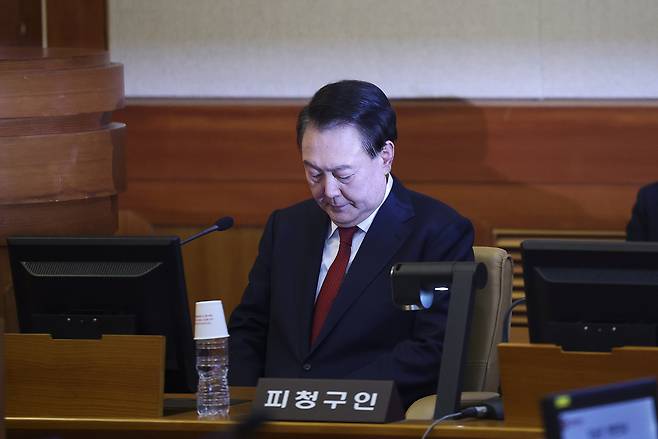
South Korea watchers expressed mixed views Wednesday after a special counsel requested the death penalty for former President Yoon Suk Yeol, alleging he led an insurrection through a failed self-coup attempt.
Even if Yoon is sentenced to death in the Feb. 19 ruling and the sentence is later upheld by the Supreme Court, it remains highly unlikely that he would be executed. South Korea is considered a de facto death penalty abolitionist, with no executions since December 1997, despite around 60 people on death row.
While largely symbolic, the harshest possible sentence for Yoon could have significant implications in a country long haunted by memories of military coups, dictatorships and repression prior to democratization in 1987.
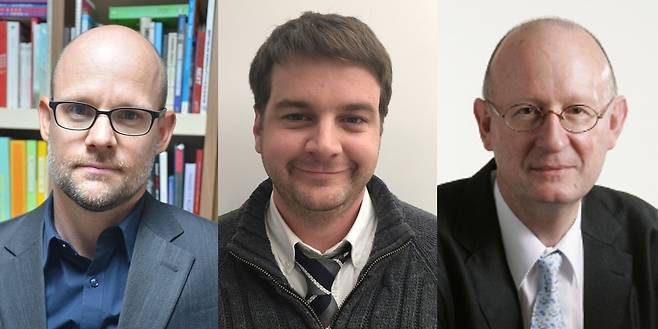
“The special counsel’s request is symbolically rich, even though Yoon is highly unlikely to be executed,” said Mason Richey, a professor of international studies at Hankuk University of Foreign Studies. “The message is that the judicial system and government take abuse of martial law — and the potential for its tyrannical misuse — with utmost seriousness.”
Another expert echoed this view, emphasizing the importance of sending a strong message that any threat to democracy is intolerable.
“Given the gravity of the situation, it seems appropriate to request the maximum sentence, even though the likelihood of execution is virtually zero,” said Benjamin Engel, an assistant professor of Korean studies at Dankook University. “The request and any subsequent sentence would signal that Yoon’s self-coup attempt is completely unacceptable in a democratic South Korea.”
However, Michael Breen, an author and journalist from the United Kingdom, said such a sentencing is "intended to assuage the emotions of the people" and could later be commuted, calling execution of Yoon "ridiculous."
"Sentencing in high-profile cases in Korea is not a rational matter of the punishment fitting the crime," said Breen, who lived in South Korea for more than 40 years. "I thought from the start that prosecutors would ask for the death penalty. But I expect in the end, he will be pardoned ... when people no longer care."
Others have voiced concerns about the impact on social division.
“Allegations of insurrection must be investigated thoroughly and independently, free from political influence,” said Spencer Waters, an American working in communications in Busan.
“But seeking the harshest punishment risks deepening polarization and turning the legal process into a symbolic or retaliatory act.”
A human rights group advocating for the abolition of capital punishment also argued against the death penalty, regardless of the seriousness of the crime.
“No one is above the law, including a former president, but seeking the death penalty is a step backward,” said Chiara Sangiorgio, Amnesty International’s death penalty adviser, in a statement Tuesday.
“Yoon’s imposition of martial law in December 2024 endangered fundamental human rights, prompting prosecutors to seek his execution. While accountability is vital, the death penalty undermines the very principles of human rights and dignity that the rule of law is meant to protect.”
The special counsel’s request and the court’s upcoming decision in February could reshape South Korea’s political landscape, just five months ahead of local elections.
It could also deal a potential blow to the conservative People Power Party ahead of the June elections, as Yoon’s sentencing could split the party.
“A death sentence may be Yoon’s final disgrace, but it could also turn him into a martyr among hard-line conservatives,” said Engel of Dankook University. He noted that since the party has not completely severed ties with Yoon, internal strife between moderates and extremists is likely to persist. “If the extremists prevail, the PPP may struggle in June’s elections.”
Richey of HUFS said Yoon’s sentencing would likely have a limited impact on overall voter sentiment. However, he noted that a conviction could slightly suppress conservative turnout if it causes confusion or division within the party's messaging.
Copyright © 코리아헤럴드. 무단전재 및 재배포 금지.