S. Korea shifts back toward nuclear power, targets 89% utilization this year
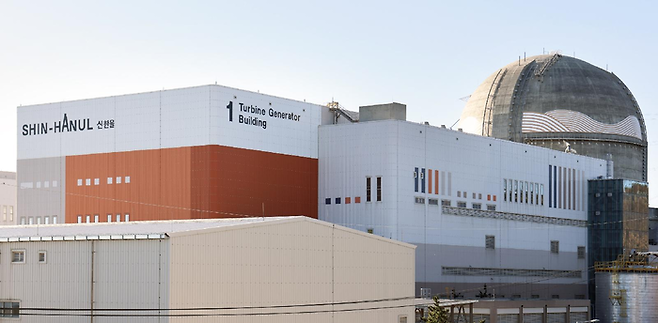
The ministry said it will also move ahead with site acquisition for two new large-scale nuclear reactors included in the country’s 11th Basic Plan for Power Supply and Demand, following a public opinion survey. The move reflects a broader pivot away from a nuclear phaseout stance amid growing electricity demand and heightened pressure to meet carbon-neutrality goals.
In a briefing released Tuesday, the ministry said Korea Hydro & Nuclear Power (KHNP) aims to lift the average utilization rate of nuclear plants to 89 percent this year. That would be up 4.4 percentage points from last year’s 84.6 percent and the highest level since 2011.
Nuclear utilization refers to the ratio of actual power generation to maximum possible output. South Korea currently operates 26 nuclear reactors, each typically running on an 18-month cycle followed by around two months of planned preventive maintenance.
A KHNP official said the company is working to optimize maintenance schedules and shorten downtime to raise utilization, adding that the effort is also expected to improve profitability. The official said KHNP is also pursuing lifetime extensions for 10 reactors whose original operating licenses have expired.
KHNP said it will proceed with securing sites for two new large reactors and one small modular reactor depending on the outcome of policy discussions and public opinion surveys, in line with the 11th power supply plan announced early last year.
Lee Ho-hyun, second vice minister at the climate ministry, said a public survey on new nuclear construction will be conducted this week. The ministry said two polling firms will survey 3,000 respondents by automated phone calls, adding that details on sampling and questionnaires will be disclosed after the results are released.
The government also announced plans to accelerate the “West Coast Energy Highway” project, designed to transmit renewable electricity generated in western coastal regions, including the Honam area, to the Seoul metropolitan region.
Separately, Korea Electric Power Corp. (KEPCO) said it plans to complete seven out of 25 grid construction projects by 2030, one year earlier than previously scheduled. KEPCO said it is considering using a public growth fund or launching a public investment fund, in coordination with the government, to finance the projects.
The plan follows a proposal by Lee Jae-myung, who suggested in December that public funds be used to finance transmission and distribution network expansion while offering stable returns to citizens.
KEPCO also outlined plans related to expanding the Dongseoul converter station, which would transmit electricity generated on the east coast to the Seoul area using high-voltage direct current technology.
Vice Minister Lee said the government views democratic and inclusive consultation with local residents along transmission routes as essential, adding that authorities are reviewing multiple options while sincerely listening to community concerns.
Seo Chul-soo, vice president of KEPCO‘s power system division, said accelerating construction would be the best way to ensure power supply aligns with planned completion timelines.
Meanwhile, five power generation companies traditionally centered on coal-fired plants said they will expand wind and solar capacity in line with government renewable energy targets. Korea South-East Power said it plans to add more than 24 gigawatts of renewable capacity and raise the share of carbon-free energy to 70 percent by 2040, while Korea Midland Power said it aims to secure 4.2 gigawatts of power through large-scale offshore wind and solar projects using idle land.
Copyright © 매일경제 & mk.co.kr. 무단 전재, 재배포 및 AI학습 이용 금지
- “1890만원 신문지로 감쌌다가 맙소사”…제대로 써보지 못한 돈 ‘2조8400억’ - 매일경제
- 삼성 뛰쳐나와 빚더미 침대 공장 출근…1100억 잭팟 만들어낸 남자 - 매일경제
- “14일, 휴가낸 사람이 진짜 승자”…‘영하15도’ 미친듯이 춥다는데 - 매일경제
- 전세보증금, 집주인 대신 보증기관에 맡긴다 - 매일경제
- 특검 "전두환보다 엄정히 단죄"… 尹 '사형' 구형 순간 헛웃음 - 매일경제
- “몸테크 10년 했더니 분담금 10억 내라고?”…강남 재건축 ‘가시방석’ - 매일경제
- “집에 빨리 가려다”…얼어붙은 저수지 건너다 물에 빠진 50대, 극적 구조 - 매일경제
- 최강록, ‘흑백요리사2’ 최종 우승…백종원·안성재 만장일치 - 매일경제
- “난 주식 한주도 없는데, 1년 새 시총 80% 껑충”…삼전·하이닉스 끌어올려 - 매일경제
- ‘최강 중국에 무관 선물’ 韓 탁구 희망 장우진, WTT 챔피언스 준우승…역대 최고 성적 타이 + AG