South Korea steps up FX oversight as won slides into 1,470s
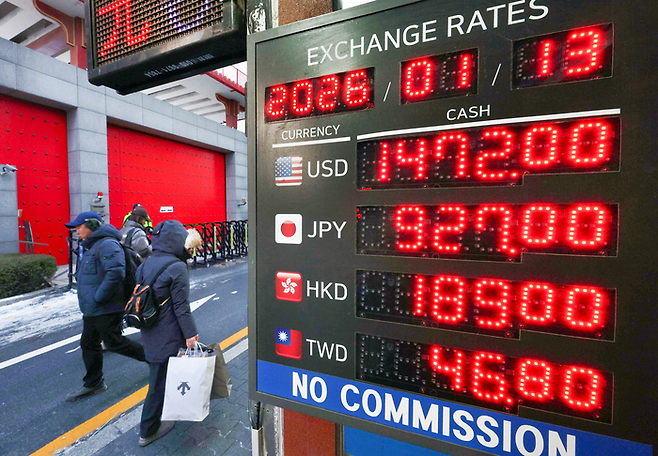
Authorities have already resorted to verbal intervention and encouraged currency hedging by the National Pension Service, while also floating tax incentives for retail investors who buy overseas stocks. Still, policymakers acknowledge that these measures have so far fallen short of reversing the won’s downward momentum.
As part of its response, the government plans to intensify monitoring of exporters’ foreign-exchange transactions and encourage banks to lower dollar deposit rates in a bid to draw foreign currency back into the domestic market.
On Tuesday, the Korea Customs Service said it has launched a task force to crack down on illegal trade and foreign-exchange transactions linked to the weak won. The agency will deploy all 24 of its foreign-exchange investigation teams nationwide to conduct on-site inspections. These audits typically involve customs officials being dispatched to company sites for one to two months, after prior notice, to review accounting books and transaction records. Cases in which illegal activity is suspected may be escalated into criminal investigations.
The probe will target 1,138 companies whose cumulative trade volume over the past five years exceeded $50 million and whose uncollected export proceeds or unpaid import bills in 2025 rose sharply compared with the average of the previous four years. Of these firms, 62 are large conglomerates, 424 are middle market companies and 652 are small and medium-sized enterprises.
Customs authorities said the move reflects a rapid widening gap between reported export values and the actual trade payments flowing through banks. Based on export declarations, this discrepancy expanded from $80.1 billion in 2021 to $168.5 billion in the January–November period last year, nearly doubling in five years.
Lee Jong-wook, vice commissioner of the Korea Customs Service, warned that currency volatility can create incentives for illegal transactions, including shifting domestic assets overseas or delaying the repatriation of export earnings.
Under current foreign-exchange law, long delays in collecting export proceeds are not illegal in themselves, following a regulatory change in 2017. However, failing to report transactions in which export earnings are offset against debts of overseas subsidiaries constitutes a violation. Customs officials suspect that some export-import companies have set up overseas affiliates without notifying authorities and engaged in preferential transactions, offsetting export proceeds against affiliate debts.
“We will strictly enforce the rules to ensure that foreign currency that should normally flow into the country is not withheld,” Lee said.
Skeptics, however, question whether the crackdown will have a meaningful impact on the foreign-exchange market, where daily trading volumes average around $40 billion across spot and forward markets. Last year, the total value of illegal FX transactions uncovered through inspections amounted to just 2.2 trillion won ($1.51 billion), a relatively small figure by comparison.
Business circles also caution that, during periods of sharp currency swings, companies may temporarily hold dollars as part of legitimate profit-maximization strategies, blurring the line between lawful and unlawful behavior. They stress the need for clear standards and better communication to avoid mislabeling normal global business practices as intentional non-repatriation.
Separately, Financial Supervisory Service Governor Lee Chan-jin convened a market monitoring meeting on Tuesday and urged financial institutions to refrain from excessive sales promotions or events related to overseas stock investments and foreign-currency financial products. In line with regulatory guidance, banks have begun lowering dollar deposit rates to curb corporate demand for the greenback.
Woori Bank said it will cut the interest rate on its “Wibee Travel Foreign Currency Deposit” for U.S. dollars to 0.1 percent from 1 percent starting Jan. 15. Shinhan Bank plans to lower its dollar deposit rates by 5 basis points from Jan. 16. At KB Kookmin Bank, the interest rate on its “KB Kookmin UP Foreign Currency Time Deposit” stood at 3.06 percent as of Tuesday, down 0.04 percentage point from early this month. The total balance of dollar deposits rose to $66.95 billion as of Jan. 12, up from $57.09 billion in October last year.
Despite these steps, market participants continue to bet on further won weakness. Data from the Korea Securities Depository show that domestic investors were net buyers of U.S. stocks worth $1.86 billion between Jan. 5 and 12 on a settlement-date basis. Over the same period, foreign investors sold a net 2.97 trillion won worth of South Korean stocks.
“Retail investors see higher long-term return potential in U.S. equities than in Korean stocks that have already rallied sharply in the short term,” said Jung Yong-taek, head of research at IBK Investment & Securities. “Underlying expectations for dollar-denominated assets remain relatively strong, which continues to weigh on the exchange rate.”
The won ended Tuesday’s onshore trading session at 1,473.7 per dollar, down 5.3 won from the previous close. The currency has weakened for eight consecutive sessions since the first trading day of the year. After briefly rebounding to the low-1,400s late last year following aggressive government intervention, the won has once again moved rapidly toward the psychologically significant 1,500 level within a matter of weeks.
Copyright © 매일경제 & mk.co.kr. 무단 전재, 재배포 및 AI학습 이용 금지
- “1890만원 신문지로 감쌌다가 맙소사”…제대로 써보지 못한 돈 ‘2조8400억’ - 매일경제
- “14일, 휴가낸 사람이 진짜 승자”…‘영하15도’ 미친듯이 춥다는데 - 매일경제
- 특검 "전두환보다 엄정히 단죄"… 尹 '사형' 구형 순간 헛웃음 - 매일경제
- 삼성 뛰쳐나와 빚더미 침대 공장 출근…1100억 잭팟 만들어낸 남자 - 매일경제
- 전세보증금, 집주인 대신 보증기관에 맡긴다 - 매일경제
- “몸테크 10년 했더니 분담금 10억 내라고?”…강남 재건축 ‘가시방석’ - 매일경제
- “집에 빨리 가려다”…얼어붙은 저수지 건너다 물에 빠진 50대, 극적 구조 - 매일경제
- 최강록, ‘흑백요리사2’ 최종 우승…백종원·안성재 만장일치 - 매일경제
- 한국인 암 6%가 ‘식습관’ 영향…기여도 1위는 의외로 ‘이 음식’ - 매일경제
- ‘최강 중국에 무관 선물’ 韓 탁구 희망 장우진, WTT 챔피언스 준우승…역대 최고 성적 타이 + AG