Savings bank deposits fall below $67.8bn despite rise in insurance limit
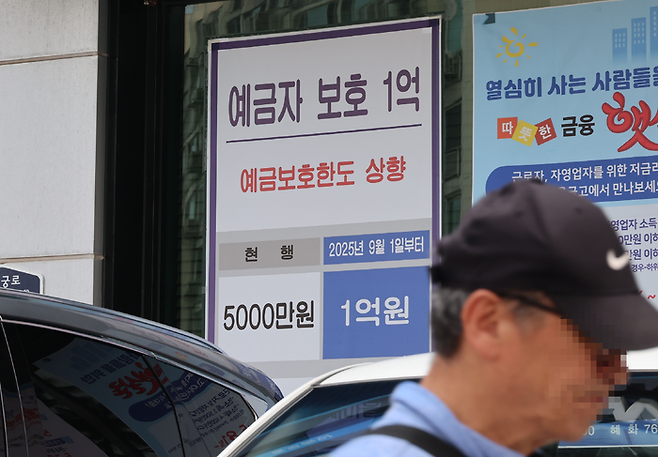
According to data obtained by the office of Representative Lee Hun-seung of the main opposition People Power Party from Korea Deposit Insurance Corp., savings bank deposits totaled about 99 trillion won as of the end of December 2025.
Although the deposit insurance limit was raised to 100 million won on September 1, 2025 – raising expectations that funds would flow into savings banks – the balance instead declined.
Deposits stood at 102.4 trillion won as of September 1, 2025, briefly rising to 105 trillion won by the end of September, before falling for three consecutive months to 103.5 trillion won at the end of October, 100.6 trillion won at the end of November, and 99 trillion won at the end of December.
Market observers note that savings banks lost their interest rate competitiveness by keeping fixed-term deposit rates at levels similar to or lower than those of commercial banks, as they lacked sufficient lending or investment opportunities.
According to disclosures by the Korea Federation of Savings Banks, the average interest rate on one-year fixed deposits stood at 2.93 percent as of Tuesday.
While some savings banks offer rates in the low 3 percent range, the gap versus commercial banks or internet-only banks is not significant.
Shinhan Bank and NH NongHyup Bank offer up to 3 percent including preferential rates, Jeju Bank, Jeonbuk Bank, and Suhyup Bank offer 3.1 percent, and Standard Chartered Bank Korea and BNK Kyongnam Bank offer up to 3.15 percent.
“The strength of savings banks lies in offering relatively higher interest rates than commercial banks, but their appeal has significantly declined as the rate gap has disappeared,” said a financial industry official.
Savings banks have refrained from sharply raising their deposit rates because even if they attract funds with higher rates, there are few investment targets available.
Raising deposit rates increases costs, but they currently lack sufficient lending opportunities to generate interest income that would offset those costs, making it difficult for them to engage in deposit competition.
Following the June 27 household-loan regulations last year, which capped credit-loan limits at borrowers’ annual income, new credit lending by savings banks fell sharply.
New household credit lending, which had exceeded 1 trillion won annually, remained at around 800 billion won per month from July – when the regulations took effect -through the end of November last year.
Expanding real-estate project financing (PF) loans is also challenging for savings banks due to the construction slump.
Given that savings banks have a high proportion of low-credit borrowers, aggressively attracting deposits could further complicate their delinquency management.
“Savings banks are keeping rates low because they already hold substantial funds and face high delinquency rates,” said an industry official. “With market conditions unfavorable, they are focusing more on managing asset quality than expanding lending.”
Another factor behind the decline in savings bank deposits is the stock market rally.
Industry sources believe some funds that left savings banks moved into equities, as the country’s benchmark Kospi has been setting record highs, drawing liquidity into the stock market.
As of January 8, investor deposits reached 92.9 trillion won, surpassing 90 trillion won for the first time ever.
This represents a sharp increase of about 71 percent in just over a year compared with 54.24 trillion won at the end of last year.
Copyright © 매일경제 & mk.co.kr. 무단 전재, 재배포 및 AI학습 이용 금지
- “1890만원 신문지로 감쌌다가 맙소사”…제대로 써보지 못한 돈 ‘2조8400억’ - 매일경제
- “14일, 휴가낸 사람이 진짜 승자”…‘영하15도’ 미친듯이 춥다는데 - 매일경제
- 특검 "전두환보다 엄정히 단죄"… 尹 '사형' 구형 순간 헛웃음 - 매일경제
- 삼성 뛰쳐나와 빚더미 침대 공장 출근…1100억 잭팟 만들어낸 남자 - 매일경제
- 전세보증금, 집주인 대신 보증기관에 맡긴다 - 매일경제
- “몸테크 10년 했더니 분담금 10억 내라고?”…강남 재건축 ‘가시방석’ - 매일경제
- “집에 빨리 가려다”…얼어붙은 저수지 건너다 물에 빠진 50대, 극적 구조 - 매일경제
- 최강록, ‘흑백요리사2’ 최종 우승…백종원·안성재 만장일치 - 매일경제
- 한국인 암 6%가 ‘식습관’ 영향…기여도 1위는 의외로 ‘이 음식’ - 매일경제
- ‘최강 중국에 무관 선물’ 韓 탁구 희망 장우진, WTT 챔피언스 준우승…역대 최고 성적 타이 + AG