Why are Seoul buses on hold?
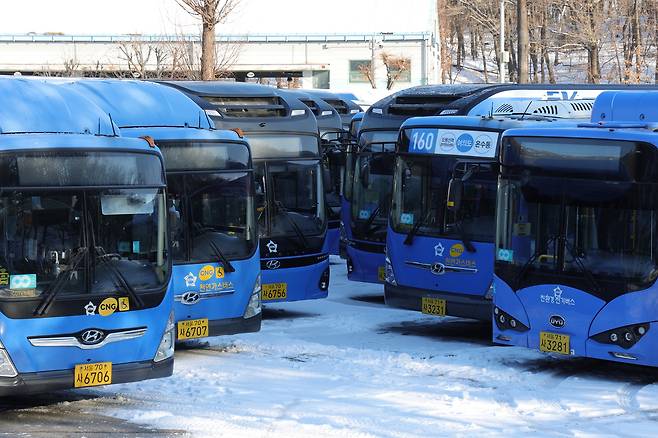
Seoul’s citywide bus strike entered its first full day Tuesday with no timetable for renewed negotiations, as city officials warned that a swift return to normal operations is unlikely and rolled out costly emergency transport measures to keep the capital moving.
The Seoul Metropolitan Government said talks remain at a standstill after overnight negotiations between bus operators and the labor union collapsed, triggering an indefinite walkout that has sharply curtailed public transportation across the city.
Officials said they have received no indication from the union on when discussions might resume or whether additional demands could be raised.
“At this point, everything is uncertain,” the city said during a joint briefing with the Seoul Bus Transport Association.
Kim Jung-hwan, head of the association, said discussions continued informally for about an hour after formal talks failed but produced no compromise.
“We have not been able to schedule further negotiations,” he said.
The strike has left much of Seoul’s bus network paralyzed. As of 9 a.m. Tuesday, only 129 of the city’s 395 authorized bus routes were operating, with 478 buses in service — about 6.8 percent of the total fleet. The city temporarily waived bus fares until service levels recover to at least 30 percent.
Mayor Oh Se-hoon visited the city’s disaster and safety control center early Tuesday to review emergency transport measures and ordered officials to minimize disruptions for commuters.
The city increased subway service by 172 additional runs, extended rush-hour operations by one hour and deployed free shuttle buses linking major neighborhoods to subway stations.
Subway ridership during early morning hours rose about 18 percent from the previous day, officials said.
Emergency measures are expected to cost roughly 10 billion won ($6.7 million) per day, largely due to chartered buses. To ease traffic congestion, the city also suspended 69.8 kilometers of curbside bus-only lanes, while maintaining restrictions on median bus lanes.
Seoul said it would respond firmly to any illegal interference with drivers who choose not to participate in the strike and pledged to protect continued operations where possible.
At the center of the strike is a dispute over how “ordinary wages” should be calculated, a technical but consequential issue that determines overtime, night-shift and holiday pay.
The conflict intensified after an October appellate court ruling in a lawsuit involving Dong-A Transportation, which held that bonuses should be included in ordinary wages but calculated based on actual hours worked, rather than a fixed monthly standard.
Bus operators say applying the ruling industrywide using real working hours would result in wage increases of about 6 to 7 percent, an adjustment they describe as consistent with the court’s decision and financially sustainable at a time of mounting fiscal pressure on public transport providers.
The labor union, while agreeing that bonuses should be included, rejects the use of actual hours, arguing it would effectively reduce pay and undermine the ruling’s intent.
Under the union’s preferred method, overall wage increases would approach 12 percent.
Negotiations collapsed after the two sides failed to bridge that gap.
During last-minute talks, operators proposed a 10.3 percent wage increase tied to wage system reform and offered to retroactively pay additional wages if future Supreme Court rulings favor labor.
The union rejected the proposal, demanding a 3 percent wage increase without restructuring and insisting that retroactive payments be discussed later.
A mediation panel under the Seoul Labor Relations Commission proposed a compromise involving a 0.5 percent base pay increase and a delay in wage system restructuring. Management accepted the plan, but the union rejected it, prompting the strike.
In a statement released Tuesday, the Seoul city government expressed “deep regret” over the union’s decision to strike and rejected claims that it had enforced a wage freeze or ignored Supreme Court rulings.
The city said assertions that wages were frozen for 2025 and 2026 were “not true,” stating that it had consistently proposed wage system reform and an overall pay increase since the first half of 2025, offers it said were repeatedly rejected by the union.
Officials also denied allegations of illegal practices or disregard for corrective orders from the Ministry of Employment and Labor, saying that no final Supreme Court judgment has yet been issued regarding city bus wages and that related administrative measures remain under review following objections filed by bus companies.
Addressing claims that drivers were being monitored, the city said its annual operational inspections are part of the semipublic bus system and are aimed at ensuring safety and service quality, not surveillance.
It said no disciplinary action has been imposed based on inspection results and that companies have been instructed not to penalize drivers.
The city added that Seoul bus drivers already receive the highest wage levels in the country among city bus operators, but warned that prolonged disruption would place further strain on public finances and commuters alike.
Copyright © 코리아헤럴드. 무단전재 및 재배포 금지.