Artist O Syng-yoon's lifelong exploration of 'Koreanness' unfolds at ACC
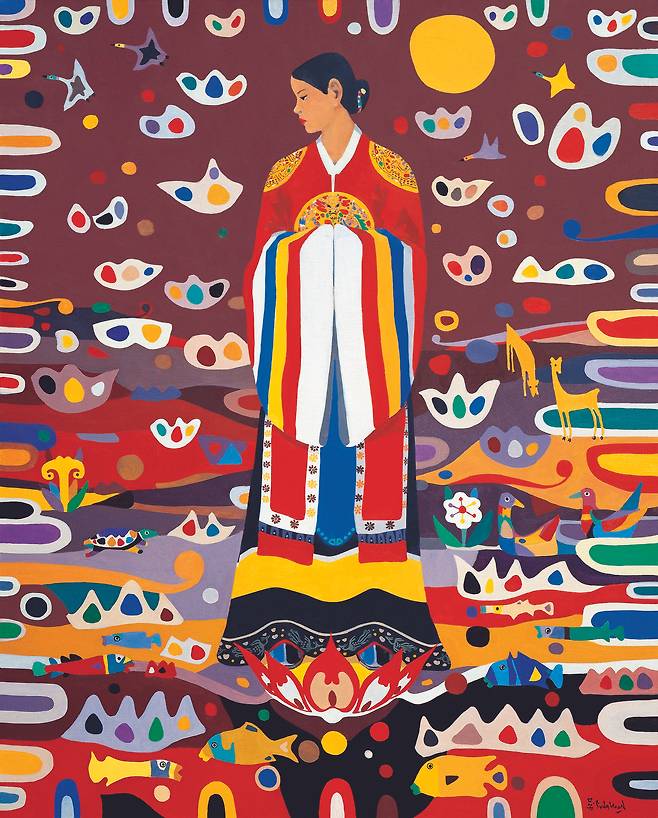
What defines “Koreanness?" The aesthetics of Korean tradition cannot be narrowed into a single idea, having evolved over centuries of history. Yet, the question was one painter O Syng-yoon relentlessly pursued throughout his life, refusing to follow artistic trends.
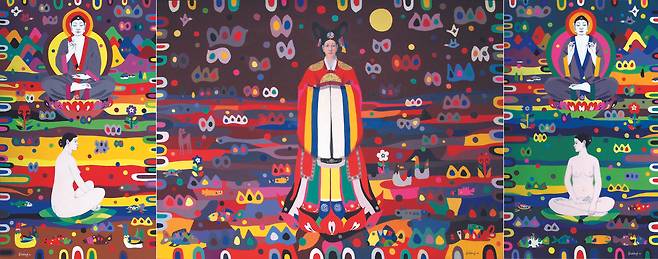
What captured him was "obangsaek," the five traditional cardinal colors. While widely recognized as traditional Korean aesthetics, the bold combination was not a popular theme among artists from the late 1900s to the early 2000s due to its limited commercial appeal.
O, however, dared to embrace the colors as a central language of his paintings.
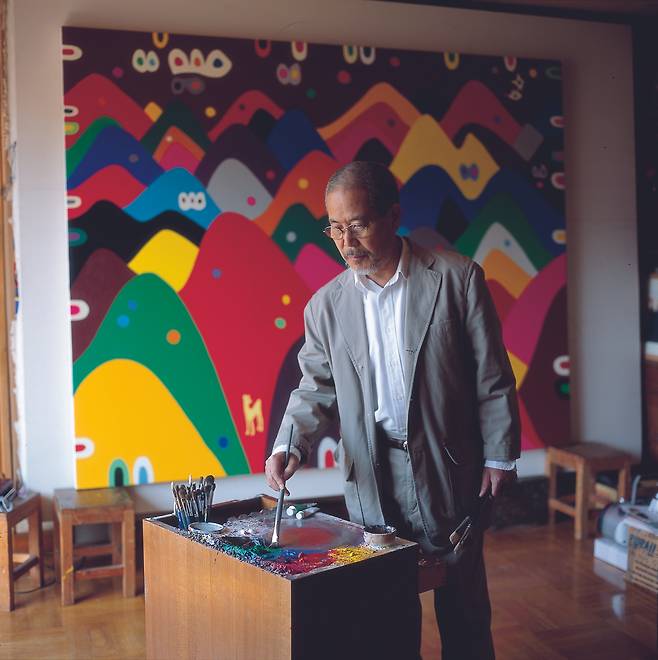
“Without our own cultural roots, art is nothing more than a lifeless form,” O once said. “Art that is detached from its people cannot truly take root in our society.”
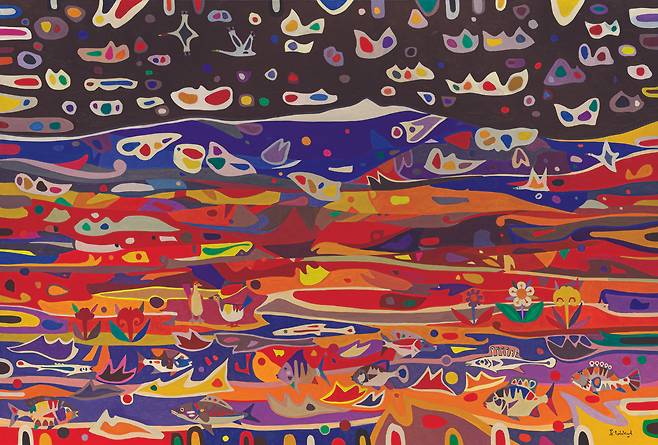
The artist's first retrospective at the National Asian Culture Center in Gwangju traces O’s pivotal moments in the artist’s artistic journey through 37 works, highlighting how O reinterpreted the identity of Korean aesthetics through exploration of “pungsu,” or Korean geomancy, folk-inspired visual forms and "obangsaek."
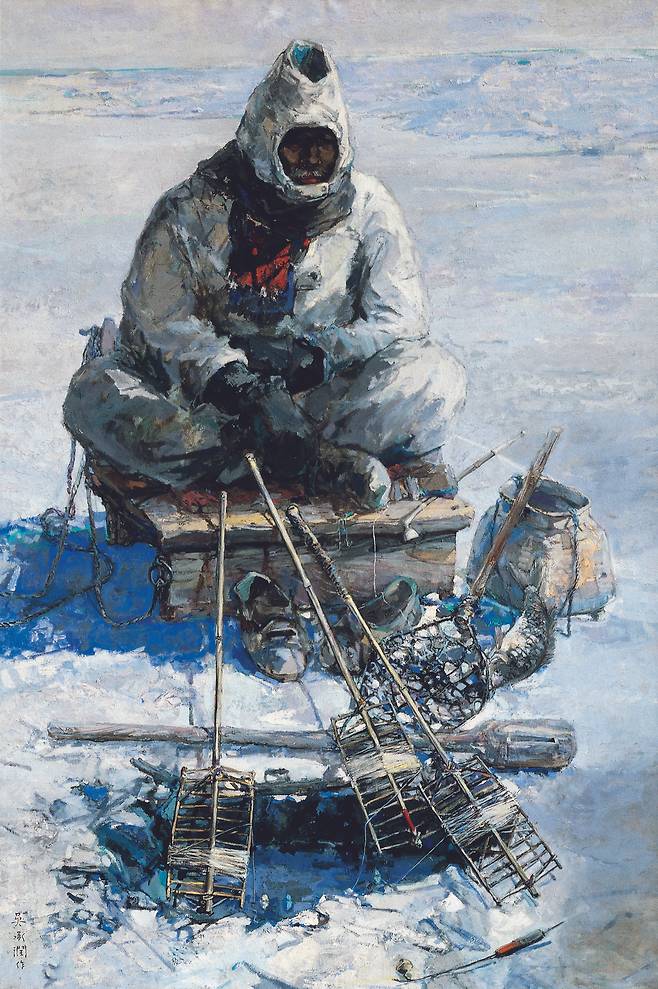
Born in 1939 as the second son of Oh Ji-ho, a pioneer of Korean impressionism and one of Korea’s first-generation modern artists, O was once deeply influenced by his father’s artistic legacy.
His father introduced a bright and luminous painterly language, which O initially inherited, as shown in the painting “Intense Cold.” O later departed from his father's legacy to establish his own distinctive artistic identity, the artist’s daughter Oh Soo-kyung, who is also a painter, told The Korea Herald.
“In the 1990s, my father began traveling to mountain temples across Korea. When he entered shaman shrines and Buddhist temples, the obangsaek came to him very strongly. That was when he began to unfold his own artistic world,” Oh said in a phone interview on Tuesday.
“Traveling the mountain temples, he came to realize that Korea’s view of nature and its geomantic philosophy are truly at the heart of our national identity.”
A highlight of the exhibition is the monumental work “The History of Wind and Water,” regarded as a culmination of O’s artistic and philosophical vision, which features humans, animals, plants, earth and sky forming a harmonious order with obagsaek colors. The piece was shown at the 2004 Gwangju Biennale, according to ACC.
O died in 2006 at the age of 66.
The exhibition “O Syng Yoon: Colors of Pungsu, Melodies of Life” runs through Sunday.
Copyright © 코리아헤럴드. 무단전재 및 재배포 금지.