S. Korean banks cut hiring as voluntary retirements surge in AI era
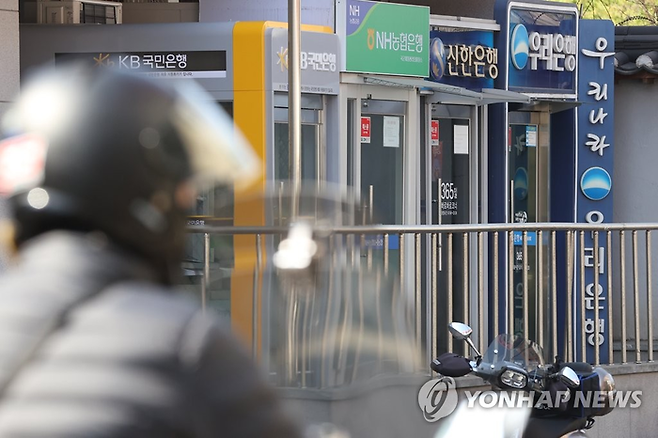
According to sources on Monday, the four major lenders — KB Kookmin Bank, Shinhan Bank, Hana Bank and Woori Bank — saw new hires decline for a third consecutive year last year, while the number of employees opting for voluntary retirement climbed to a five-year high.
A total of 2,027 bank employees left through voluntary retirement programs in 2025, nearly 30 percent more than in 2024. This marked the largest annual total since 2021. Industry officials said that while retirement packages have not improved significantly since 2023 amid criticism over generous severance pay, many employees are still choosing to leave voluntarily in search of a second career.
In contrast, recruitment has continued to shrink as banks accelerate efforts to replace routine tasks with digital and AI-based systems. New hiring across the four banks, which had risen from 1,663 in 2022 to 1,880 in 2023, fell 30 percent to 1,320 in 2024 and declined further to 1,170 in 2025.
Although voluntary retirement imposes a short-term financial burden due to large severance payments, banks view it as one of the most effective ways to reduce long-term costs, as labor expenses account for a substantial share of operating costs. Branch maintenance costs, another major expense item, are more difficult to cut due to regulatory pressure to preserve access for financially underserved groups, making workforce reductions the primary lever for cost control.
Unlike restructuring driven by financial distress, bank voluntary retirement programs typically offer favorable terms, including severance equivalent to at least 31 months of salary and continued tuition support for employees’ children after departure. These conditions have contributed to relatively positive perceptions among bank employees.
The number of voluntary retirees is expected to exceed 2,000 again in 2026. At Shinhan Bank, where applications have already closed, 669 employees are set to leave, up 23.7 percent from 541 a year earlier.
KB Kookmin Bank has made the most extensive use of voluntary retirement. After 800 employees left in 2021, the bank saw 674 departures in 2022, 713 in 2023, 674 in 2024 and 647 in 2025 — the highest cumulative total among peers. This year’s figure, however, is expected to fall slightly to the mid-500 range. Hana Bank and Woori Bank are each projected to see between 300 and 400 departures.
As banks curb hiring while expanding voluntary retirement, cost-efficiency metrics have continued to improve. The cost-to-income ratio (CIR), which declines as efficiency improves, has shown a steady downward trend across the sector.
KB Kookmin Bank reduced its CIR from 48.7 percent in 2022 to 43.2 percent in 2023 and 43.3 percent in 2024. Through the third quarter of last year, the ratio stood at 38.5 percent, with full-year figures expected to improve further despite year-end cost recognition.
Shinhan Bank lowered its CIR from 43.7 percent in 2022 to 41.8 percent in 2024, while Woori Bank improved efficiency from 48 percent to 43.4 percent over the same period. Hana Bank, which had cut headcount more aggressively in earlier years and now records the fewest voluntary retirements, posted a largely flat CIR of 41.2 percent in 2022 and 41.3 percent in 2024.
Copyright © 매일경제 & mk.co.kr. 무단 전재, 재배포 및 AI학습 이용 금지
- “한국인 머리카락을 훔치고 싶다”…해외에서 반응 오는 K헤어 - 매일경제
- “아파트 사려고? 닥치고 서울”…지난해 상경 투자 4년 만에 최대 - 매일경제
- [속보] 고용노동부, 한화오션 압수수색…부당 노동행위 관련 - 매일경제
- “상사 입에서 똥내, 참기로 했습니다”…‘가글 선물’ 환불한 이유가 - 매일경제
- 오늘의 운세 2026년 1월 13일 火(음력 11월 25일) - 매일경제
- “주식 아직도 안샀어? 통장 깨서 일단 넣어”…은행 대기자금 일주일새 28조 증발 - 매일경제
- “이란 가만두면 안될 거 같다”...트럼프 으름장에 하메네이 대답은 - 매일경제
- [속보] 강호동 농협회장, 대국민 사과…‘추가 3억연봉’ 겸직 사임 - 매일경제
- [속보] 이 대통령 “보완수사권, 당에서 숙의하고 정부는 의견 수렴하라” - 매일경제
- ‘최강 중국에 무관 선물’ 韓 탁구 희망 장우진, WTT 챔피언스 준우승…역대 최고 성적 타이 + AG