Musinsa’s subtle jab at Coupang and why it worked
전체 맥락을 이해하기 위해서는 본문 보기를 권장합니다.
Samsung Electronics, for instance, has openly engaged in such campaigns. In 2024, Apple halted television broadcasts of an iPad Pro advertisement after facing backlash for mocking artists. Samsung then released an ad widely interpreted as a jab at Apple, featuring the message, "Creativity cannot be crushed."
Commenting on a local news report about Musinsa's coupon campaign targeting Coupang, one user criticized Coupang's compensation plan, adding that Musinsa "picked the right moment for its campaign."
이 글자크기로 변경됩니다.
(예시) 가장 빠른 뉴스가 있고 다양한 정보, 쌍방향 소통이 숨쉬는 다음뉴스를 만나보세요. 다음뉴스는 국내외 주요이슈와 실시간 속보, 문화생활 및 다양한 분야의 뉴스를 입체적으로 전달하고 있습니다.
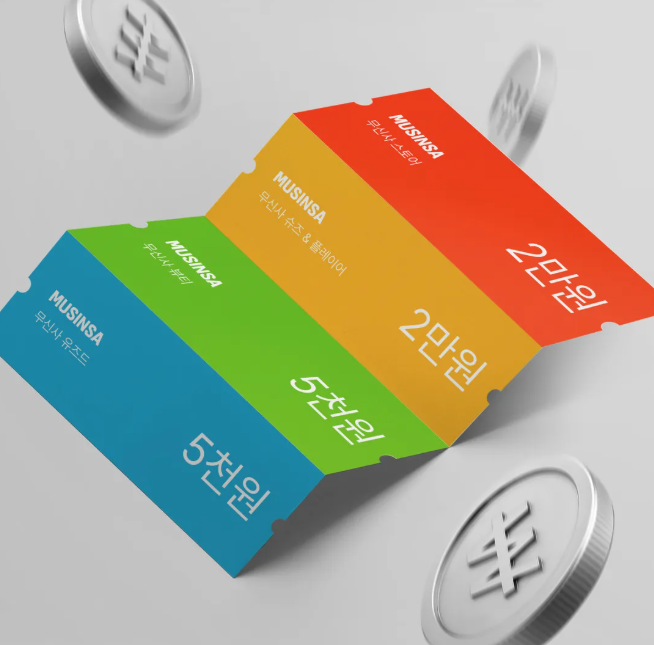
South Korea's leading fashion platform Musinsa rolled out a discount package titled “New Year’s benefits. No strings attached" on Jan. 1. It was no ordinary set of coupons.
It didn’t take long for many to interpret the move as a subtle jab at rival Coupang, whose compensation package had drawn criticism for being underwhelming in the wake of a massive data breach affecting 33.7 million users.
Musinsa’s gesture was subtle, yet it made little effort to conceal its intent.
The company issued four vouchers: 20,000 won ($13.60) for the Musinsa Store, 20,000 won for Musinsa Shoes, 5,000 won for Musinsa Beauty, and 5,000 won for Musinsa Used.
Both the total value and the breakdown mirrored Coupang’s compensation package. Coupang offered 20,000 won for Coupang Travel, 20,000 won for Alux, its luxury platform, 5,000 won for Coupang Eats, and 5,000 won usable across its platform.

The similarities went beyond the numbers. Musinsa’s promotional visuals featured the exact red, yellow, green and blue used in Coupang’s logo.
The campaign quickly went viral online. It was especially effective in Korea, where competitor-targeting advertising remains rare.
Interest grew further when local media revisited the two companies' past legal tensions.
Last year, Coupang sought a court injunction to prevent two former executives from joining Musinsa, arguing the move could lead to the leakage of business secrets linked to its iconic delivery service, Rocket Delivery.
The court dismissed the request in November, ruling that Rocket Delivery was not a technology-driven secret but a system built through large-scale capital investment. Coupang initially appealed but later withdrew the lawsuit following a personal data breach incident.
At the time, a Musinsa official reportedly criticized the move as excessive legal action against its employees.
Globally, competitor-targeted advertising is not uncommon.
Samsung Electronics, for instance, has openly engaged in such campaigns. In 2024, Apple halted television broadcasts of an iPad Pro advertisement after facing backlash for mocking artists. Samsung then released an ad widely interpreted as a jab at Apple, featuring the message, “Creativity cannot be crushed.”
In South Korea, however, direct comparative advertising remains rare due to strict regulations and the risk of consumer backlash.
Broadcast advertising rules prohibit defamatory comparisons with competitors, even when the claims are factually accurate. As a result, Korean companies tend to avoid direct attacks.
However, that sentiment is gradually changing, according to Korean marketing industry insiders.

A marketer surnamed Kim said Musinsa’s campaign was widely regarded as highly effective, noting that it delivered strong promotional impact at a relatively low cost.
“In an increasingly crowded media environment, traditional advertising doesn’t work as well as it used to. Attracting consumer attention and becoming a topic of conversation has become a key metric,” said Kim.
Another marketer, surnamed Min, described the approach as “issue hijacking” in advertising terms. While such tactics are not suitable for all brands, she noted that they can be effective when used selectively.
“Market leaders tend to gain little from directly targeting competitors, and brands built on trust may risk reputational damage,” she said.
However, Min added that the strategy is more understandable given Musinsa’s positioning, as the company primarily targets younger consumers who are more receptive to such tactics.
As these marketers noted, online responses were largely positive.
On social media and online forums, users praised the campaign as clever and entertaining, applauding Musinsa’s marketing team for its creativity.
Commenting on a local news report about Musinsa’s coupon campaign targeting Coupang, one user criticized Coupang’s compensation plan, adding that Musinsa “picked the right moment for its campaign.”
Another commenter highlighted the campaign’s attention to detail, calling the use of the four colors from Coupang’s logo “brilliant.”
The numbers also indicate the campaign’s success, Musinsa said Sunday.
Transactions in non-fashion categories on the company's online store surged after it issued 50,000 won coupons on Jan. 1. Sales in the beauty category more than doubled from a year earlier. By product group, body care sales jumped 304 percent, while skin care and perfume rose 156 percent and 141 percent, respectively. Sales of household goods also increased 34 percent.
Seo Yong-ku, a professor of business administration at Sookmyung Women’s University in Seoul, also described the campaign as a strategic move, adding that he does not view competitor-targeting campaigns as inherently negative or positive.
“If a large company were to leverage negative sentiment surrounding Coupang, it could have a backlash,” Seo said. “But because Coupang is a dominant player and Musinsa is perceived as an underdog startup, this type of marketing can work.”
Copyright © 코리아헤럴드. 무단전재 및 재배포 금지.