Value coffee chains lure global investors as bargain brews gain traction
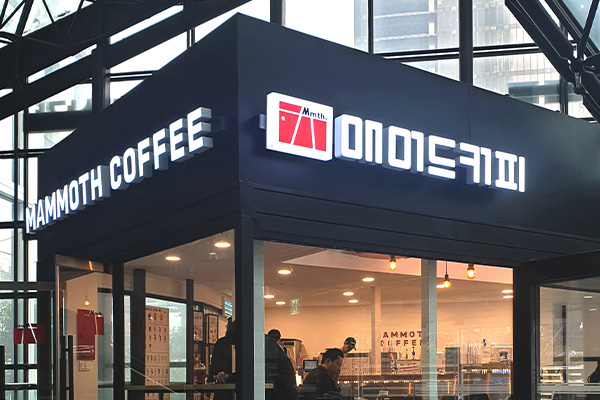
According to investment banking sources on Monday, East Asia-focused Orchestra Private Equity signed a share purchase agreement on Jan. 8 to acquire a 100 percent stake in Mammoth Coffee Lab, the operator of Mammoth Coffee, along with coffee bean roaster Seojin Roasters, for around 100 billion won ($68.5 million). Founded in 2012, Mammoth Coffee expanded to around 800 stores nationwide by offering Americanos priced in the 1,000-won range.
The deal follows a series of high-profile transactions in the budget coffee segment. In August 2024, Compose Coffee, the industry’s second-largest player, was sold to a consortium led by Philippine food giant Jollibee Foods Corporation (JFC) and Seoul-based private equity firm Elevation Equity Partners for 470 billion won. In December, management control of Tenpercent Coffee was acquired by a consortium of DS Investment Partners and TY Partners, valuing 60 percent of the company at roughly 39 billion won.
Market watchers attribute the surge of interest to the growing polarization of the coffee market. While premium brands focus on offering space and experiences, low-cost coffee caters to habitual, everyday consumption. Demand that once supported mid-priced brands is increasingly shifting toward cheaper alternatives.
This trend is not unique to South Korea. In the United States, Dutch Bros has gained popularity by focusing on low-priced beverages sold primarily through drive-through stores, in contrast to Starbucks’ “third place” strategy centered on comfortable seating and Wi-Fi. In China, Luckin Coffee, known for its 9.9-yuan ($1.36) Americanos, has overtaken Starbucks in market share.
Industry analysts also point to a “fast fashion” strategy unique to South Korea’s budget coffee chains. Targeting Gen Z consumers from their late teens to early 30s, brands roll out visually striking seasonal drinks at a rapid pace, mirroring the approach of SPA fashion brands. Customized drinks such as “Ashotchu” (iced tea with an added espresso shot) or Peach Iced Tea with Espresso and heavily topped frappes have helped fuel a culture of playful personalization.
Strong profitability and growth prospects further align with the investment strategies of private equity firms seeking exits within a few years. Chains such as Compose Coffee and Mammoth Coffee operate their own roasting facilities, enabling double-digit operating margins. While the domestic market is approaching saturation, investors see potential in exporting this business model overseas.
The global popularity of K-culture is also bolstering expectations that Korean coffee brands can be positioned as part of a refined lifestyle abroad. Jollibee reportedly tapped BTS member V as a model for Compose Coffee with Southeast Asian expansion in mind, while Orchestra PE is said to be exploring Mammoth Coffee’s entry into the Japanese market.
“Low-cost coffee succeeded not simply because it is cheap, but because it resonates with younger consumers who value personal taste and individuality,” said Cho Jung-min, Head of Boston Consulting Group’s Principal Investors & Private Equity practice in Korea. “The competitiveness of Korean brands can appeal to overseas markets, offering meaningful upside through global expansion.”
Still, some limitations remain. Compose Coffee was valued at around eight times its earnings before interest, taxes, depreciation and amortization (EV/EBITDA) at the time of its sale, reflecting relatively low valuation multiples. Analysts cite low entry barriers and the lack of proven overseas performance as key factors.
An investment banking official noted that franchise market dynamics differ significantly by country. “Unlike South Korea, where many stores are run by individual owner-operators, Japan often sees corporations sign master contracts to operate dozens of outlets at once,” the official said.
Copyright © 매일경제 & mk.co.kr. 무단 전재, 재배포 및 AI학습 이용 금지
- 서울 강남 뺨치는 경기 이 동네…집값 급등에 전세가율 50% 아래 ‘뚝’ - 매일경제
- “한국인 머리카락을 훔치고 싶다”…해외에서 반응 오는 K헤어 - 매일경제
- “이란 가만두면 안될 거 같다”...트럼프 으름장에 하메네이 대답은 - 매일경제
- 재정폭탄 코앞인데 “선거부터”…기초연금·정년연장 개혁도 밀렸다 - 매일경제
- 미사일 대신 관세폭탄 먼저 쏜 트럼프…“이란과 거래하는 나라에 관세 25% 부과” - 매일경제
- “교실이 텅 비어간다”…올해 초등학교 입학생 30만명 붕괴 - 매일경제
- “7년 전부터 엔비디아 보유”…수익률 ‘800%’ 고백한 여가수 - 매일경제
- “이젠 사람이 귀하지 않습니다”…은행, 신규채용 ‘찔끔’ 희망퇴직 ‘북적’ - 매일경제
- [단독] 부모님의 주택연금, 목돈 없이 자녀가 이어받을 길 열린다 - 매일경제
- 적수가 없다!…‘세계 최강’ 안세영, 中 왕즈이 꺾고 말레이시아 오픈 3연패 달성 - MK스포츠