Seoul and Gyeonggi brace for possible city bus strike as talks drag past midnight
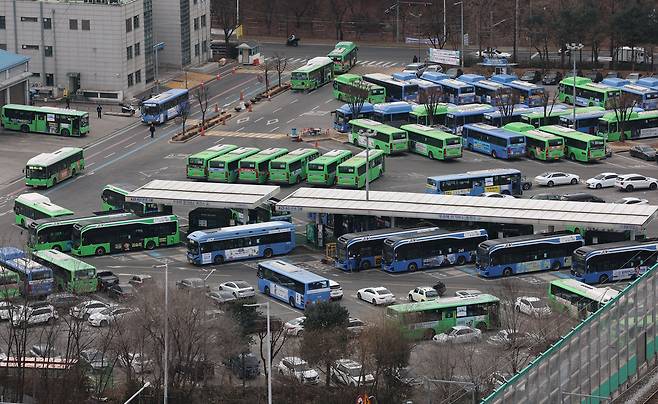
Last-minute negotiations between Seoul city bus operators and the labor union continued past midnight, just hours before a strike scheduled to begin with the first buses at 4 a.m. on Jan. 13.
While the union had previously warned it would declare talks deadlocked at midnight, both sides chose to keep negotiating. An official from the Seoul Regional Labor Relations Commission, which is mediating the talks, said around 11:50 p.m. that more time was needed, adding that the midnight deadline did not mean negotiations had collapsed.
Formal talks began at 3:30 p.m. on Monday. If no agreement is reached, all 18,700 union members across 64 bus companies are expected to go on strike, potentially halting operations of roughly 7,300 buses on about 390 routes in Seoul, with spillover effects on 111 routes serving 12 areas in Gyeonggi Province.
Ahead of the planned strike, Seoul City and Gyeonggi Province announced emergency transportation measures. Seoul will increase subway services by 172 runs per day, extend peak commuting hours, and operate last trains until 2 a.m. Free shuttle buses and about 670 public and private vehicles will be deployed to link major hubs and subway stations, while authorities may request flexible work hours if disruptions persist.
Gyeonggi Province said it will boost peak-hour service on 128 routes, expand the use of village buses and taxis, and deploy safety personnel at crowded stations. Both governments said they remain hopeful of a last-minute deal while focusing on minimizing transportation disruptions.
Negotiations have dragged on since December 2024 due to sharp disagreements, particularly over how to apply a Supreme Court ruling that recognized bonuses as part of ordinary wages. The union has argued the ruling must be reflected in pay, while management has insisted that discussions on a new wage system should come first.
Amid the prolonged standoff, the union had previously announced — and later withdrawn — strike plans twice last year.
In the latest talks, the union has set aside the ordinary wage issue, instead demanding a 3 percent wage increase for this year and an extension of the retirement age, saying the wage ruling will be addressed through a separate civil lawsuit. Management, however, has opposed the proposal, arguing that combined with potential future wage adjustments, it could amount to an effective pay increase of nearly 19 percent.
With the union’s self-imposed negotiation deadline set for midnight, concerns are growing over possible transportation disruptions, especially as a severe cold wave is forecast for Tuesday morning.
Copyright © 코리아헤럴드. 무단전재 및 재배포 금지.