Korean researchers find way to remove nanoplastics from water in 10 minutes
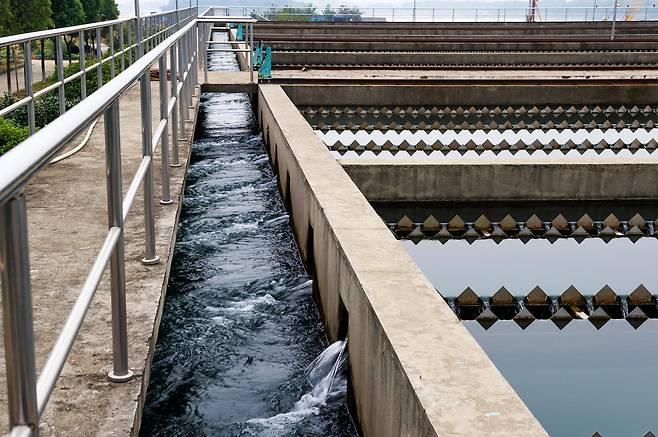
Pusan National University said on Monday its researchers have developed a water-treatment method that removes microscopic plastic pollution in minutes by drawing the particles together with a magnetic field, offering a potential route to cleaner drinking water and wastewater systems.
The team said its process eliminated more than 95 percent of micro- and nanoplastics within 10 minutes by using plate-shaped iron-oxide magnetic nanoparticles.
The approach targets plastic fragments too small to be captured by conventional filtration and sedimentation, which allows them to spread through aquatic ecosystems and potentially accumulate in the human body.
Led by Chung Sung‑wook, the researchers replaced commonly used spherical magnetic particles with thin, plate-like ones.
The geometry increases the contact area with plastic fragments and strengthens interactions between the materials.
When an external magnetic field is applied, the particles cluster together, trapping additional plastics in a phenomenon the team describes as dynamic confinement.
The scientists also chemically modified the particle surfaces to improve bonding with plastics and designed the system so the particles can be recovered magnetically and reused, lowering operating costs and environmental impact.
The study showed the full pathway from nanoparticle design and scale-up synthesis to the removal mechanism itself, positioning the technology for broader use in municipal water and wastewater facilities, environmental cleanup, and industrial effluent treatment.
“Nanoplastics measuring tens to hundreds of nanometers have emerged as a new environmental threat, but filter-based methods struggle to remove them,” Jung said. “This offers a way to clear ultra-fine contaminants quickly and at high efficiency.”
The research was supported by Korea’s National Research Foundation and the Ministry of Trade, Industry and Energy, and published online in the Journal of Environmental Management on Dec. 24.
Copyright © 코리아헤럴드. 무단전재 및 재배포 금지.