In Nara, Seoul and Tokyo gauge room for cooperation on trade and history
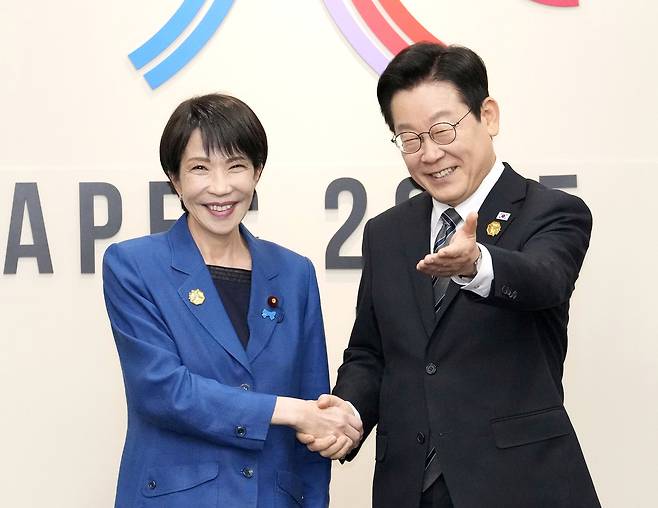
The central question in the Seoul-Tokyo summit set for Tuesday in Nara, in Japan's Kansai region, will be whether the two leaders can clear a basic hurdle by carving out a workable opening for substantive talks on expanding trade ties and managing long-fraught historical issues.
That proposition will unfold on two tracks: Seoul's bid to join a Japan-led regional free-trade pact as a pathway to future-oriented economic cooperation and a parallel effort to approach deep-seated historical disputes.
What gives added weight to the summit between President Lee Jae Myung and Prime Minister Sanae Takaichi is the regional geometry. In addition to the shared challenge of escalating North Korean threats, South Korea faces rising China-Japan tensions over Taiwan, now spilling into arenas well beyond security, including supply chains.
The Lee-Takaichi meeting also comes just after Lee's summit with Chinese President Xi Jinping on Jan. 5 in Beijing.
The strains have sharpened since Takaichi's remarks in November suggesting Japan could invoke collective self-defense if China used force against Taiwan. The island is self-governed but claimed by China, which has never renounced the use of force to "reunify" it with the mainland.
"President Xi Jinping seems to have invested significant effort in pulling South Korea closer to China. Prime Minister Takaichi, for her part, is also likely to press strongly to bring Korea onto Japan's side amid the front lines of China-Japan tensions," Lee Won-deog, a professor of Japanese studies at Kookmin University, told The Korea Herald.
"That makes it all the more important for South Korea to hold its ground and strike a careful balance, conducting dialogue through a pragmatic diplomatic approach."
Lee cautioned that Seoul has limited room for maneuver in mediating escalating friction between Beijing and Tokyo, but it can still shape the atmosphere at the margins.
"In reality, there is not all that much Korea can do. That said, at a broader level, the China-Japan-Korea trilateral summit — which was meant to be held on a regular basis — is currently suspended," Lee noted. "Proposing the resumption of the trilateral leaders' meeting as a way to ease tensions could be a neutral and constructive option."
However, the professor said the president's trip to Japan "can itself serve as a form of balancing — and should not be read in negative terms."
"In that sense, South Korea's strategic value has risen considerably," Lee said. "If Seoul manages that balance well, it will have ample opportunities to maximize its national interests."
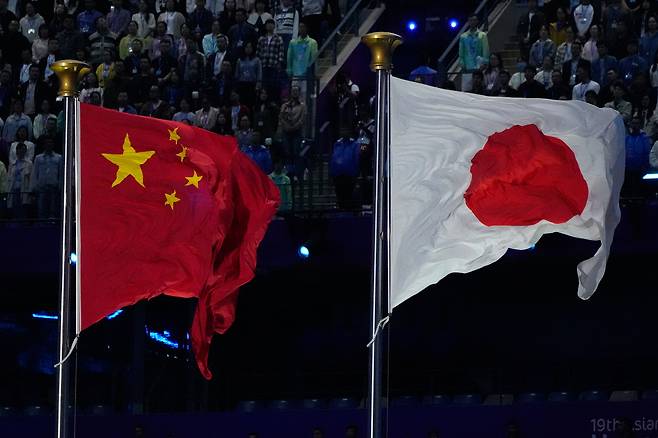
Lee Ki-tae, director of the Center for Diplomatic Strategy at the Sejong Institute, said "Korea should maintain what we call strategic ambiguity in the context of China-Japan tensions."
"Moving in a way that appears to take one side or the other does not serve Korea's national interests," the director told The Korea Herald.
Rather than addressing specific flashpoints such as Taiwan, Lee Ki-tae explained, Korea is more likely to confine its message to general principles, including support for "peace and stability on the Korean Peninsula and in East Asia."
However, some observers note that with visits to China and Japan coming in quick succession, the diplomacy will need to be accompanied by language that matches the significance of those moves.
"If Korea is meeting both sides, it does raise the question of whether we should play some role — even if it falls short of mediation," said Choi Eun-mi, a research fellow at the Asan Institute for Policy Studies.
"Taiwan is often framed through the lens of China-Japan rivalry. There's concern that any statement could look like we're taking sides, but the Taiwan Strait also carries important implications for Korea, so it matters that Korea articulates a position of its own."
The confrontation is now bleeding into economic security, adding pressure on Seoul.
China's Commerce Ministry said on Jan. 6 it would bar exports of certain dual-use items to Japanese military end users and for uses deemed to bolster Japan's military capabilities. Japanese media have reported tighter Chinese shipments of rare earths and magnets to Japanese firms — a fresh concern for industries reliant on those inputs.
"Even if the dual-use measures weren't aimed at us, we can't be unaffected — there could be direct or indirect impacts," Choi said. "From that perspective, there may be room for further discussion between the two sides on supply chains and on facilitating seamless free trade."
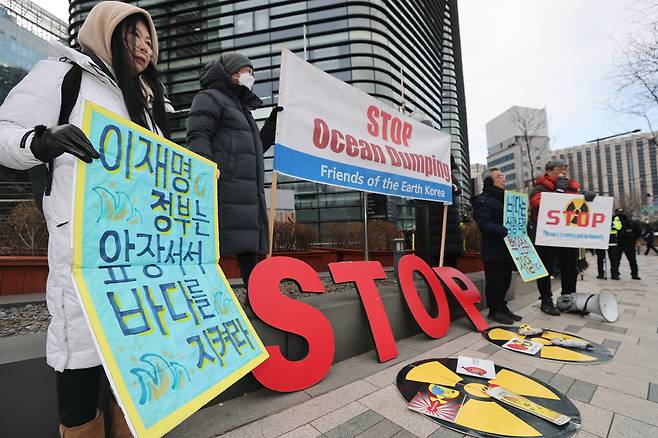
Another key test will be whether the summit can generate momentum for Seoul’s bid to join the Comprehensive and Progressive Agreement for Trans-Pacific Partnership, a major free-trade pact led by Japan that includes 12 Asia-Pacific economies.
Lee Won-deog called CPTPP accession the most “important practical agenda” from Seoul’s standpoint.
"In substantive terms, this is an issue in which Korea has a great deal at stake. That's why it is very important for Korea to create an environment in which it can join the CPTPP smoothly," he said. "Put simply, it would amount to an expansion of Korea's economic territory. It would also be a crucial step toward significantly accelerating economic cooperation with Japan. That is why this is the central theme likely to be discussed at the summit."
Still, expectations are that the summit is unlikely to produce any definitive outcomes.
"On economic cooperation — particularly Korea's accession to the CPTPP — it will probably be difficult to reach any major agreement at this stage. Japan is likely to raise conditions, such as calling for the lifting of Korea's ban on Fukushima seafood imports," director Lee Ki-tae said. "My expectation is that the two sides will go no further than agreeing, in broad terms, to continue consultations going forward."
On historical disputes stemming from Japan's occupation of the Korean Peninsula from 1910 to 1945, experts expect both leaders to avoid the most politically explosive issues, while exploring whether less contentious matters can be addressed through a humanitarian framework.
Cheong Wa Dae announced Friday the Lee-Takaichi summit is expected to pave the way for "strengthening cooperation at the humanitarian level on historical issues."
"The most notable feature this time is the focus on humanitarian approaches to historical issues," said Lee Ki-tae.
"Rather than trying to resolve history as a whole, the discussion is about addressing it at a humanitarian level — such as the Chosei coal mine case and, possibly, the sinking of the Ukishima Maru."
The Chosei coal mine disaster occurred on Feb. 3, 1942, when an undersea tunnel off Ube in Yamaguchi prefecture was flooded, killing 183 workers — including 136 forcibly mobilized Koreans. Japan never recovered the victims' remains nor did it conduct a full investigation.
Separately, Tokyo has handed over a long-awaited list of Koreans believed to have died aboard the Ukishima Maru, a Japanese ship that exploded in 1945 while repatriating Koreans after the end of colonial rule. South Korea is verifying the identities of passengers and victims to confirm forced-labor cases.
"Cooperation between the two countries on these issues in humanitarian terms is likely to emerge as the most significant and tangible outcome," Lee underscored.
Research fellow Choi noted that the Chosei coal mine issue has not been widely addressed in the past, even though there has been awareness of the problem on both sides, adding that Japan is unlikely to strongly oppose discussing it.
"Above all, the current atmosphere in Korea-Japan relations is relatively positive," Choi said. "And with Prime Minister Takaichi reportedly considering dissolving the lower house, there is also a need — from Japan's perspective, and for Prime Minister Takaichi personally — to produce visible diplomatic outcomes through a series of summits."
Japanese media have reported that Takaichi is weighing an early dissolution of the House of Representatives after the Diet opens on Jan. 23, making high-profile diplomatic events — including Lee's visit to Nara — potential political assets ahead of a snap election.
"However, from Japan's point of view, the outcome may be limited to agreements on measures such as investigations or the return of remains," Choi added.
Yang Kee-ho, a professor of Japanese studies at Sungkonghoe University, expects other sensitive history disputes to be handled "low-key" again this time, as they so far have been under the Lee administration.
Yang pointed to a clear pattern in Tokyo's approach: While Japan continues to hold that claims and property issues were "completely and finally" settled under a 1965 treaty, it has also funded separate measures on issues such as Korean atomic bomb victims and Koreans left on the island of Sakhalin under the rubric of "humanitarian support" or "welfare."
In Yang's view, the Chosei coal mine issue fits that same logic and should be understood as distinct from the question of Japan's historical recognition.
"The premise has not changed at all — that the 1910 treaty was legal and that Japan's rule through 1945 was lawful," Yang said. "The Chosei coal mine issue and the question of historical recognition are entirely separate. That's how it should be understood."
Choi also said that starting with the Chosei coal mine issue could serve as a point of entry for addressing unresolved historical issues between Korea and Japan that have not been discussed since the Lee Jae Myung administration took office.
"I think the Lee administration has been avoiding historical issues," Choi said. "However, if the Chosei coal mine becomes a starting point and the two sides take things forward step by step, that is something we could cautiously hope for."
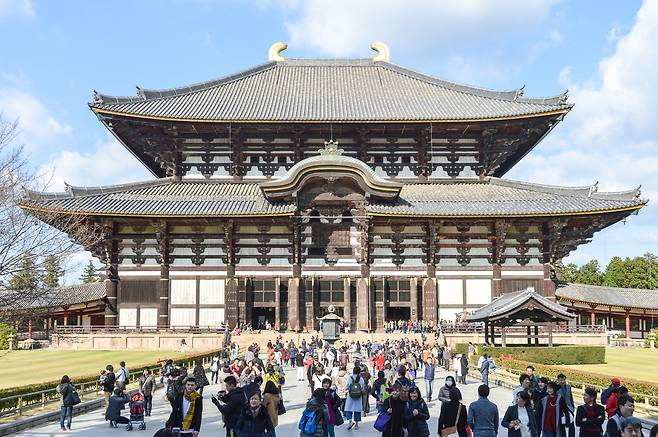
Beyond the substance of trade and history, the summit's setting itself carries a message about where the relationship is headed.
Professor Lee Won-deog said the choice of venue carries a third layer of meaning: history embedded in place.
Nara is dotted with landmarks such as Horyu-ji — which the two leaders are set to visit on Wednesday — and Todai-ji, two of Japan's most venerated ancient Buddhist temple complexes.
Together, they bear the imprint of cultural currents that once flowed from the Korean Peninsula into early Japan. Shaped by Buddhism, craftsmanship and state-building traditions carried over from Baekje, an ancient Korean kingdom, Nara is often seen as a shared cultural wellspring.
"When people think of Korea-Japan relations, they tend to jump straight to the Imjin War or the colonial period," Lee said. "But if you go further back, the Korean Peninsula was, in cultural terms, the more advanced society, and it exerted considerable influence on Japan. Nara is where that history becomes tangible."
The venue's symbolism also speaks to a broader shift in Korea-Japan ties.
Observers cite the Busan summit between Lee and then Prime Minister Ishiba Shigeru in September 2025 as a turning point. It is widely seen as an effort to broaden cooperation beyond high politics — security and history — to shared, everyday challenges such as demographic decline, regional hollowing-out and social sustainability.
Holding the summit in Nara reinforces that direction. By meeting outside the capital, the two governments are signaling a growing emphasis on people-to-people exchanges and bread-and-butter cooperation that affects daily life.
"Holding the summit in Nara itself sends a powerful message about placing greater emphasis on regional communities," Yang said. "I see it very positively that Korea and Japan, as advanced countries, are seeking to respond jointly — on an equal footing — to the structural challenges they share."
Copyright © 코리아헤럴드. 무단전재 및 재배포 금지.