Young Koreans expect less pay as entry-level jobs vanish
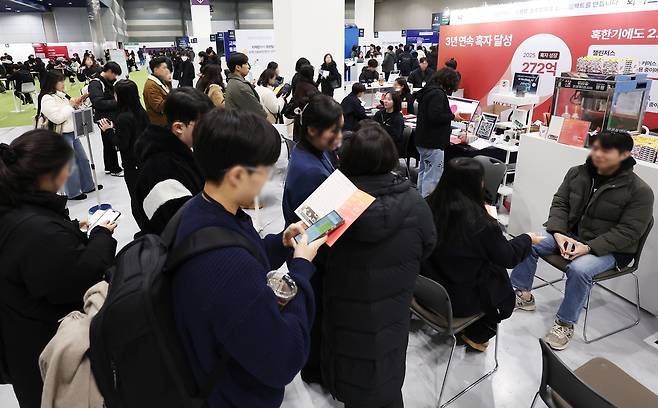
Hoped-for starting wages among young job seekers in Korea fell by about 10 percent from a year earlier as the entry-level job market continued to freeze, a survey showed.
Analysts attribute the decline to a growing sense of urgency among applicants to accumulate work experience as early as possible.
Rapid adoption of artificial intelligence is reducing demand for entry-level workers while increasing corporate preference for candidates with some prior experience.
A survey conducted by Korean job platform Catch found earlier this month that young applicants, on average, hoped to earn 43 million won ($29,300) in their first year on the job, down 4 million won from the previous year.
The annual survey covered 1,204 job seekers aged 31 or younger.
Catch said the drop in wage expectations reflects a shift in job-hunting strategies.
Although more than half of respondents said their ultimate goal is to work for a major corporation, 64 percent said they plan to join small and medium-sized enterprises first to gain experience rather than wait for openings at large conglomerates.
Small and medium-sized firms have traditionally been viewed as less attractive due to lower pay and concerns that starting salaries could negatively affect future wage negotiations when changing jobs.
However, the survey found that employers’ growing preference for experienced candidates is pushing job seekers toward career paths they previously avoided.
“Job seekers still aspire to work for high-paying industry giants, but their wage expectations are becoming more realistic,” a Catch official said. “Instead of viewing their first workplace as a lifelong commitment, more young people are trying to start their careers wherever opportunities are available.”
Diminishing expectations of entering high-paying companies also stem from a sharp reduction in entry-level hiring, a trend expected to become more structural as artificial intelligence adoption accelerates.
Another Catch survey conducted last year found that job postings for regular entry-level positions at major companies totaled 2,145 cases between January and November 2025, marking a 43 percent drop from a year earlier.
A major factor behind the decline is the growing use of AI in low-skilled positions that have traditionally served as entry points for young people.
While hiring fell across most industries, the decline was especially steep in information technology and telecommunications, sectors at the forefront of AI adoption. Entry-level recruitment in these industries plunged 67 percent year over year.
To boost their chances of joining major firms later, many job seekers are considering reapplying for entry-level positions after gaining experience at smaller companies.
This approach, known in Korea as the "secondhand rookie" strategy, allows candidates to compete for entry-level roles while already possessing practical skills, making them more attractive to employers.
Catch’s survey last year showed that 70 percent of respondents had considered using this strategy. As companies increasingly favor entry-level hires who require less training, the proportion of secondhand rookies is expected to continue rising.
Data from the Federation of Korean Industries shows that secondhand rookies accounted for 28.1 percent of new hires at the top 500 companies by revenue in 2024, marking the second consecutive year of growth.
Copyright © 코리아헤럴드. 무단전재 및 재배포 금지.