Hyundai’s Ioniq 5 robotaxi is finally ready to hit the streets
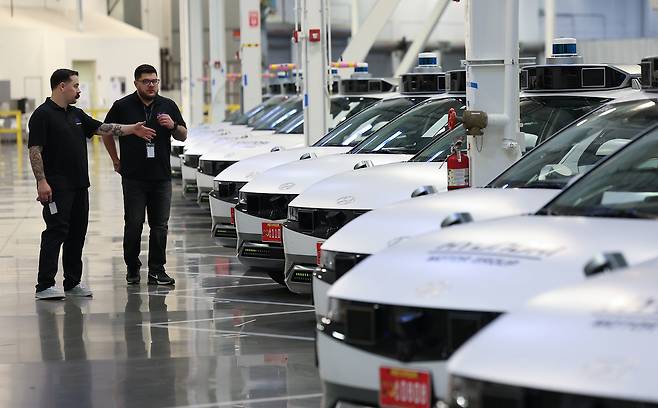
LAS VEGAS — Hyundai Motor Group is nearing the commercial rollout of its long-awaited autonomous driving ambitions, with the Ioniq 5 robotaxi — developed with its US-based self-driving joint venture Motional — set to begin fully driverless taxi service in Las Vegas later this year.
Motional was established in 2020 by Hyundai Motor and US autonomous driving startup Aptiv, initially as a 50-50 joint venture. Hyundai has since increased its stake through additional capital injections and now owns roughly 86 percent of the company.
At a press briefing Thursday at Motional’s technical center in Las Vegas, CEO Laura Major said the company plans to launch full-scale Level 4 driverless services in the city by the end of 2026, using Las Vegas’ complex road environment to validate its technology, before expanding operations to Pittsburgh.
Competition in the US robotaxi market has intensified following CES 2026, as new entrants challenge incumbents such as Tesla and Waymo. The race heated up further after Nvidia announced plans to launch a robotaxi service with Mercedes-Benz in the first quarter.
Against this backdrop, Motional is positioning “safety” and “cost efficiency” as its core competitive advantages. Major highlighted the company’s operational track record, noting that Motional has logged more than 130,000 public rides through Lyft and Uber, and accumulated over two million autonomous miles without a single at-fault incident.
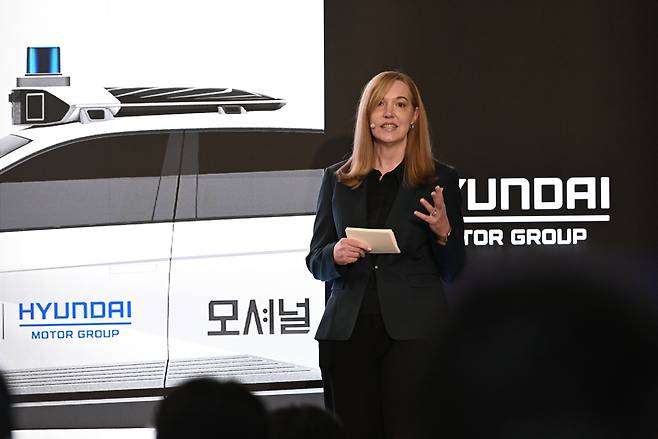
Since pausing commercial operations in 2024, Motional has rebuilt its driving system around a Large Driving Model -- a multimodal, AI-first autonomy stack positioned between Waymo’s traditional rule-based architecture and the End-to-End (E2E) learning approach pursued by Tesla. The move was a “hard decision,” Major said, but it allowed Motional to move beyond expensive, purely modular systems while preserving their safety and at the same time advancing toward the scalability and cost efficiency associated with E2E learning.
Unlike Tesla’s camera-only approach, Motional’s Ioniq 5 robotaxi uses a multimodal sensor suite combining 13 cameras, 11 radars and five LiDARs to provide 360-degree sensing capability in dense urban environments. And compared with Waymo, which has historically installed autonomy systems onto vehicles after production, Motional integrates its autonomy hardware directly on Hyundai’s Singapore factory line to improve scalability and cost efficiency.
According to Major, while an E2E system can deliver a “90 percent solution” for routine driving, it raises safety concerns in edge cases such as unpredictable pedestrian or vehicle behavior. To address this, Motional developed a Pedestrian Yield Intent tool that assesses whether pedestrians standing at curbs are likely to cross the road and whether the vehicle should stop, with about 95 percent of such situations now handled autonomously.
Addressing cost-efficiency concerns compared with Tesla, Major said multimodal sensors such as LiDAR remain essential for safety but are becoming more affordable, adding that Motional is optimizing next-generation sensor architectures -- including camera-radar integration -- to reduce costs while meeting safety standards. She also said the company is pursuing partnerships to offset the high computing costs required for Large Driving Models.
Kim Heung-soo, global strategy officer at Hyundai Motor Group, added that Motional is leveraging the manufacturing and supply-chain strengths of its parent companies, Hyundai and Aptiv, to cut costs early in vehicle development and optimize its robotaxi business model ahead of commercialization later this year.
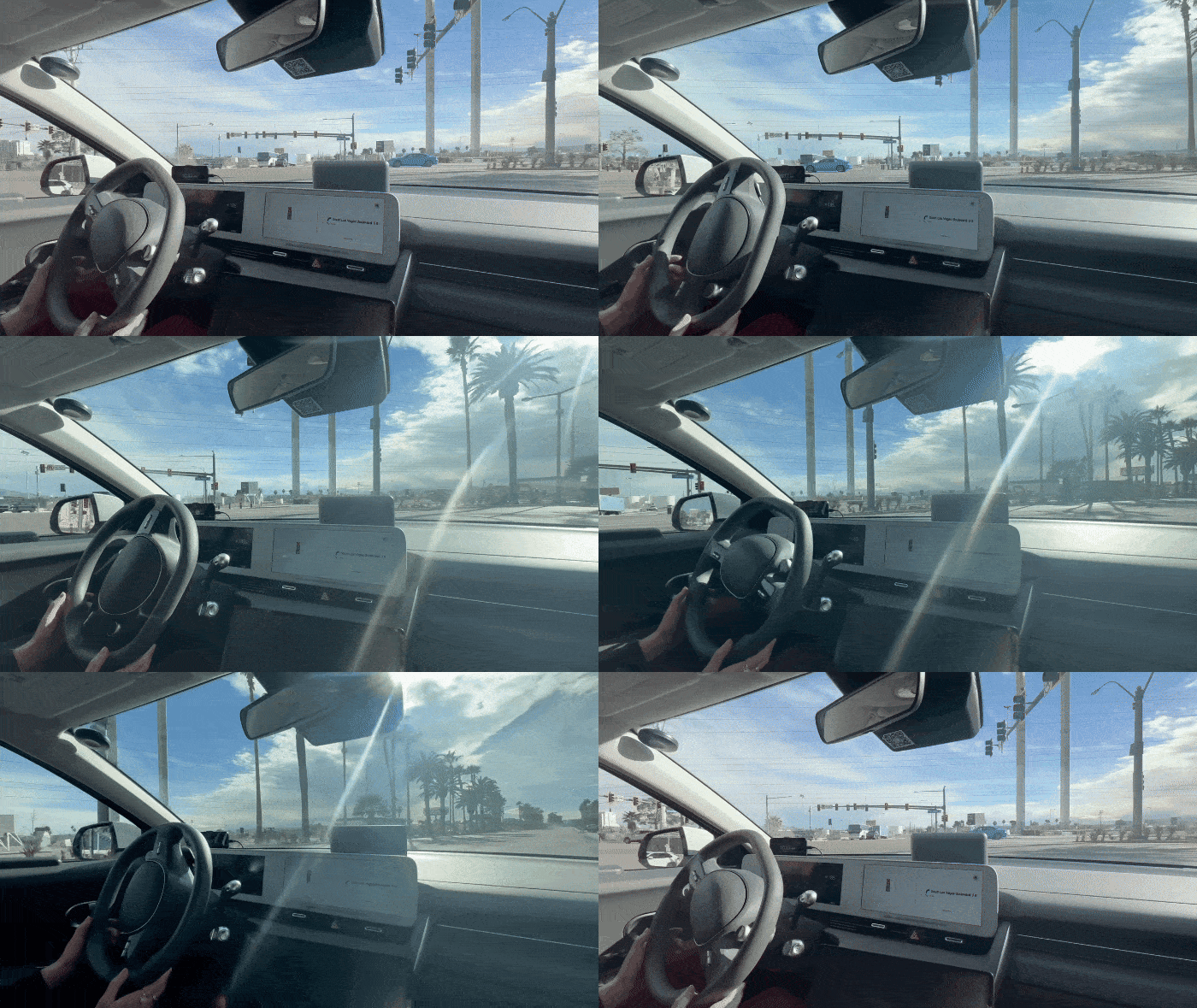
After the press briefing, Motional held a media test drive of its Ioniq 5 robotaxi, which remains in a development phase and may still require human intervention. The round trip covered 14 kilometers in downtown Las Vegas.
In comparison to human-driven electric taxis, which often exhibit abrupt acceleration and braking, the Ioniq 5 robotaxi provided noticeably smoother throttle and brake control. It came to precise, stable stops at stop signs and reduced speed over speed bumps more gently than a typical human driver, highlighting an effort to minimize ride discomfort in everyday urban driving.
The system also demonstrated strong situational awareness, slowing when a left-turn signal suddenly changed from yellow to red, even while changing lanes.
However, on uneven road surfaces near the Mandalay Bay Convention Center, the robotaxi drove noticeably more slowly than surrounding traffic, suggesting a conservative, safety-first approach that may affect ride times.
One notable challenge arose in a construction zone, where the car struggled to merge into a congested single lane as other vehicles refused to yield, requiring the driver’s manual intervention. The turn signal also repeatedly went on and off, highlighting an area for further system refinement.
Copyright © 코리아헤럴드. 무단전재 및 재배포 금지.