Buying time: How outsourcing housework became a survival strategy for young Koreans
전체 맥락을 이해하기 위해서는 본문 보기를 권장합니다.
"This shift has fueled the rapid growth of home-service platforms offering on-demand domestic labor," said Choi Jong-ryeol, a sociology professor at Keimyung University. "For single-person households responsible for all chores alone, these services have become reliable allies."
"Small homes become messy very quickly, and an unclean space can directly affect mood and quality of life," the expert said. "Outsourcing housework may reflect a desire to regain control over at least one part of life and most of all, take care of themselves."
이 글자크기로 변경됩니다.
(예시) 가장 빠른 뉴스가 있고 다양한 정보, 쌍방향 소통이 숨쉬는 다음뉴스를 만나보세요. 다음뉴스는 국내외 주요이슈와 실시간 속보, 문화생활 및 다양한 분야의 뉴스를 입체적으로 전달하고 있습니다.
For Jeong, a 30-year-old office worker living alone in Seoul’s Mapo-gu, cleaning used to be something squeezed in between work and exhaustion. Since 2023, she has chosen a different approach.
Once or twice a month, she opens an app, selects a date and time, and a cleaner arrives to scrub every corner of her small studio measuring under 50 square meters. The three-hour session costs her 50,000 won ($34).
“There’s no real difference between me cleaning and someone else doing it,” Jeong said. “But the time I save I can spend watching a movie or exercising. That makes a big difference.”
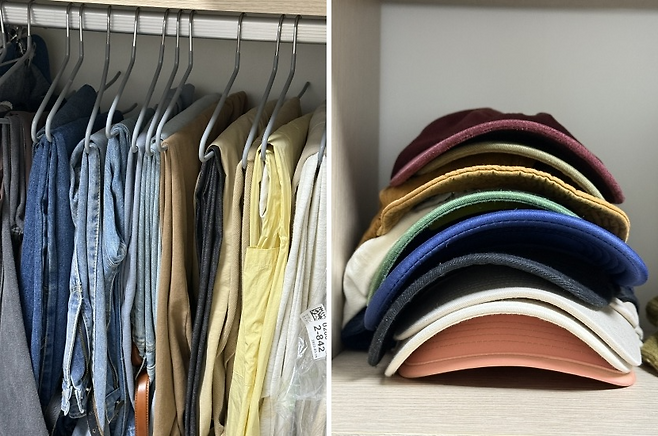

What was once a luxury largely reserved for the wealthy — having someone else clean one's home or run errands — has quietly entered the everyday lives of young Koreans. For many in their 20s and 30s, especially those living alone or managing the many demands of work and life, outsourcing housework has become a practical way to “buy time.”
From apartment cleaning and refrigerator organization to laundry, folding towels, trash disposal and even dog walking, domestic labor is increasingly being ordered in hourly increments through smartphone apps.
With single-person households and dual-income families continuing to grow, the outsourcing of housework is rapidly becoming ordinary.
According to government data released last month, the number of one-person households reached 8.045 million in 2023, up 6.3 percent from the previous year. Their share of all households has risen steadily — from just over 30 percent in 2019 to more than 36 percent in 2023.
"This shift has fueled the rapid growth of home-service platforms offering on-demand domestic labor," said Choi Jong-ryeol, a sociology professor at Keimyung University. "For single-person households responsible for all chores alone, these services have become reliable allies."
The stereotype that young people use these services out of laziness, these youths argue, misses the point.
"It's about managing time efficiently," Jeong said. "Usually, it takes hours, sometimes a whole day, to clean up this small place. Rather than spending my precious day off on cleaning, I use that time to build other assets, such as studying investments or researching properties."
"That single day of time can be worth much more," she added.
Surveys show that users of domestic services most often cite time savings, a desire to focus on personal development and the inefficiency of doing housework in small living spaces as their main reasons for outsourcing.
Jeong is not alone in this trend. The culture of outsourcing is impacting those in their 20s, who are "always running out of time."
In a small studio apartment in Busan, a 24-year-old university student surnamed Kim recently began using housekeeping services.
"Between classes, teaching part-time, preparing for exams and job applications, housework was the first thing to fall off the list," he said.
He is not alone. Around university districts, it is now common to see large trash bags hanging from doorknobs, left by residents for waste-sorting services that collect and dispose of garbage on their behalf.
LaundryGo, a laundry service that launched in 2019, saw its annual revenue jump over 30 times, from 1.6 billion won to nearly 50 billion won, within four years, according to company data.
Young consumers appear to be driving much of that growth. One service found that people in their 20s account for nearly 40 percent of its users, the second-highest share among all age groups.
In a recent survey by Trendmonitor, over 64 percent of respondents in their 20s said they were "interested in services that save time," the highest proportion of any age group.
Experts say the trend is unlikely to slow.
“When you factor in the physical fatigue and time required for housework, many people conclude that outsourcing offers greater value than the cost,” said Seo Yong-gu, a business professor at Sookmyung Women’s University.
Sociologists describe this condition as “time poverty” — a state in which individuals are unable to complete all required tasks within a day without cutting into sleep or leisure. According to a regional research institute, young job seekers spend an average of 14 hours a day preparing for employment.
Once eight hours of sleep are deducted, only about two hours remain each day for everything else: meals, commuting, housework, self-care and rest.
Taking care of oneself
Postponing domestic labor on a busy day often comes with an emotional cost.
As clutter piles up and living spaces deteriorate, many young people report feelings of guilt, self-blame and depression — a sense that they are failing at even the basics of adult life.
“At first, I thought, ‘Am I really incapable of managing something as simple as housework?’” the student recalled. “That thought alone was exhausting.”
A clinical psychology expert noted that in an uncertain job market, the areas young people can control are limited — and one of the few tangible areas they can control is their living environment.
“Small homes become messy very quickly, and an unclean space can directly affect mood and quality of life,” the expert said. “Outsourcing housework may reflect a desire to regain control over at least one part of life and most of all, take care of themselves.”
“Once my place was clean, it finally felt like somewhere I could rest,” the student said. “The difference in how I felt after coming home was immediate.”
In a society increasingly described in terms such as “time efficiency” and “value per minute,” time has overtaken money as the most precious resource, experts note. That pressure weighs especially heavily on young adults, who face expectations to graduate quickly, secure stable employment, achieve independence and demonstrate constant progress.
High grades, rapid employment and self-sufficiency are no longer milestones achieved in sequence, but demands imposed simultaneously. With only 24 hours in a day, something has to give.
For Korea’s young adults, outsourcing housework is not a sign of indulgence, they say. It is a strategy — a way to preserve time, mental health and a sense of control in a society that rarely slows down.
Copyright © 코리아헤럴드. 무단전재 및 재배포 금지.