LG slips into first quarterly loss since 2016 despite record annual sales
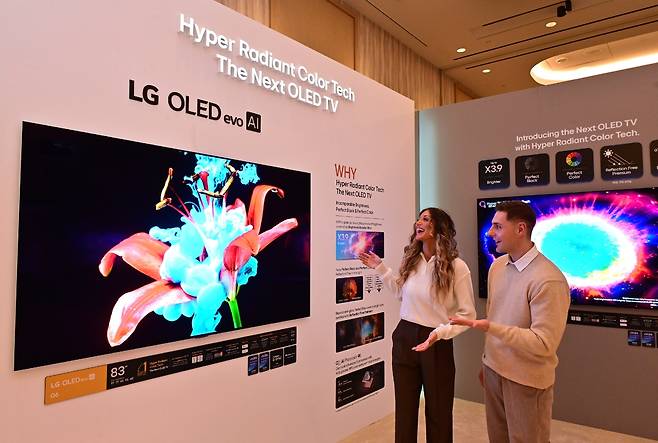
LG Electronics reported record-high revenue for 2025 yet slipped into its first quarterly operating loss in nine years, as price competition in the premium TV market undercut profitability in its display unit.
The company booked 89.2 trillion won ($61.3 billion) in consolidated revenue for the year, up 1.7 percent from 2024, according to preliminary earnings released Friday. Operating profit fell 27.5 percent year-on-year to 2.48 trillion won, while fourth-quarter results showed an operating loss of 109.4 billion won, its first since the fourth quarter of 2016.
The loss was driven by a combination of increased marketing spend, delayed recovery in TV demand and a one-time charge from a voluntary retirement program, the company explained.
At the center of the decline was the company’s OLED-focused display business, which continued to lose ground against Chinese competitors.
According to second-quarter 2025 data from Counterpoint Research, TCL and Hisense have overtaken LG in global unit shipments and are challenging Samsung for the No. 2 spot in premium TVs. Both firms have expanded aggressively with Mini-LED models priced 30 to 40 percent below organic light-emitting diodes, capturing the mass-premium segment and compressing LG’s margins in its core product category.
LG acknowledged in the latest preliminary earnings release that it raised marketing spending in response to heightened competition, particularly in the second half of the year, which further pressured margins. The company expects its display product-based businesses, including TVs and monitors, to post a full-year operating loss.
LG is repositioning itself accordingly. The company said nearly 50 percent of its 2025 revenue now comes from what it classifies as “qualitative growth” areas. These include business-to-business segments such as vehicle electronics and heating, ventilation and air conditioning systems, platform-based services such as webOS and subscriptions and direct-to-consumer digital sales. These units now account for over 90 percent of operating profit, compared to just 21 percent in 2021.
To support that transition, LG secured 1.86 trillion won in cash through the initial public offering of its Indian subsidiary in late 2025. The unit’s valuation temporarily exceeded the parent company’s market cap in Seoul. LG said the proceeds will be used for expansion in growth verticals including AI-defined vehicles and liquid-cooling solutions for artificial intelligence data centers, which are emerging bottlenecks in global compute infrastructure.
CEO Lyu Jae-cheol, appointed in November last year, is emphasizing execution speed and realignment of the company’s portfolio around scalable enterprise and platform assets. “We have to move beyond legacy momentum and confront the current competitive environment with sharper focus and faster decisions,” Lyu said at a recent CES 2026 press conference in Las Vegas.
One of LG’s highest-profile new initiatives is CLOiD, an AI-powered home robot unveiled at the annual tech trade show. The robot is designed to automate household tasks and connect with LG’s ecosystem of appliances using internally developed actuators and AI software. Field trials are set to begin in 2027, but LG has acknowledged the project will remain in investment phase for several years.
Final audited results, including net income and business unit performance, will be released at the end of January.
Copyright © 코리아헤럴드. 무단전재 및 재배포 금지.