Korea’s live shopping market grows 2.4-fold in three years
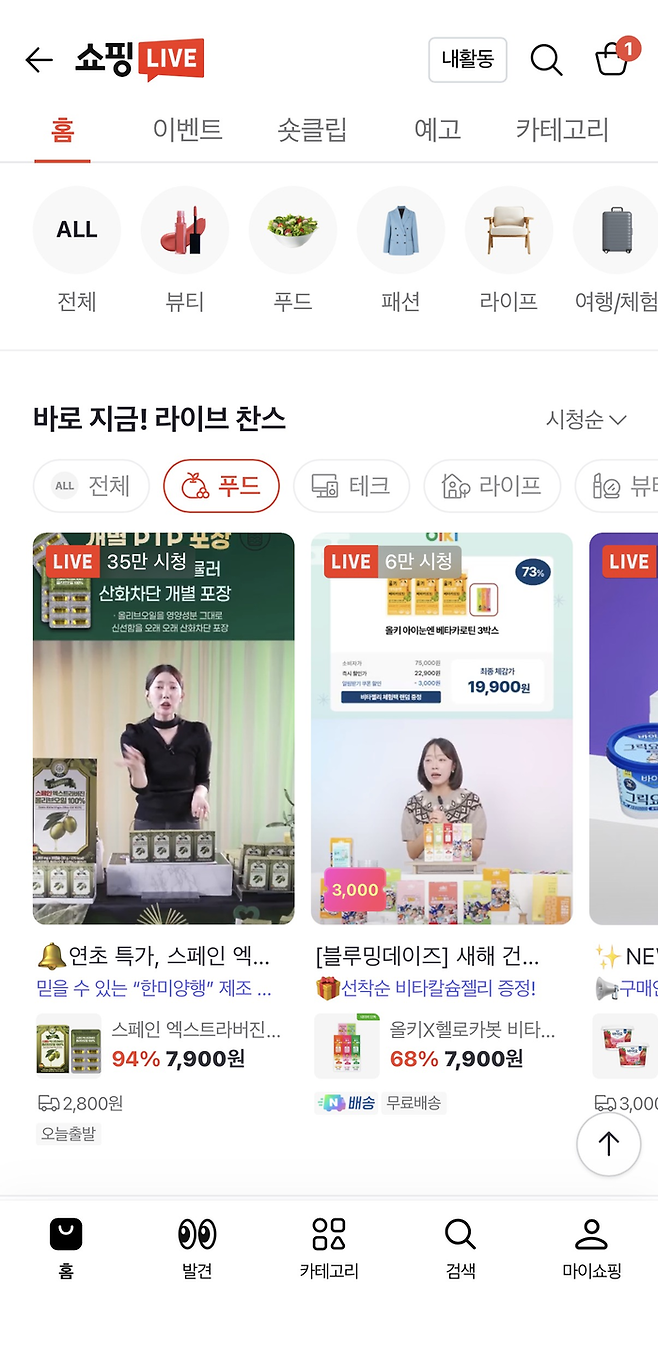
According to live stream commerce data platform Labangba Data Lab, Korea’s live commerce market stood at 4.7 trillion won in 2025, up 35 percent from the previous year.
The market reached 2 trillion won in 2022, 3 trillion won in 2023, and 3.5 trillion won in 2024, maintaining a rapid growth trajectory.
Live commerce involves selling products through real-time online broadcasts.
Around 2020, when the market took off, the focus was on the volume of broadcasts and participating brands. Analysts now note a shift toward quality, prioritizing sales efficiency and actual purchases, with companies improving content and targeting consumers more precisely.
Last year, major platforms ran 178,000 broadcasts, down 14.9 percent from 2024, while total views fell 15.2 percent to 4.34 billion. Average sales per broadcast, however, soared 61.1 percent to 9.98 million won.
Platforms are also prioritizing efficiency.
Since its July 2020 launch, Naver Corp.’s Shopping Live has surpassed 4 trillion won in cumulative transactions, with last year’s volume up 40 percent compared with the previous year.
“We are working to make live shopping part of everyday life by advancing artificial intelligence technology and improving operational efficiency,” said a Naver official.
Recently, the adoption of AI-based production environments has further fueled the expansion of the live commerce market.
Naver Shopping Live has introduced a feature that automatically generates broadcast scripts by analyzing product characteristics and customer responses.
AI also automatically selects key scenes to create highlight videos and even generates screen backgrounds, enabling immersive broadcasts without separate studio sets.
Last year, digital and home appliances accounted for the largest share of live shopping sales at 40 percent, followed by food at 12.4 percent, health supplements at 8.8 percent, fashion apparel at 8.6 percent, cosmetics and beauty at 7.6 percent, and maternity and baby products at 7.2 percent.
Food has become a core category due to high sales volume despite low unit prices. Health supplements accounted for 45.3 percent of food sales, followed by beverages (16.7 percent), weight-loss foods (8.5 percent), frozen/convenience foods (7.9 percent), and livestock products (6.3 percent).
Retail and food companies are increasingly using live shopping as a key marketing tool.
Its versatility supports purpose-driven campaigns, such as commemorative events or new product tests. Urgency-driven tactics—like surprise discounts or limited-quantity offers during broadcasts—help boost purchase conversion rates.
Last month, Ediya marked its 25th anniversary with up to 50 percent discounts on five popular teas via Naver Shopping Live.
“We planned the broadcast to expand customer touchpoints on our anniversary and directly showcase our tea products’ competitiveness,” a company official said.
Namyang Dairy Products Co. also ran a four-hour limited-time promotion last month on Naver Shopping Live, offering protein beverages at a 48 percent discount.
Copyright © 매일경제 & mk.co.kr. 무단 전재, 재배포 및 AI학습 이용 금지
- “어려운 분들에게 전해주세요”…우체통에 성금 넣고 간 ‘기부천사’ - 매일경제
- “지구 절반 갖겠단 소리인가”…미국 야욕에 이웃 캐나다 초긴장 - 매일경제
- 이재명표 '용산공원 아파트' 나올까…도심 최후 가용지 총동원 - 매일경제
- [단독] 이러다 재개발 또 늦어지는 거 아니야?…순항하던 성수4지구 ‘시끌’, 무슨 일이 - 매일
- [속보] ‘내란 우두머리’ 윤석열 전 대통령 결심공판 시작 - 매일경제
- “코스피 불장 예감했나”…외국인 한 달만에 ‘바이 코리아’ 전환, 매수 규모보니 - 매일경제
- “삼전닉스가 국룰이라면, 화끈하게 2배로”…홍콩으로 달려간 개미들 - 매일경제
- 조선인 강제 끌려간 태평양 섬에서 일본군 시신 집단 매장지 발견 - 매일경제
- 트럼프 “대만 문제는 시진핑이 결정할 일…공격 않기를 희망” - 매일경제
- [공식발표] 베테랑 홍정호 떠나보낸 전북, ‘국대 수비수’ 박지수 영입…“헌신적인 수비로 전