FTC chief rejects US concerns over online platform bill
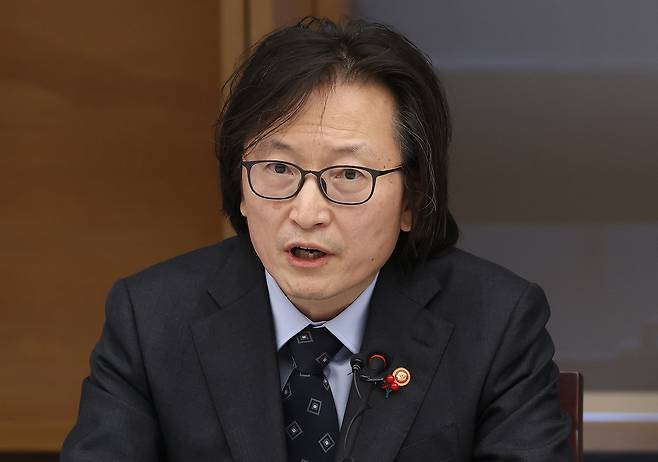
SEJONG — Fair Trade Commission Chair Ju Biung-ghi on Thursday dismissed concerns from US lawmakers that Korea’s proposed online platform legislation unfairly targets American tech firms, saying such claims do not reflect the intent of the bill.
Speaking to reporters in Sejong, Ju said the Online Platform Fairness Act, which is still under review, is not aimed at any particular country or company.
“This bill is not about targeting US companies,” he said. “It’s about dealing with unfair practices and imbalances that can arise in platform-based transactions.”
He added that the law is designed to apply across the board, without discrimination between foreign and domestic firms.
“Large domestic platforms, including Naver, would be subject to the same rules,” Ju said. “We’re not talking about designating companies in advance or regulating for the sake of regulation.”
Ju’s remarks came as public scrutiny over online retail platform Coupang has intensified in recent weeks. Although Ju did not mention Coupang by name during Thursday’s briefing, his comments appeared closely tied to the broader discussion surrounding dominant platforms.
“This isn’t about tightening the screws,” he said. “It’s about making sure the existing system actually works in today’s market.”
Ju also pointed to Korea’s sanction levels, noting that they remain modest compared to those of other advanced economies.
“In the EU, fines can go up to 30 percent of relevant turnover, and in Japan, about 15 percent,” he said. “By comparison, Korea’s penalties are still on the lower side.”
As Korean companies expand globally, he said, regulatory frameworks also need to evolve.
“Their responsibilities grow as well,” Ju added.
The FTC chief reiterated comments he made during a National Assembly hearing late last year, where he acknowledged that Coupang’s rising market share warranted closer review.
“We’re looking into whether it meets the criteria to be classified as a dominant market player,” he said. “That review is ongoing.”
If such a designation is made, the company could face stricter scrutiny under abuse-of-dominance rules.
Looking ahead, Ju said the government is seeking to rely more on economic measures, rather than criminal penalties, in enforcing competition rules.
“The president has made that direction clear,” he said. “We need to move away from heavy criminal punishment and focus more on economic tools like fines. It’s about updating the system, not making it harsher.”
Copyright © 코리아헤럴드. 무단전재 및 재배포 금지.