Taxi driver took cold medication before fatal crash
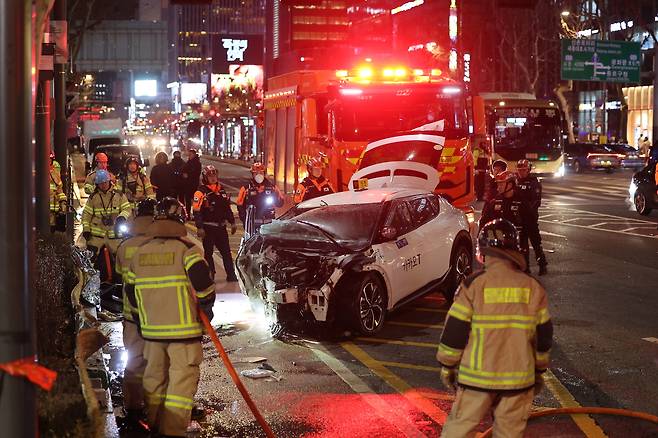
An elderly taxi driver involved in a deadly crash in central Seoul earlier this month was found to have taken an over-the-counter cold medicine before the accident, police said Thursday.
An analysis by the National Forensic Service found that the driver, a man in his 70s, had taken pills for a cold shortly before getting behind the wheel, according to the local broadcaster MBN.
The police had requested an arrest warrant for possible charge of driving under influence of drugs, but the court on Monday rejected it.
The forensics test was ordered after a rapid during screening indicated possible traces of morphine in his blood.
The test found a substance called chlorphenamine, an antihistamine used to treat allergies or cold symptoms. A common side effect is drowsiness and dizziness.
Police decided to drop the DUI charge, since they did not find any substances banned by the Narcotics Control Act.
The suspect's taxi on Jan. 2 drove into two cars and multiple pedestrians, killing a woman in her 40s and injuring 15 people including the suspect and his three passengers.
The incident occurred at around 6:05 p.m., near Jongak Station in Jongno-gu, central Seoul, and the suspect testified that he has no exact recollection of the accident.
Article 45 of the Road Traffic Act bans driving after taking narcotics, marijuana, psychotropic drugs, and others stipulated by the related decree. Taking legally sold medicines and driving is not a crime in itself, but can in theory lead to a DUI charge if there is a risk that they will be unable to do so normally.
The case has renewed attention on drug-impaired traffic accidents. In November, comedian Lee Kyung-kyu was fined 2 million won ($1,380) after driving while taking prescribed medication for panic disorder.
Under revisions to the Road Traffic Act that took effect this year, penalties for drug-impaired driving have been increased to up to five years in prison or a fine of up to 20 million won, up from a maximum of three years or 10 million won previously.
Copyright © 코리아헤럴드. 무단전재 및 재배포 금지.