Debt relief expanded as vulnerable borrowers qualify after repaying 5%
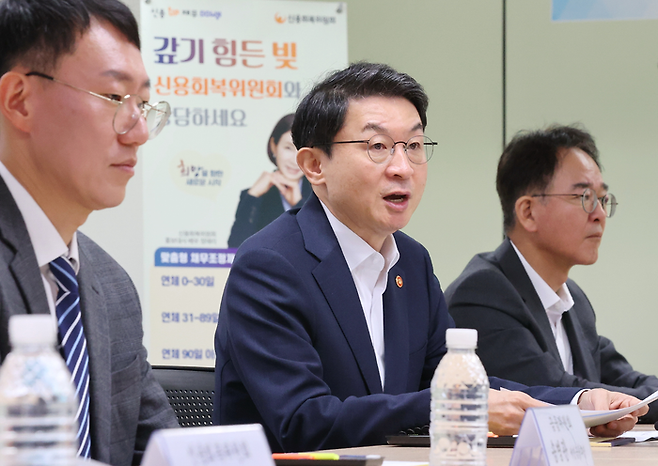
According to sources on Wednesday, the Financial Services Commission plans to finalize measures this month to revamp the liquidation-type debt adjustment program. The initiative targets financially vulnerable groups — including recipients of basic livelihood support, people with severe disabilities, seniors aged 70 and older, and minors who have inherited family debt — who have already received up to 90 percent principal reductions through court-led rehabilitation or bankruptcy procedures.
Under the scheme, borrowers who steadily repay more than half of their adjusted debt over three years are eligible to have the remaining balance completely forgiven. In practice, this means that repaying just 5 percent of the original principal qualifies a borrower for full debt relief.
Until now, eligibility was limited to debts with principals of 15 million won ($10,380) or less. Under that threshold, repaying 750,000 won allowed borrowers to have the remaining 14.25 million won written off. Financial authorities and the Credit Counseling & Recovery Service (CCRS) are now working to revise the credit recovery support agreement to raise the ceiling to 50 million won, more than tripling the current limit.
Consent is being sought from around 7,000 financial institutions that have signed the agreement. Given the financial sector’s alignment with the Lee Jae-myung administration’s inclusive finance agenda, the revision is widely expected to pass without major resistance.
If implemented, a vulnerable borrower with 50 million won in outstanding principal would need to repay just 2.5 million won (5 percent) to have the remaining 47.5 million won forgiven. The Financial Services Commission estimates that the number of beneficiaries would rise sharply, from about 5,000 people a year to roughly 20,000.
The expansion is part of President Lee’s broader vision of “life-saving finance.” However, critics warn that repeatedly expanding debt relief programs could fuel moral hazard, encouraging expectations that the government will eventually erase debts. Concerns have also been raised over growing frustration among borrowers who have continued to repay their obligations in full.
Regulators counter that borrowers with principals of up to 50 million won may have had repayment capacity in the past but are now facing hardship due to illness or other unforeseen circumstances. “The intent is to support those who have nonetheless made consistent efforts to repay their debts, even in small amounts, over three years,” an official said.
Copyright © 매일경제 & mk.co.kr. 무단 전재, 재배포 및 AI학습 이용 금지
- “솔직히 중국 따라갈 자신없다”…CES 정복한 ‘중국산’에 탄식만 - 매일경제
- 삼성전자 24만원·하이닉스 112만원...믿기 힘든 목표가 나왔다 - 매일경제
- “한달 18만원, 나만 이렇게 비싸게 내나”…실손보험, 갈아타야 하나 고민이라면 - 매일경제
- 75명 사망자 낸 베네수 마두로 체포작전, 미군 피해 이정도라니 - 매일경제
- 삼성전자 작년 4분기 영업익 20조원…대한민국 기업 사상 최대 - 매일경제
- “가격 안 보고 삽니다”…만성 ‘공급부족’에 폭등, 젠슨 황도 찜한 이 업종 - 매일경제
- “억대 연봉인데, 월급 31개월치 한번에 준다”…연초 희망퇴직 받는 ‘이 회사’ - 매일경제
- 40대 한국인 인도서 흉기 찔려 숨져…20대 현지인 여성 구속 - 매일경제
- “자녀 결혼에 1억3000만원 실화냐”…은퇴 닥칠 아빠 노후 ‘무방비’ - 매일경제
- SON 없어도 든든하네! ‘韓 최고 재능’ 양민혁 향한 ‘코번트리 출신’ 매디슨의 애정 미쳤다…