BMW cements No. 1 spot in Korea’s imported car market
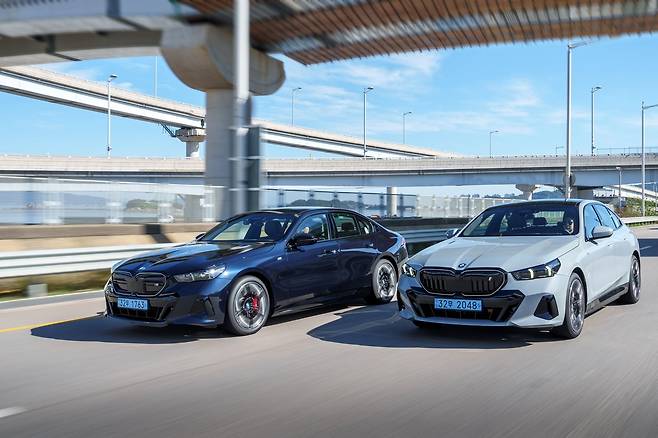
BMW topped South Korea’s imported car market in 2025, as new registrations of foreign passenger vehicles climbed past 300,000 units for the first time.
According to data released Tuesday by the Korea Automobile Importers & Distributors Association, newly registered imported passenger cars totaled 307,377 units in 2025, up 16.7 percent from 263,288 units a year earlier.
BMW led the market with 77,127 registrations, maintaining a comfortable lead over Mercedes-Benz, which posted 68,467 units. Tesla ranked third with 59,916 registrations, reflecting continued strength in electric vehicles. Volvo, Lexus, Audi and Porsche followed, while China’s BYD registered 6,107 vehicles in its first full year of broader market exposure.
BMW’s dominance was reinforced by strong demand for its core sedan lineup. The BMW 5 Series remained one of the most popular imported models, alongside Mercedes-Benz’s E-Class. Tesla’s Model Y, however, emerged as the single best-selling imported vehicle of the year, with 37,925 units registered, underscoring the growing role of EVs in the market.
By fuel type, hybrids accounted for the largest share of registrations at 56.7 percent, while electric vehicles totaled 91,253 units, or nearly 30 percent of the market. Gasoline and diesel vehicles made up 12.5 percent and 1.1 percent, respectively.
European brands continued to dominate imported car sales, accounting for nearly 70 percent of total registrations, followed by US brands at 22.3 percent, Japanese brands at 8.7 percent and Chinese brands at 2.0 percent.
Individual buyers accounted for 64.2 percent of imported car purchases, with most registrations concentrated in the Greater Seoul area, while corporate demand was strongest in Busan, Incheon and South Gyeongsang Province.
Copyright © 코리아헤럴드. 무단전재 및 재배포 금지.