Dollar stores now the go-to for cosmetics
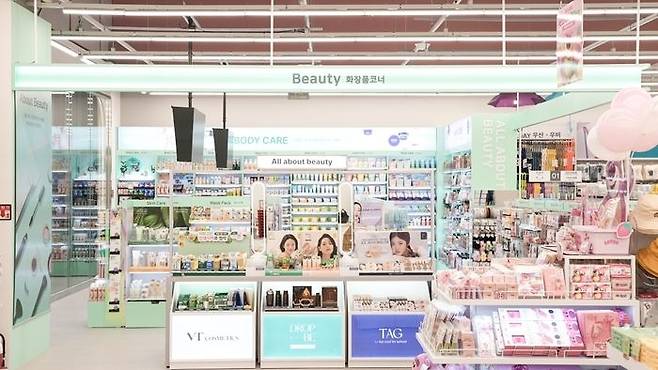
For years, South Korea’s beauty shopping map seemed fixed: Olive Young at the center, flanked by department stores on one end and bargain channels on the other. That hierarchy is now quietly shifting.
The country’s dollar-store chain Daiso, long associated with household essentials and impulse buys, is emerging as an unlikely but increasingly influential beauty destination.
What stands out is not simply the presence of low-priced cosmetics, but who is choosing to sell them there. Premium and professional brands that once kept a clear distance from flat-price channels are now moving in deliberately, reframing Daiso as more than a testing ground for small labels. Instead, it is becoming a strategic stage in brand planning.
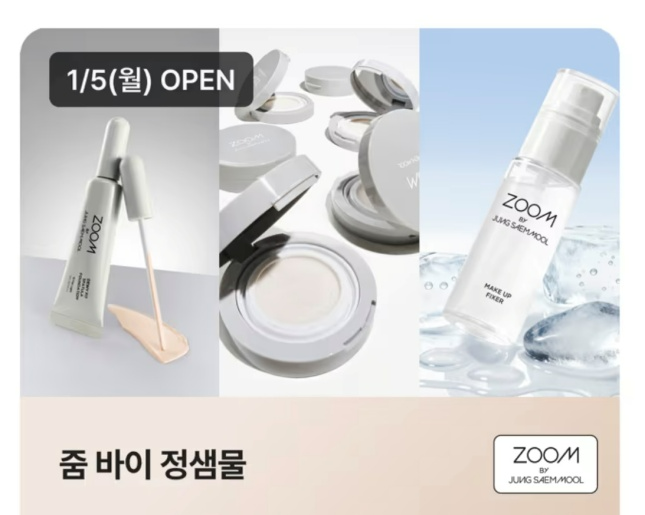
The clearest such signal came with the launch of “Zoom by Jung Saem Mool,” a Daiso-exclusive collaboration with the renowned, artist-led brand, unveiled online on Monday.
Thirteen items — including skin pads, spatula foundations and foundation cushions — went on sale with prices ranging from 1,000 to 5,000 won. This carried symbolic weight for a brand whose base products typically sell for 40,000 to 50,000 won, and which limits discounting even at major retailers.
Jung Saem Mool's arrival at Daiso underscores how far the dollar store has evolved from its former “cheap-only” image.
Daiso said the launch aligns with its broader direction.
“As with other categories, we aim to introduce a wider variety of products in our beauty lineup,” the company said, adding that the collaboration was designed to allow more customers to “easily experience beauty products that reflect makeup artist Jung Saem-mool’s expertise in their everyday routines.”
Jung Saem Mool is not alone. Daiso’s beauty shelves have expanded well beyond their earlier focus on road-shop staples such as Tonymoly and Nature Republic. The lineup now includes derma and pharmaceutical-backed brands such as CNP and Dongkook Pharmaceutical, alongside established skincare names including VT and Medipeel.
Some brands appear under their original names, while others operate Daiso-only secondary lines. Many are developing Daiso-exclusive lines from the planning stage, with separate pricing, compositions and target consumers. This approach minimizes brand dilution while allowing labels to work within Daiso’s fixed price structure.
The appeal is not limited to a single generation. According to Daiso membership data, cosmetic sales in November last year were evenly distributed across age groups from shoppers in their 20s to those aged 60 and older. Consumers in their 40s accounted for the largest share, while those in their 20s and 30s also formed a core customer base.
An industry expert said sustaining the trend will require balance.
“For premium brands to continue launching Daiso-exclusive lines, the key challenge lies in maintaining clear quality standards, transparency in labeling and advertising, and positioning differences from existing lines in a way consumers can clearly understand,” the expert said.
Copyright © 코리아헤럴드. 무단전재 및 재배포 금지.