[CES] LG Electronics bets on 'affectionate intelligence' to bring AI into daily life
전체 맥락을 이해하기 위해서는 본문 보기를 권장합니다.
LG Electronics CEO Lyu Jae-cheol on Monday pledged to lead the era of "AI in action," outlining a new vision in which artificial intelligence connects more intuitively with daily life through what the company calls "affectionate intelligence."
"Our ambition goes beyond creating a simple home assistant," Lyu said. "LG will take the next step, with new solutions, including space-based robots. And through this journey, we will set a new standard for future home life. We move across many spaces — homes, cars, workplaces, shops and cities."
이 글자크기로 변경됩니다.
(예시) 가장 빠른 뉴스가 있고 다양한 정보, 쌍방향 소통이 숨쉬는 다음뉴스를 만나보세요. 다음뉴스는 국내외 주요이슈와 실시간 속보, 문화생활 및 다양한 분야의 뉴스를 입체적으로 전달하고 있습니다.
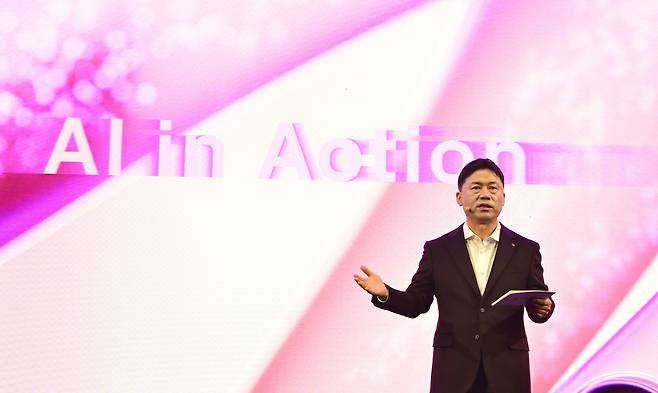
LG Electronics CEO Lyu Jae-cheol on Monday pledged to lead the era of “AI in action,” outlining a new vision in which artificial intelligence connects more intuitively with daily life through what the company calls “affectionate intelligence.”
His remarks, delivered during the LG World Premiere event at the Mandalay Bay Convention Center in Las Vegas, marked his first global appearance as CEO. The event was held on the eve of CES 2026, the world’s largest consumer technology trade show.
“Our vision for the AI home is clear: to give time back to our customers,” Lyu said.
Rather than focusing solely on technical advancement, LG has been reshaping its AI strategy in recent years with an emphasis on empathy. At the center of this shift is what it calls “affectionate intelligence” — AI that understands users’ routines, preferences and emotions.
“The home is the place we know best. But for AI, it is one of the hardest spaces to understand. Because every home is different: each one reflects its own habits, culture and emotions,” Lyu said.
His comments point to a deeper challenge faced by AI developers: while devices are becoming increasingly capable, the ability to interpret the nuance of human behavior — particularly in the home — remains a tall order.
Lyu cited LG’s longstanding footprint in the global home appliance market as a core strength in realizing its AI vision.
“As a global leader in home appliances and consumer electronics, LG already has countless touchpoints in people’s living spaces. We deeply understand real homes and real lifestyles of our customers around the world,” he said.
That reach is now being consolidated through LG’s proprietary platforms — ThinQ and webOS — which connect various devices into a single learning ecosystem. According to the company, this integration lays the foundation for a “zero-labor home,” where household tasks are handled seamlessly with minimal user input.
“Because we create so much of the home ecosystem ourselves, we can seamlessly orchestrate it all through LG ThinQ and LG webOS. They understand each viewer’s life styles, preferences and viewing context. This allows our products to become 'Agent Appliances' — helping you, adapting to you and learning your preferences over time,” Lyu said.
As part of this broader push, LG unveiled CLOiD — a new AI-powered home robot designed to perform tasks such as loading dishes or folding laundry. Through its integration with the ThinQ platform, the robot functions as a hub for coordinating smart appliances around the home.
Still, LG views CLOiD as a starting point. The company envisions AI agents extending far beyond domestic spaces, adapting across settings including vehicles, offices and cities.
“Our ambition goes beyond creating a simple home assistant,” Lyu said. “LG will take the next step, with new solutions, including space-based robots. And through this journey, we will set a new standard for future home life. We move across many spaces — homes, cars, workplaces, shops and cities.”
Copyright © 코리아헤럴드. 무단전재 및 재배포 금지.