The absurd push to relocate Yongin’s semiconductor plants to Saemangeum
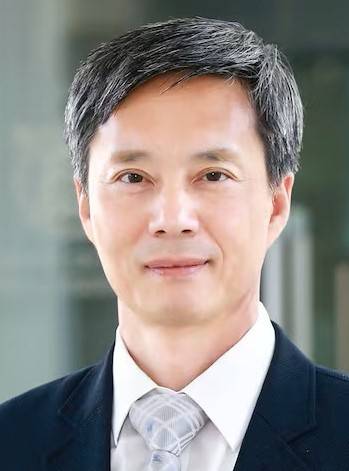
Hwang Cheol-seong The author is a distinguished professor of the Department of Materials Science and Engineering at Seoul National University.
Riding the global surge in AI, Korea’s semiconductor companies have recently posted sharply improved earnings, raising hopes of a virtuous cycle across the broader industrial ecosystem. If sustained, this momentum could even ease the longstanding drift of science and engineering students toward medical schools.
![Prime Minister Kim Min-seok, right, visits the Saemangeum project site in Gunsan, North Jeolla, on Sept. 3, 2025, to inspect a land-based solar power complex. [YONHAP]](https://img4.daumcdn.net/thumb/R658x0.q70/?fname=https://t1.daumcdn.net/news/202601/06/koreajoongangdaily/20260106000647086zodr.jpg)
Against this backdrop, however, a proposal has begun to circulate in political circles, local governments and parts of academia to relocate some of the semiconductor plants planned for the Yongin National Industrial Complex in Gyeonggi to Saemangeum, a vast land reclamation project on the southwest coast in North Jeolla, originally developed for agriculture, industry and renewable energy. The idea shows signs of spreading to other regions as well, a trend that has heightened concern following ambiguous remarks by Kim Sung-hwan, the minister of climate, energy and environment, which were widely interpreted as lending political weight to the relocation argument.
Proponents cite RE100 renewable energy commitments and balanced regional development as their main justifications. Few would dispute the importance of decarbonization or the need to address regional disparities. Yet the sudden call to move semiconductor fabs ignores technical and economic realities. Taken too far, it risks weakening a core national industry, amounting to little more than the folly of killing the goose that lays the golden eggs.
The semiconductor sector has long generated national value through corporate tax payments and exports, serving as a pillar of the broader economy. In a country facing persistent military threats from the North, it also functions as a “silicon shield,” underpinning national security as much as economic prosperity. Maintaining competitiveness in semiconductors is therefore not merely an industrial policy question but one tied to the country’s long-term survival.
The RE100 argument, in particular, has been overstretched. RE100 is a voluntary private initiative launched in 2014 by a British nonprofit and carries no legal force. While some U.S. technology giants participate, only Apple strictly requires renewable energy. Microsoft and Google allow the use of other decarbonized power sources, including nuclear energy. Major semiconductor customers such as Nvidia, Broadcom, AMD and Qualcomm are not even members of RE100. Memory rival Micron is also not a signatory.
Most analysts agree that Korean chipmakers can readily handle the portion of customer demand that does require RE100 compliance. Dire forecasts that semiconductor exports could fall 30 percent by 2030 if RE100 is not met rest on highly speculative assumptions rather than firm evidence.
The environmental case for renewables also deserves a more sober assessment. Solar and wind facilities are now entering a phase where large volumes of waste are being generated, yet recycling technologies remain rudimentary. Disposal itself consumes substantial energy. Energy storage systems pose additional challenges, as large-scale batteries have finite life spans and create their own waste burdens. Renewables are clearly an essential pillar of decarbonization, but treating them as inherently and unconditionally green is misguided.
![The first advanced base of the SK hynix Yongin Cluster begins to take shape. Structural work is underway on the first of four planned fabrication plants. [SK HYNIX]](https://img1.daumcdn.net/thumb/R658x0.q70/?fname=https://t1.daumcdn.net/news/202601/06/koreajoongangdaily/20260106000648659axmb.jpg)
From a power supply perspective, relocating fabs to Saemangeum borders on fantasy. Even moving just one-third of the new plants planned by Samsung Electronics and SK hynix would require roughly 5 gigawatts of electricity. Saemangeum’s existing solar capacity stands at about one-tenth of a gigawatt. Given Korea’s average solar utilization rate of roughly 15.4 percent, supplying a stable 5 gigawatts would require building some 32.5 gigawatts of new solar capacity.
That would demand an estimated 34.4 trillion won ($24 billion) in investment and occupy about 280 square kilometers (69,200 acres), or roughly 97 percent of Saemangeum’s already reclaimed land. Wind power would be even costlier, with installation expenses more than seven times higher than solar. Taken together, these constraints make it virtually impossible to operate large-scale semiconductor fabs in Saemangeum on renewables alone. Nor can the fierce global competition for semiconductor talent be ignored. Attracting top engineers to regions lacking adequate living conditions is far from easy.
Balanced regional development remains a worthy goal, but it should not come at the expense of eroding the competitiveness of industries vital to the nation. A more sustainable path lies in strengthening semiconductor capabilities and then sharing the gains nationwide through policy and fiscal measures. This generation should not leave its successors a country remembered for having voluntarily given up its golden goose.
This article was originally written in Korean and translated by a bilingual reporter with the help of generative AI tools. It was then edited by a native English-speaking editor. All AI-assisted translations are reviewed and refined by our newsroom.
Copyright © 코리아중앙데일리. 무단전재 및 재배포 금지.
- Police officer, tow truck driver killed while responding to traffic accident
- Court orders release of Korean President Yoon Suk Yeol — as it happened
- At CES 2026, a humanoid robot showdown between Korea and China
- Ahn Sung-ki, veteran actor, dies aged 74
- North Korean leader seems to reference Venezuela a day after 'hypersonic' missile drill
- Introducing the Ioniq 3: Hyundai's compact EV gamble to arrive in 2026
- Balloons believed to have been launched in China during New Year's celebrations found across Seoul
- Three teenage boys identified as prime suspects in series of online bomb threats
- Hwang Hee-chan scores as Korea ties 1-1 with Oman — as it happened
- Samsung, SK hynix dramatically scaling up HBM production to meet rising demand, recent Nvidia deals