Across 70 years and 170 films, Ahn Sung-ki charted history of Korean cinema
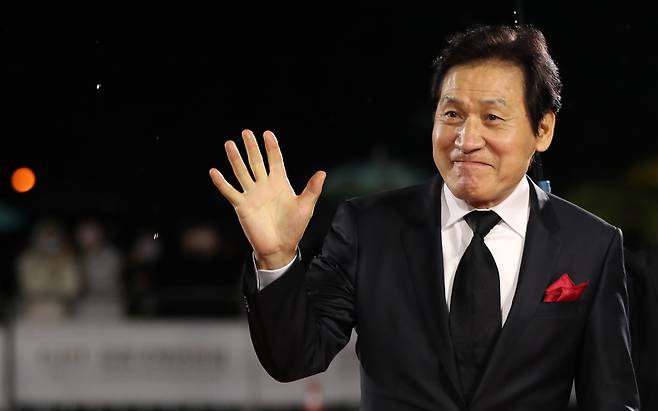
Veteran actor Ahn Sung-ki, one of Korea’s most beloved actors and a moral anchor of its cinema, died Monday at the age of 74.
He had been receiving treatment in an intensive care unit and was hospitalized in an unconscious state for six days after he collapsed at his home on Dec. 30.
Over a career that spanned nearly seven decades, Ahn became known for his calm authority and remarkable range. He appeared in more than 170 films, a body of work that mirrored the evolution of modern Korean cinema itself.
From prolific child roles, defining leading performances and, later, to quietly anchoring ensemble casts, he moved fluidly between comedy and tragedy, realism and genre film, leaving behind a legacy built on the trust of directors, colleagues and audiences alike.
“The hunger never goes away. I always want to meet new characters, to encounter new worlds through film, to meet new people and to connect with viewers through the films we make,” he said in a 2016 interview.
“Cinema is a series of discoveries, and that’s what excites me every time.”

From child star to defining figure of cinematic renaissance
Ahn entered the film world at age 5, cast by director Kim Ki-young in “The Twilight Train” (1957). The role marked the beginning of an unusually prolific childhood career. By his teens, he had appeared in more than 70 films, including Kim’s landmark “The Housemaid” (1960) and “A Defiance of Teenagers” (1959). The latter earned international recognition at the San Francisco International Film Festival.
Despite his early fame, Ahn stepped away from acting for more than a decade to focus on his studies, enrolling at Hankuk University of Foreign Studies to study Vietnamese. When he returned to cinema in 1977 after completing military service, prevailing industry wisdom held that child actors rarely succeeded as adults. Ahn proved the rare exception.
His breakthrough came with Lee Jang-ho’s “Good Windy Days” (1980), in which he portrayed Duk-bae, a young man working at a suburban Chinese restaurant. The coming-of-age film — a portrait of three young men drifting along the margins of a rapidly changing city — captured the frustrations and aspirations of Korea’s youth. Ahn’s performance earned him the Grand Bell Award for best new actor and helped revive social realism in Korean cinema.
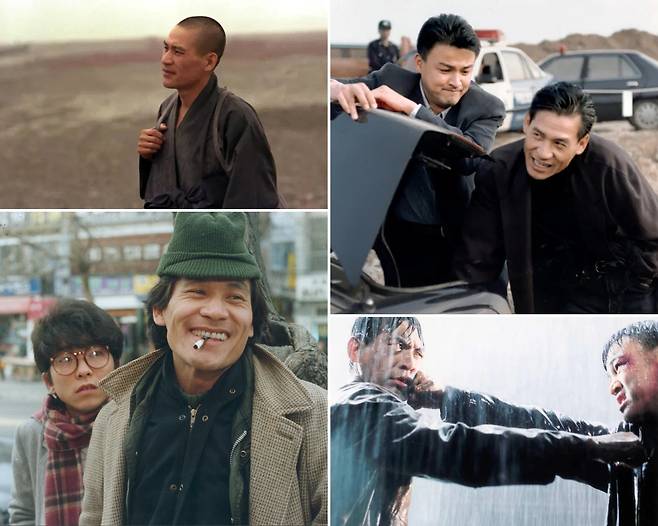
Throughout the 1980s and 1990s, Ahn emerged as a defining presence in Korean film’s creative resurgence, repeatedly chosen by leading auteurs for roles that demanded emotional restraint and moral complexity.
In Im Kwon-taek’s “Mandara” (1981), he played a Buddhist monk struggling with doubt, earning the Baeksang Arts Award for best actor. In Bae Chang-ho’s “Iron Men” (1983), he embodied working-class figures caught between idealism and survival, and in “Whale Hunting” (1984), he portrayed a drifter wandering the city’s margins.
His films of the period achieved both critical and popular success, many becoming landmarks that reshaped the trajectory of Korean cinema.
In Chung Ji-young’s “North Korean Partisan in South Korea” (1990), Ahn portrayed a former war correspondent turned guerrilla fighter, challenging long-standing taboos surrounding the Korean War and earning top acting honors at the Blue Dragon Film Awards. He continued the collaboration in “White Badge” (1992), playing a veteran haunted by post-traumatic stress after the Vietnam War, at a time when such wounds were rarely addressed on screen.
Ahn later surprised audiences in Kang Woo-suk’s “Two Cops” (1993), a comedic action flick that expanded the scope of Korean genre cinema. Upon winning the Baeksang grand prize, he remarked that comedy deserved the same critical seriousness as drama.
One of his most iconic roles came in Lee Myung-se’s “Nowhere to Hide” (1999), in which he played a killer opposite Park Joong-hoon’s pursuing detective. The film’s rain-soaked fistfight remains one of the most indelible scenes in Korean film history.
Career devoted entirely to film
Though one of the most recognizable faces in Korean entertainment, Ahn did not pursue television dramas, musical theater or the stage, devoting himself almost exclusively to cinema.
“I don’t know how to do anything other than movies. It’s all I’ve ever done,” he said in a 2021 interview. “In a way, it feels like something I was destined to do. Every time I make a film, it feels like setting out on a new journey.”
That philosophy guided his later career. In “Silmido” (2003), Ahn played a rigid military commander in what became the first Korean film to draw more than 10 million viewers, a milestone in the industry’s commercial history.
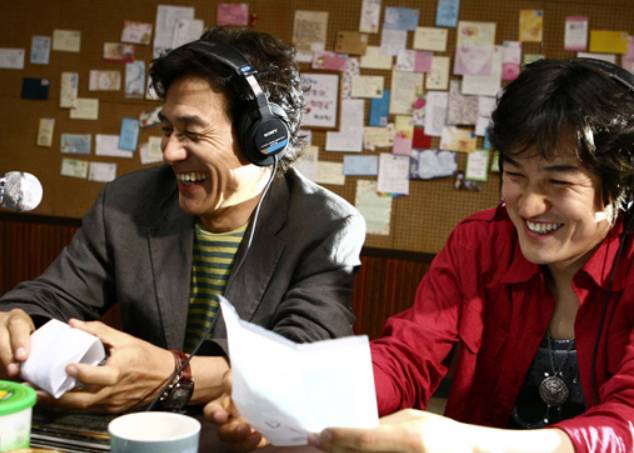
He reunited with actor Park in Lee Joon-ik’s “Radio Star” (2006), portraying the loyal manager of a once-famous, fading singer. The role earned him best actor honors at both the Blue Dragon Film Awards and the Grand Bell Awards.
In subsequent years, Ahn continued to work steadily, appearing in films such as “Unbowed” (2011), “Revivre” (2014), “The Divine Fury” (2019) and “Hansan: Rising Dragon” (2022). His final screen appearance came in “Noryang: Deadly Sea” (2023), in which he made a brief appearance as Eo Yeong-dam, a trusted aide to Admiral Yi Sun-sin.
“I don’t think much about how I’ll be remembered,” Ahn said at a retrospective held in his honor in 2003. “If I’m remembered simply as an actor who brought people a measure of joy, that’s enough for me.”
Moral presence beyond screen
Ahn’s gentle, principled image and a career free of scandal reinforced his stature as a moral presence beyond the screen. He was one of the few major figures in Korean cinema to inspire near-universal affection and, for decades, served as the face of a leading coffee brand, becoming a symbol of familiarity across generations.
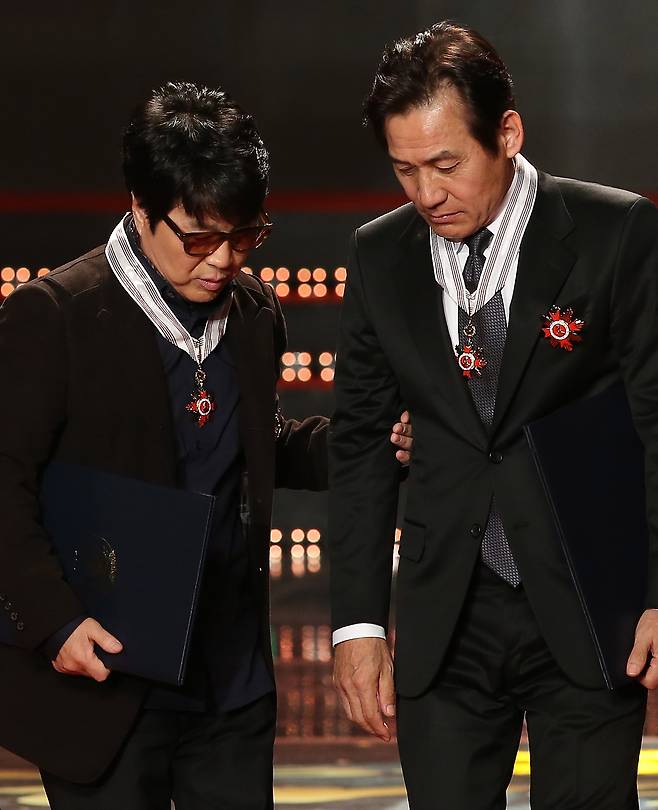
His contributions extended beyond acting. He held leadership roles at major film institutions and festivals, including the Busan International Film Festival, and received numerous honors, including the Silver Crown of the Order of Cultural Merit in 2013. In 2024, he was elected a member of the National Academy of Arts.
In a 2023 interview, Ahn spoke about the weight of being called the nation’s “people’s actor.” The title, he said, sometimes felt like a constraint narrowing the range of roles he might take on, but ultimately, he added, it guided him in the right direction.
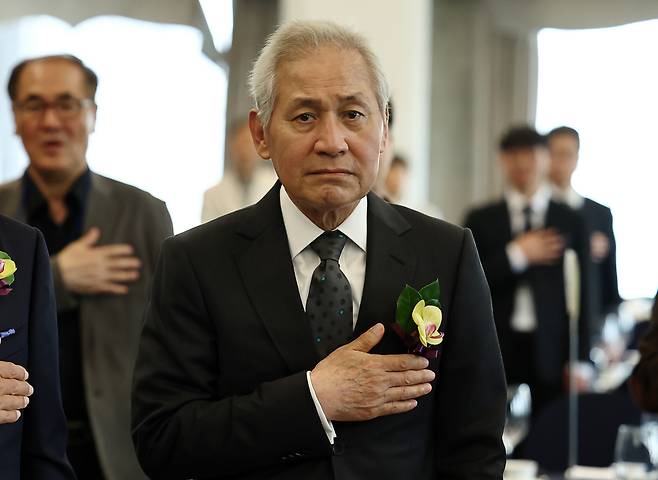
Ahn disclosed in 2022 that he had been living with blood cancer since 2019, a diagnosis he had kept private while continuing to work.
Accepting a lifetime achievement award at the Grand Bell Awards that year, he said in a prerecorded message, “I thought I would live as an actor forever. Lately, I’ve come to realize that time and age do not stop. Still, I hope to meet you again through a new film.”
He appeared at public events in 2023 to prolonged applause and spoke of his improving health. But the return he hoped for never came.
In a career defined not by spectacle but by constancy, Ahn remained, until the end, what audiences had long believed him to be: a performer who carried the weight of his era with quiet dignity, and who showed, film by film, how an actor might grow old without growing distant.
Copyright © 코리아헤럴드. 무단전재 및 재배포 금지.