Strong ensembles, star power to define 2026 orchestral scene
With its leading orchestras entering a period of stability, an influx of international artists returning to Korea, and homegrown stars poised to meet -- and often surpass -- domestic expectations, 2026 promises to be another strong year for classical music.
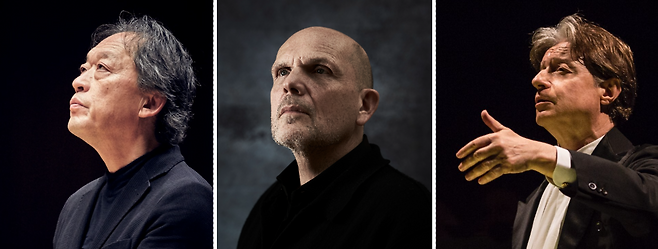
South Korea’s orchestral landscape enters 2026 with a rare sense of alignment and momentum, as the country’s three leading ensembles -- the Seoul Philharmonic Orchestra, the Korean National Symphony Orchestra and the KBS Symphony Orchestra -- move forward under clearly defined artistic leadership.
For the KBS Symphony, this year is both a milestone and a reset. Marking its 70th anniversary by formally beginning a new era with Chung Myung-whun as its 10th music director, the ensemble will present 15 concerts in Seoul while continuing its nationwide tour program. Although Chung has collaborated with the orchestra since 2022 as conductor laureate, his formal appointment as its 10th music director lends renewed weight to the season. Chung returns to Mahler with Symphony No. 5 in March and Symphony No. 4 in October, and leads a concert version of Bizet’s "Carmen" in April, a work closely associated with his operatic legacy. Guest conductors include longtime collaborators Eliahu Inbal, Pietari Inkinen, Marek Janowski, Yoel Levi, and Michael Sanderling. Soloists include Leonidas Kavakos, Bruce Liu and Steven Isserlis, as well as Korean musicians such as clarinetist Kim Han, pianist brothers Lee Hyuk and Lee Hyo, and Kim Sae-hyun, the winner of the 2025 Long-Thibaud International Competition.
The SPO, which enters its third season with music director Jaap van Zweden, will present 37 performances, including 17 orchestral concerts and six chamber programs. Van Zweden continues the Mahler cycle he launched in 2024, aiming toward a complete recording of the composer’s symphonies.
The season also signals a widening of the orchestra’s international dialogue. Conductors Philippe Jordan, former music director of the Vienna State Opera, and Jonathan Nott, former chief conductor of the Bamberg Symphony, will both make their SPO debuts.
Soloists include pianists Rudolf Buchbinder and fortepiano specialist Kristian Bezuidenhout, alongside Korean artists with strong international profiles such as violinist Lee Ji-yoon and cellist Han Jae-min.
The National Symphony, meanwhile, opens a fresh chapter under Roberto Abbado, a conductor deeply rooted in the European operatic and symphonic tradition. A regular presence at major European opera houses and festivals, Abbado brings a repertoire focus that includes Italian pieces, late Romantic music and large-scale vocal-symphonic forms. Guest conductors for the KNSO include Olari Elts, Lee Seung-won -- winner of the 2024 Malko International Conducting Competition -- and Antonio Mendez. Soloists include Marc-Andre Hamelin, Jonathan Fournel, Leticia Moreno, Park Sueye and Emmanuel Pahud.
Beyond domestic seasons, 2026 will bring another dense lineup of visiting orchestras -- close to 20 in total.
The year opens with the Staatskapelle Dresden, founded in 1548 and widely regarded as the world’s oldest orchestra still in continuous existence, performing in late January and early February under Chung, with pianist Lim Yunchan as soloist.
A steady stream of major European orchestras follows, led by the Munich Philharmonic under incoming music director Lahav Shani with pianist Cho Seong-jin, alongside the Vienna Symphony in May, the Dresden Philharmonic in June, and the Lucerne Symphony in July under Michael Sanderling.
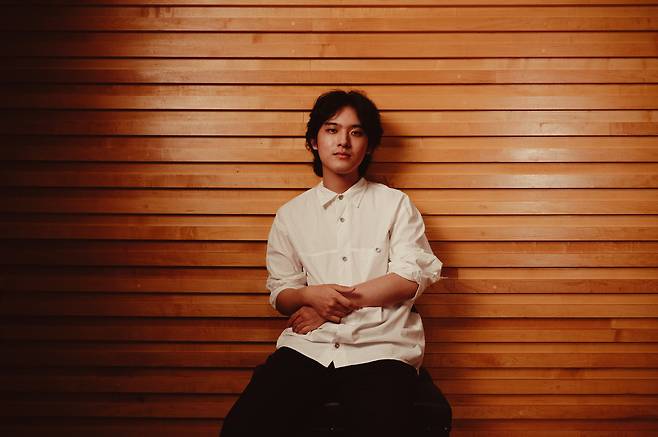
The fall calendar remains equally packed, with Gustavo Gimeno leading the Luxembourg Philharmonic and the Estonian National Orchestra appearing with pianist Kim Sun-wook in September. October brings the Vienna Philharmonic, as well as the Helsinki Philharmonic — under Jukka-Pekka Saraste for its first Korea visit — with violinist Yang In-mo, followed by Paavo Jarvi and the Estonian Festival Orchestra.
November features two of the season’s most anticipated appearances: Simon Rattle with the Bavarian Radio Symphony Orchestra, and Teodor Currentzis, who finally arrives in Korea on Nov. 17-18 with his new ensemble, the Utopia Orchestra, after a pandemic-canceled 2020 visit. The year closes in December with John Storgards leading the BBC Philharmonic and Christoph Eschenbach with the NFM Wroclaw Philharmonic.
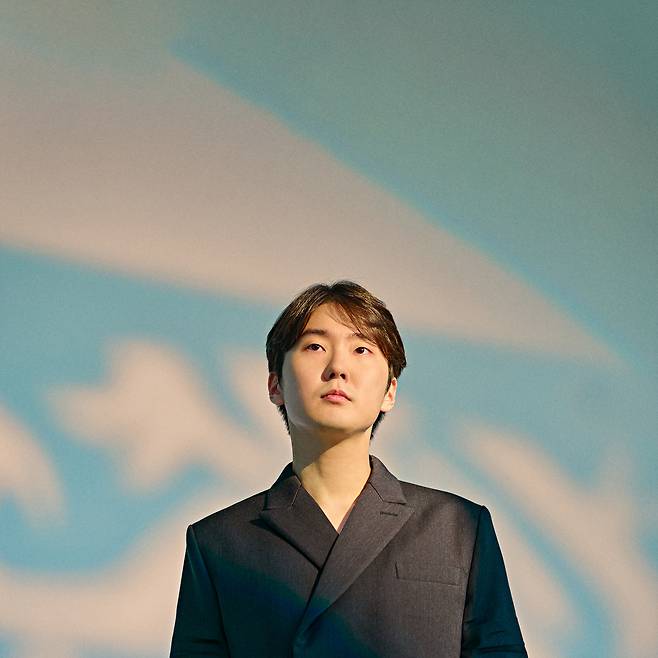
High-profile recitals further enrich the season. Lim Yunchan gives solo recitals in Seoul and Daegu in May, while Cho Seong-jin returns later in the year for recital appearances as artist-in-residence at Seoul’s Lotte Concert Hall.
International piano stars form another throughline, with Krystian Zimerman returning for a seven-city tour, Andras Schiff giving a Seoul recital in March, and Rudolf Buchbinder presenting Mozart piano concertos with the Lucerne Festival Strings in September. Mao Fujita, Hayato Sumino, Víkingur Olafsson, Alexandre Kantorow, and Nikolai Lugansky round out a packed recital calendar.
Major opera productions are also on the horizon. In April, the Seoul Metropolitan Opera will revive Verdi’s "Nabucco," marking its first staging by the company in 40 years. The Korean National Opera, meanwhile, will present the Korean premiere of Britten’s "Peter Grimes" in June, bringing one of the 20th century’s most psychologically charged operas to the domestic stage for the first time.
Copyright © 코리아헤럴드. 무단전재 및 재배포 금지.