Elementary students fuel spike in private education spending
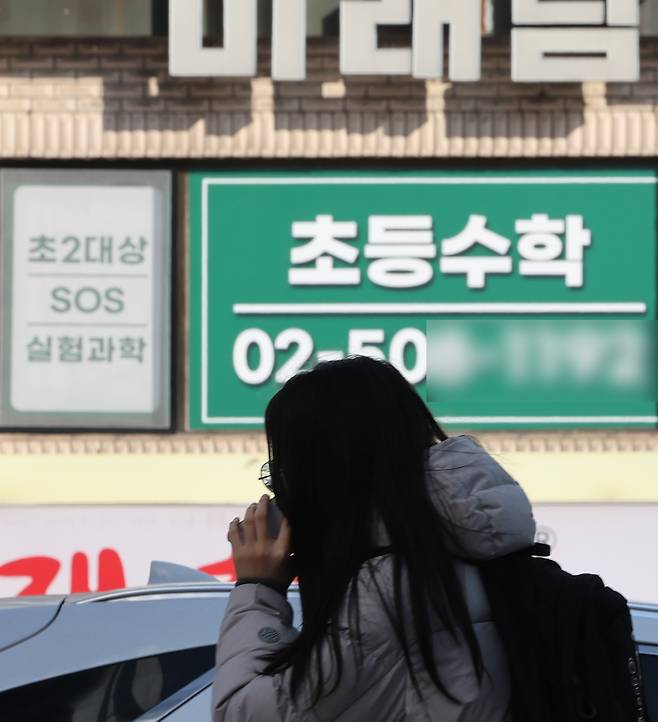
South Korea’s private education market has surged over the past decade, driven primarily by rising spending among households with elementary school students, government data show.
According to data released by the Korean Statistical Information Service, total private education spending reached 29.2 trillion won ($20 billion) in 2024, up more than 60 percent from 18.2 trillion won in 2014, despite the student population declining by 18 percent over the same period.
Elementary school households recorded the steepest increase. Parents of elementary students who enrolled their children in private lessons spent an average of 442,000 won a month per child in 2024, more than 90 percent more than a decade earlier.
Of that monthly total, 278,000 won went on academic subjects, while 163,000 won was spent on arts and sports.
In aggregate terms, total private education spending by elementary school parents jumped 74.1 percent, from 7.6 trillion won in 2014 to 13.2 trillion won in 2024, outpacing the 40.7 percent increase among middle school households and the 60.5 percent rise among high school households.
This total exceeded that of middle and high school students, which stood at 7.8 trillion won and 8.1 trilliwon won, respectively. Korean children spend six years in elementary school, followed by three years each in middle and high school.
But per enrolled student, spending was higher and rose faster for those in middle and high school. Per capita spending on middle school students reached 490,000 won, up 81 percent, and rose 126 percent to 520,000 won for high schoolers.
This sharp rise in average per-student spending suggests that the financial burden for families who provide private tuition remained heavy.
Total spending among middle and high school students was lower because participation in private education was more widespread among elementary school students. In 2024, 87.7 percent of elementary students took part in private education, compared with 78 percent of middle school students and 67.3 percent of high school students.
Successive governments have sought to curb private education spending. The Lee Jae-myung administration has named strengthening public education as one of its six key education policy goals.
“We will complete K-education through trusted public schooling and education innovation that opens the future,” Lee said in May, pledging to establish self-directed learning centers nationwide to ease the burden of private education expenses.
However, the Education Ministry said during a press briefing Monday that it did not yet have a fixed schedule for announcing additional measures to address private education spending.
Copyright © 코리아헤럴드. 무단전재 및 재배포 금지.