Shirts off, goals on: Daegu's New Year runners brave the cold
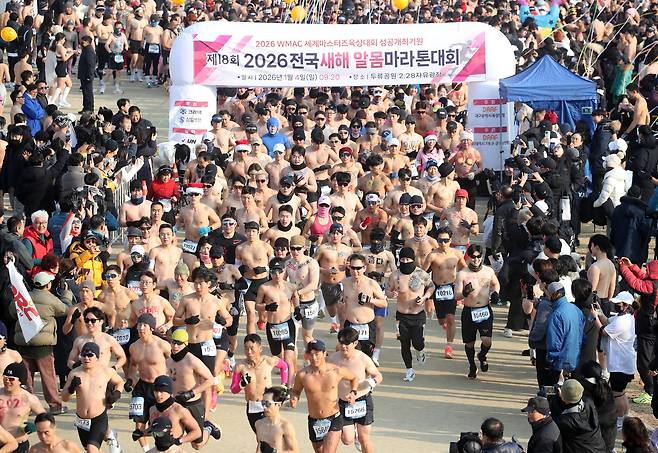
DAEGU — On the first Sunday of 2026, as the cold snap that had gripped the country through the holidays began to ease, nearly 2,400 shirtless men wearing shorts and women in sports bras and leggings gathered in the city of Daegu.
Their breath fogged the air and their cheeks flushed red as temperatures hovered just above zero. Yet among those stretching and jogging laps across the lawn as they warmed up for the race, the energy pushed the chill aside.
They were participants in the annual “New Year Bare-body Marathon,” which drew runners ranging from high school students to seniors, all eager to mark the start of the year in a memorable way.
Many bore messages on their bare backs, chests or other exposed skin, spelling out their reasons for taking part — including New Year’s resolutions.
Despite the title, full nudity was not allowed. Male participants are required to remove only their upper garments, while female participants keep their tops on. All runners must wear shorts, and those who violate the dress code are disqualified from awards, according to the Daegu Athletics Federation, the event’s organizer.
Here are some of the participants who marked the New Year with a test of grit in the cold.
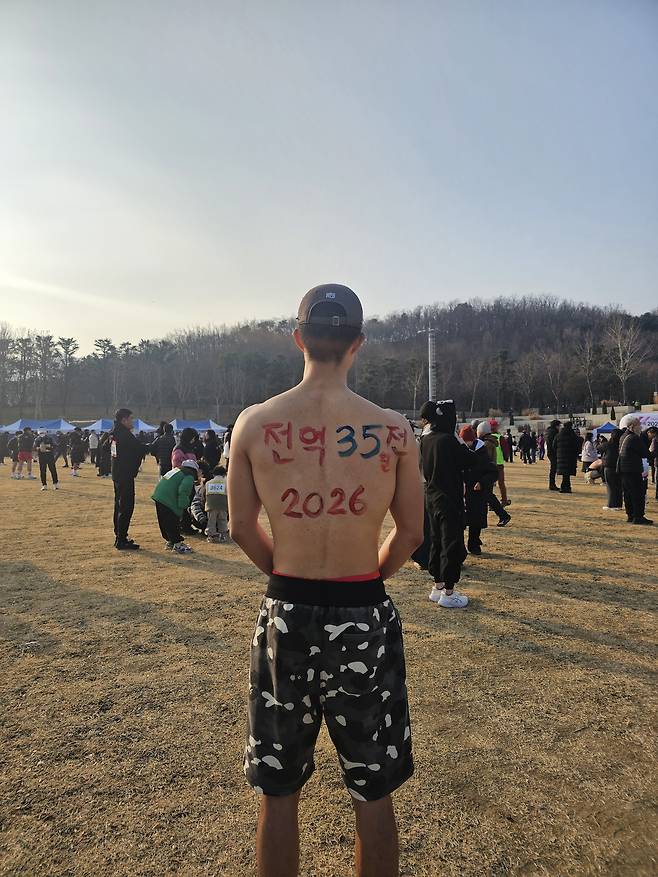
For 22-year-old Kwak Cheol-jun, who had 35 days remaining before completing his military service, the race was a way to mark a fresh start as a civilian ahead of his return to university in March.
“I worked out a lot during my military service, including running marathons, which helped me stay both physically and mentally fit. With a new chapter coming up, I wanted to clear my head and get myself ready for the new year,” Kwak said, adding that he was taking part in the event while on leave from the military.
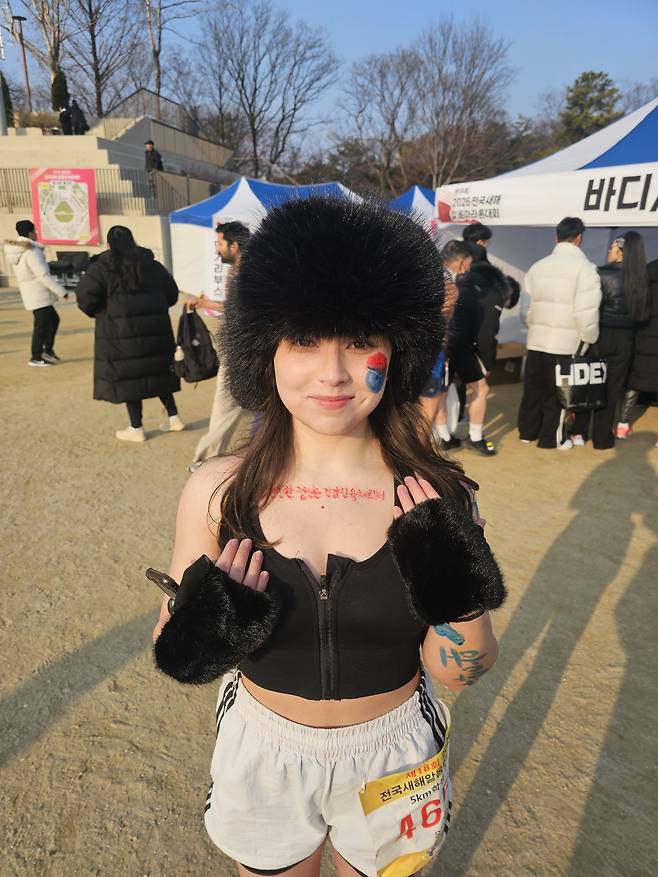
Svetlana Rumiantseva, 19, who was born to a Korean father and a Russian mother, said the event felt like a new cultural experience, despite having lived in Korea for more than a decade.
“It was my first marathon, and I found the theme of running bare-bodied in the cold fascinating. I recommended it to my foreign friends,” she said.
At 62, Seo Chun-ja from Chilgok County in North Gyeongsang Province joined the race to show that age is no obstacle to staying active.
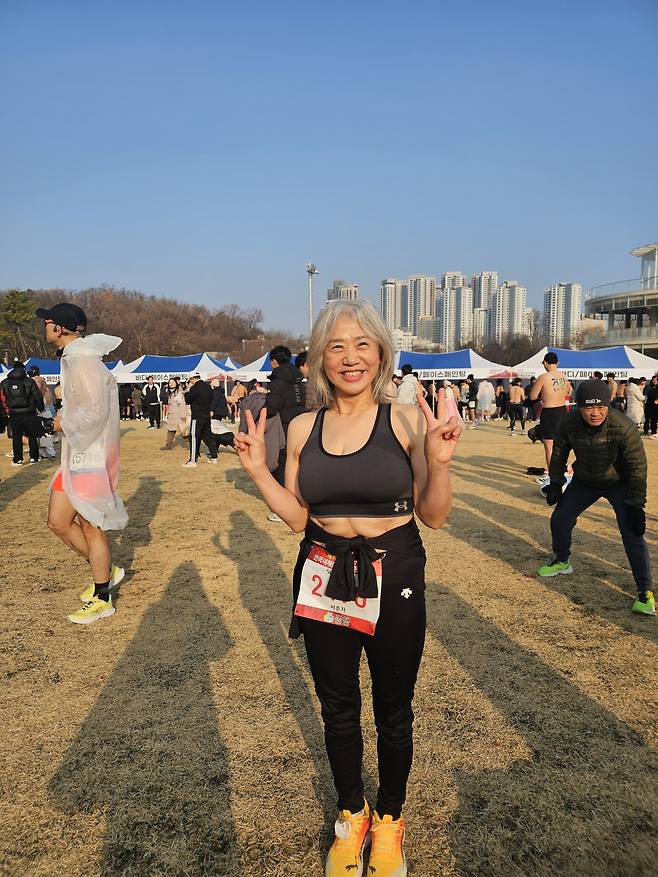
“I work out regularly to stay healthy, and I know many women my age, myself included, feel a bit intimidated when exercising next to younger people, especially in running or marathons,” she said.
“I thought today’s race would be a great chance to push past that and make some good memories with my friends.”
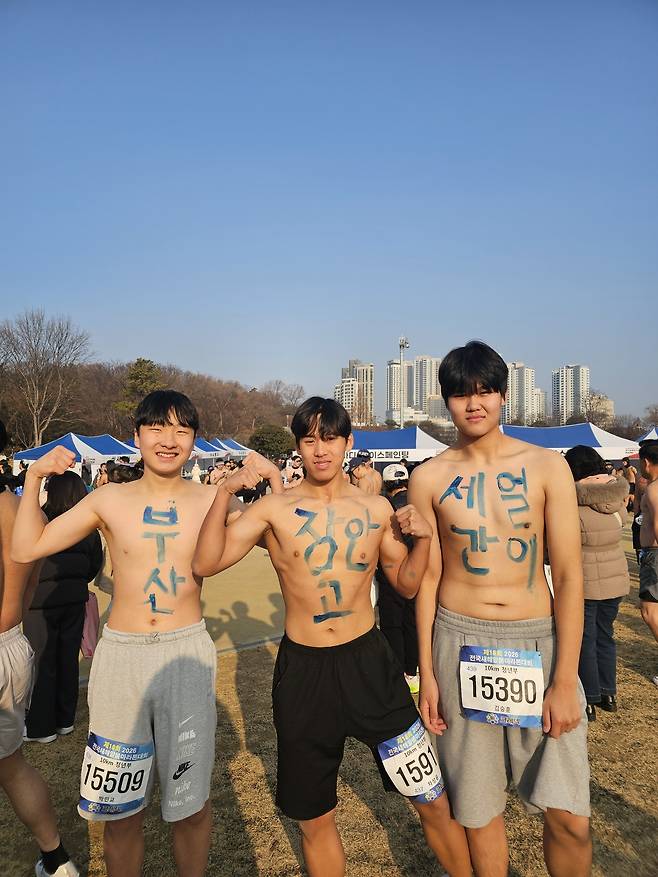
A group of male high school students from Jangan High School in Busan entered the race just for fun.
One of them -- Cha Sung-yoon, 17 -- said, “I want to get in shape this year and maybe even find a girlfriend. It’s nice to start the year doing something fun with my friends.”
Some embraced the cold weather challenge as a way to motivate themselves for new challenges.
Song In-hyuk, 26, who is preparing to take the public school teacher recruitment exam later this year to become an elementary school teacher, said he used the marathon to strengthen his resolve to study.
“My goal is to pass the exam with a top score. I’ve always enjoyed running, and this is my first marathon. The race feels like a ritual for myself. My body is cold, but my mind feels energized.”
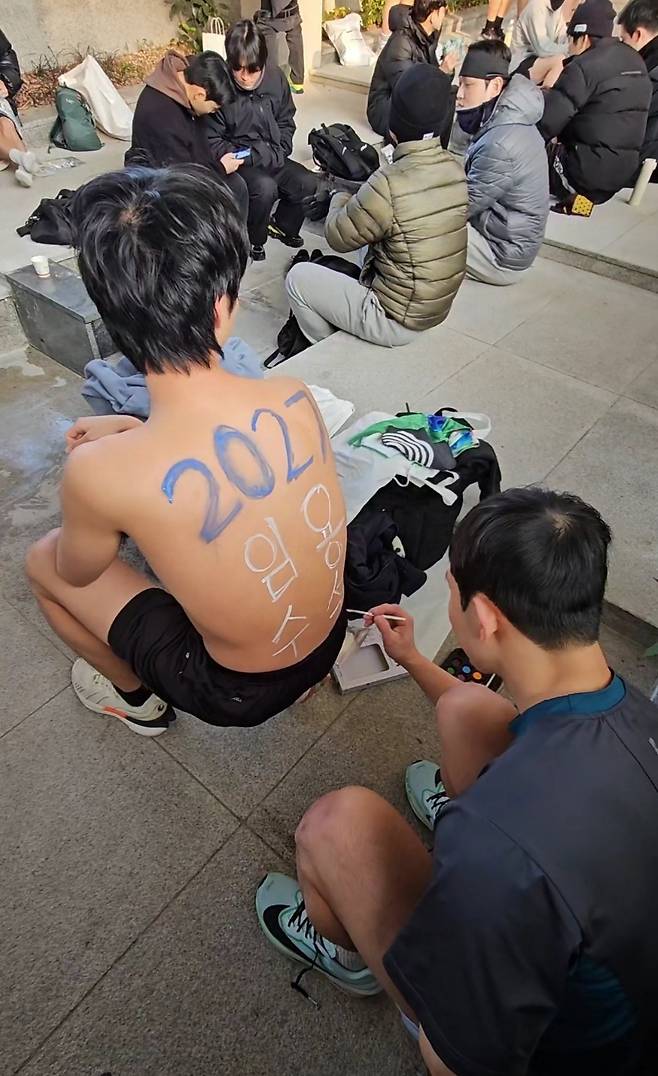
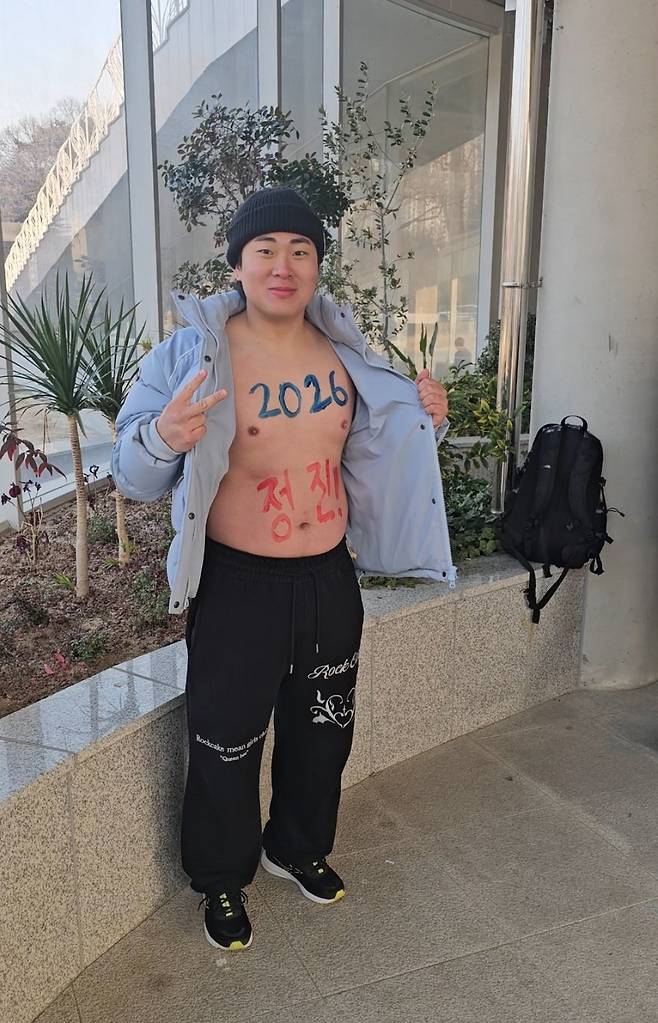
Another participant, Lee Dong-ho, in his 30s, said the marathon symbolizes shedding the hardships he faced last year and starting afresh.
“My motto for 2026 is ‘moving forward,’ and the marathon reflects the mindset I want to carry into the year. I'll give my best to both work and study throughout this year,” he said.
Held on the first Sunday of January, the 18th edition of the Daegu New Year Bare-body Marathon took place on a loop course circling the outskirts of Duryu Park in Dalseo District.
The event featured 5- and 10-kilometer races, with the longer course looping twice. Aimed at ordinary citizens and closed to professional runners, it saw participation nearly triple this year amid a marathon boom.
“Because of the phrase ‘bare-body,’ some people may misinterpret the event as provocative. However, its purpose is to challenge personal limits and start the year with determination. We are doing our utmost to ensure that everyone can run safely,” a DAF official said.
The Daegu race is not the only one of its kind. Similar bare-body marathons have been staged each year in other regions of Korea for more than a decade.
On the first day of this year, around 6,000 runners took part in the Seonyang Bare-body Marathon in Daejeon, which marked its 10th anniversary.
A similar event has been held for 11 years at Wolmido, Incheon, most recently in late December, while the 18th Uirimji Samhan Chorokgil Bare-body Marathon is scheduled to take place on Jan. 11 in Jecheon, North Chungcheong Province.
The concept grew out of a broader Korean tradition that views exposing the body to the cold as an expression of mental strength. In military drills and athletic training, groups are often seen splashing icy water on their faces, plunging bare-chested into mountain streams in winter, or running across snow-covered fields. Other parts of the world have similar practices, such as cold sea swimming in Nordic countries.
“There are times when I need a can-do mindset. Running through the cold with other people really helps me tap into that spirit in a way that’s hard to do alone,” said Shin Beom-jin, a 27-year-old office worker in Seoul who has taken part in local bare-body marathon events every January for the past three years.
“Of course, it's a one-off event, but the feeling of having accomplished something stays with me long after it’s over and gives me a boost in everyday life.”
Copyright © 코리아헤럴드. 무단전재 및 재배포 금지.