Korea’s system semiconductor exports to fall 2.6% this year despite chip boom
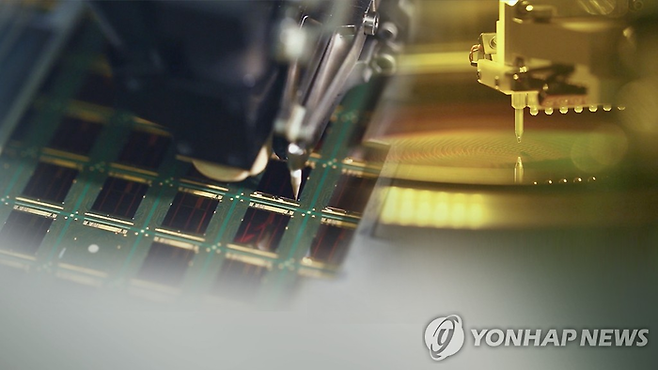
The Korea International Trade Association (KITA) announced on Sunday that the country’s system semiconductor exports are projected to reach $48.2 billion this
This contrasts with expectations that memory semiconductor exports will rise 9.6 percent over the same period from $114 billion to $125 billion.
“The spread of AI is driving increased demand not only for high value-added semiconductors such as high-bandwidth memory (HBM), but also for traditional memory semiconductors like DRAM and NAND flash, which is leading domestic companies to shift their facilities in that direction,” said a KITA official.
System semiconductors include foundries that manufacture chips on a contract basis according to design specifications, as well as central processing units (CPUs), application processors (APs), and other chips that perform functions such as computing, control, and processing.
“System semiconductors account for more than 60 percent of the global semiconductor market, and demand is expected to rise sharply,” said an official from the Korea Fabless Industry Association. “The fact that this sector is less susceptible to economic fluctuations is another reason we must foster our system semiconductor industry.“
While the memory semiconductor cycle is currently in an upswing, observers noted that system semiconductors must be developed to prepare for the inevitable downturn.
According to the Korea Fabless Industry Association, the share of the memory-centric Integrated Device Manufacturer (IDM) market fell from 70 percent in 2021 to 56 percent in 2024.
The share of the fabless market, on the other hand, rose from around 30 percent to the mid-40 percent range over the same period.
The fabless market combines the added value of companies that design semiconductors and foundry companies that manufacture them on a contract basis.
Of this market, the industry estimates that the sales of Korean fabless companies amount to around $3 billion, accounting for only about 1 percent of the entire global fabless market.
Copyright © 매일경제 & mk.co.kr. 무단 전재, 재배포 및 AI학습 이용 금지
- 단독주택서 온수기로 샤워하던 30대 돌연 사망…대체 무슨 일이 - 매일경제
- “모르는 사람과 성 접촉, 특히 20·30대 남자”…‘성병’ 비상 걸린 동아시아 - 매일경제
- 20% 저렴하게…남양주·동탄·창릉 내집마련 찬스 - 매일경제
- 1400만 먹방 유튜버, 돌연 방송 중단 선언…왜? - 매일경제
- 현주엽 아들, 결국 정신병원 입원…“망가진 영웅, 이제 와 챙기는 척 불편” - 매일경제
- [속보] ‘국민 배우’ 안성기 별세…중환자실 입원 6일만 - 매일경제
- [속보] ‘국민 배우’ 안성기 별세…중환자실 입원 6일만 - 매일경제
- 석유 매장량 1위 베네수엘라, 생산량은 미미…“유가 영향 크지 않을 것” - 매일경제
- 연초부터 밥상 덮친 쌀값…서민들 울리고 농가만 웃게 하는 쌀 보조금 - 매일경제
- 불펜 약점 있지만…지난해 최강자로 군림한 LG, 숙제 풀고 2026시즌 왕조 구축할까 [MK초점] - MK스