Will South Korea's medical standoff resume?
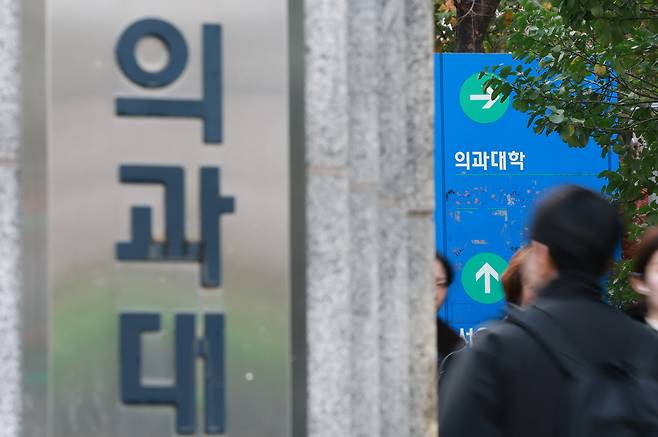
The South Korean government is once again at a crossroads on the highly-disputed medical school enrollment quota that had sparked a nationwide medical strike, as the related discussion by the state committee is set to be conducted this month.
The Ministry of Health and Welfare's committee is expected to discuss potential expansion of the medical school quotas for the 2027 academic year, based on the Physician Workforce Projection Committee's forecast that estimated a staff shortage that could exceed 11,100 doctors by 2040.
While the government has not set a firm deadline, officials have indicated that a decision could come as early as the Lunar New Year, given the potential impact on college admissions for current high school seniors.
But the Korean Medical Association, which had claimed that concerns of a medical staff shortage were exaggerated, called the recent conclusion a rushed one that was focused on "proving a politically charged point that there are not enough doctors."
The group claimed that the final numbers were based on what it called the impossible assumption that demand for medical services would keep increasing at the same rate as before.
The estimation committee projects that South Korea could face a shortage of between 5,704 and 11,136 doctors by 2040, depending on variables such as population aging, medical use patterns and productivity gains from artificial intelligence. For 2035, the projected shortfall ranges from 1,535 to 4,923 physicians.
These figures, while significant, are notably lower than earlier internal estimates discussed last month, when the potential shortage by 2040 was put as high as 36,000 doctors.
Committee Chair Kim Tae-hyun said the revised outlook reflects adjustments to avoid overestimation, incorporating time-series analysis, demographic modeling and assumptions about future changes in physicians’ working hours.
The final decision on determining the enrollment quota of the medical schools will be made by the Health and Medical Policy Deliberation Committee, chaired by Health Minister Jung Eun-kyeong, of which government officials account for a sizable share of the membership. This structure has fueled claims within the medical community that scientific projections could be overridden by policy considerations.
Jung said late last year that while the estimates provide an evidence-based foundation, determining actual enrollment numbers requires a formal legal process and policy-level choices.
Speculation is growing that the government may opt for a relatively modest increase, possibly fewer than 500 additional medical school places, though this would only make up for a shortage at the bottom end of the physician workforce committee projection.
Such a move would mark a sharp drop from the Yoon administration’s planned increase of 2,000 places, a policy that triggered unprecedented protests, walkouts and months of strained relations with doctors.
Analysts say the government is unlikely to push through a dramatic hike so soon after that experience.
Once a quota is finalized, it must be distributed across the nation’s 40 medical schools, each of which would need to amend its academic regulations. The process is procedurally complex but feasible within the admissions timeline, as universities are allowed to submit revised enrollment plans by late April in cases of sudden quota changes.
Copyright © 코리아헤럴드. 무단전재 및 재배포 금지.