TCL accused of false advertising for dropping pricey red chip in 'RGB' TV
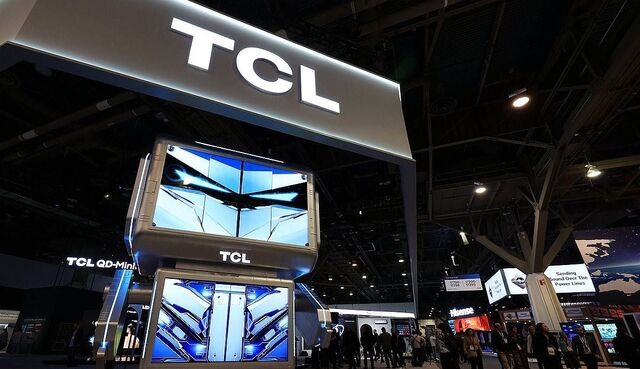
Chinese TV maker TCL is facing allegations of misleading and exaggerated advertising over a newly launched budget red-green-blue (RGB) television, accused of omitting the costly red (R) chip in order to cut production costs.
In a report Thursday, market tracker Omdia said TCL's entry-level RGB mini TV, marketed under the model name Q9M, does not contain a dedicated red LED chip. Instead, the backlight uses two blue chips and one green chip, combined with red phosphor material.
Omdia said TCL's Q9M appears to have reduced production costs by replacing a pure RGB chip structure with a combination of blue and green chips with red phosphor, as red LED chips are significantly more expensive than blue or green ones.
RGB mini LED TVs are designed to independently control red, green and blue backlights, a configuration widely regarded as delivering superior color reproduction and brightness compared with conventional white LED-based televisions.
"Consumers could end up paying more for what is effectively a conventional mini LED TV marketed under an RGB label," an industry official said. "TCL is pricing the product higher than standard mini LED TVs while marketing it as RGB."
The 85-inch model in the Q9M series is priced at about $1,680, making it more expensive than many conventional mini LED TVs, according to industry data.
Omdia also pointed out that the Q9M significantly reduces the number of local dimming zones -- the backlight control areas used to adjust brightness and contrast -- compared with existing mini LED TVs.
TCL's flagship RGB mini LED TV is reported to feature about 8,736 local dimming zones, but the budget RGB mini LED model at the center of the controversy has just 2,160 zones -- roughly a quarter of that figure. The number is also below that of many conventional mini LED TVs, which typically offer 2,000 to 3,000 zones.
Fewer local dimming zones generally result in weaker picture quality, particularly in contrast and black levels.
TCL has previously faced allegations of misleading advertising over its quantum dot light-emitting diode televisions. Consumers in the US filed a lawsuit against the company's North American unit, alleging that TCL falsely marketed the product as incorporating QLED technology despite containing little or none of the technology.
The issue comes as TCL prepares to spotlight its RGB-based TV technologies at CES 2026, the world's biggest tech show opening on Tuesday in Las Vegas. Samsung Electronics and LG Electronics are also expected to showcase their recently launched premium RGB TV models at the tech show.
Copyright © 코리아헤럴드. 무단전재 및 재배포 금지.