From a street rescue to a second chance: How one Chihuahua’s story mobilized a community
When The Korea Herald first reported on a Chihuahua darting through traffic near Gupabal Station, the story struck a familiar nerve: What actually happens after a lost dog enters the shelter system in Korea?
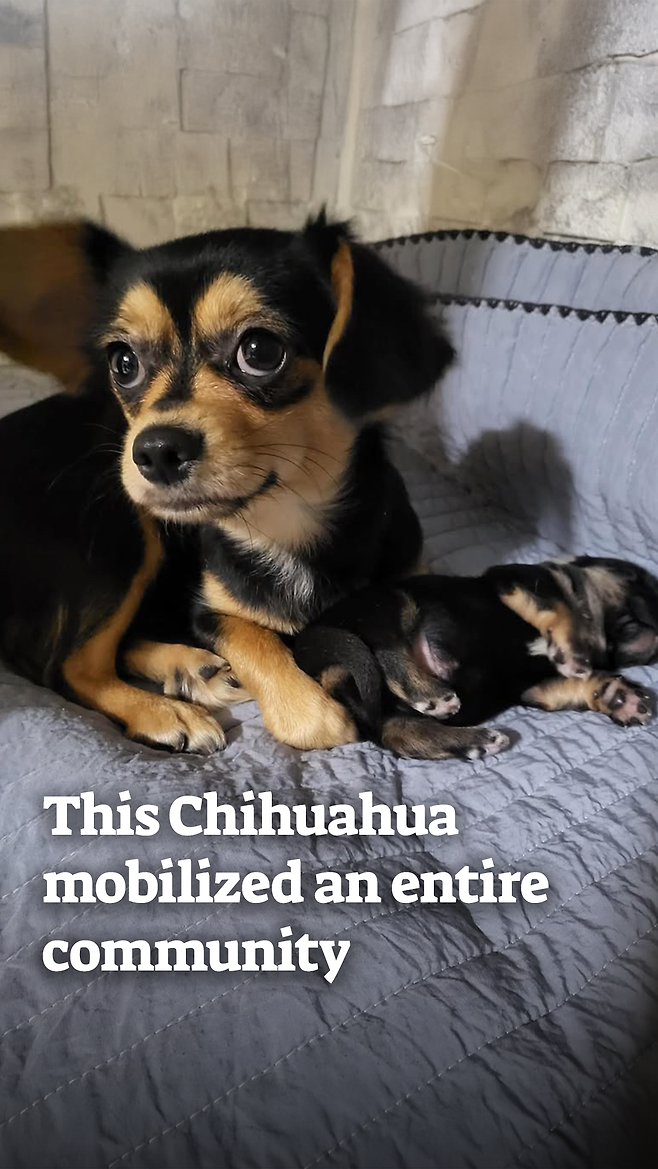
Weeks later, that same dog — now called Charm — is no longer in a municipal shelter. She is in foster care in Pyeongtaek, recovering under the care of a volunteer-run rescue group. But just as her story seemed to be settling into a hopeful rhythm, it took another unexpected turn.
Charm was pregnant. She has since given birth to a single puppy.
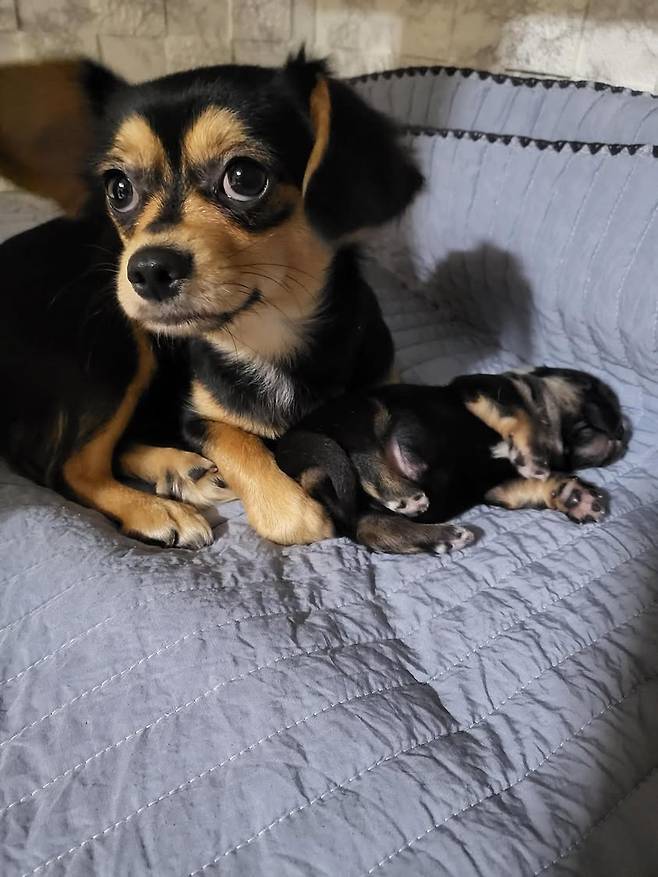
What began as a split-second decision by a passerby has since grown into a story about how fragile and complex South Korea’s rescue system can be — and how many people it can take to give one small dog, and in this case, her unexpected puppy, a second chance.
As Charm’s story circulated online, so did concern. In comment sections and community forums, some readers worried that her transfer to a government-designated shelter could put her at risk of euthanasia — a fear that, while not always accurate, reflects widespread anxiety about what happens to unclaimed animals once they enter the system.
That concern soon turned into action.
After reading about Charm, Ann-Marie Villarose, a reader based in Texas, launched a GoFundMe campaign to help rescue the Chihuahua and secure her placement with a private rescue.
“Hello! If you're reading this, you likely saw the Korea Herald story about the Chihuahua that was found running the streets of Seoul, lost and scared,” Villarose wrote in the fundraiser description.
“In order to save her from the euthanasia (kill) shelter she was sent to, I enlisted the help of Rebel Rescue South Korea … a rescue dedicated to reducing the number of precious creatures lost to euthanasia during Korea's shelter crisis.”
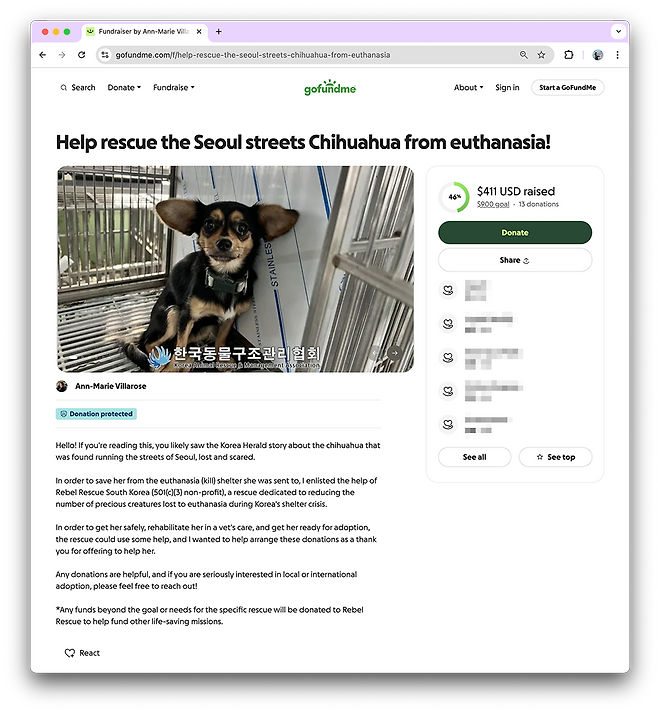
The fundraiser aimed to cover the costs of pulling Charm from the shelter, providing veterinary care and preparing her for adoption. Villarose added that any funds raised beyond Charm’s needs would be donated to support other rescue missions.
The appeal quickly drew donations and inquiries from people both in Korea and abroad — enough for Rebel Rescue South Korea to step in.
Robin Lucas, president of Rebel Rescue South Korea, said the decision was not automatic.
“I contacted my volunteers in Korea because a particular shelter she went to, KARMA, is a kill shelter, and I had rescue dogs from there before,” Lucas said. She added that to pulling Charm required going through the shelter’s formal application process.
“One of my volunteers was selected through that process, which allowed us to take her out of the shelter,” she said.
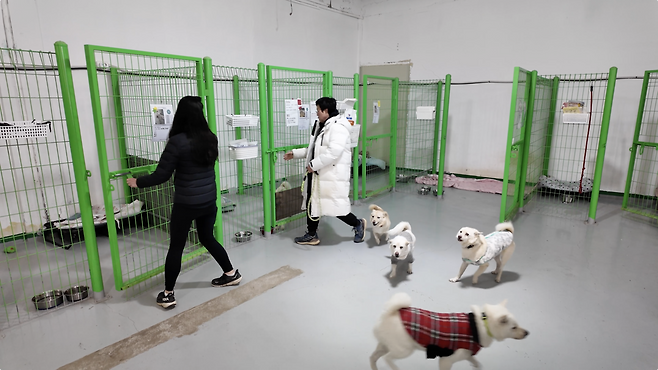
KARMA, Korea Animal Rescue & Management Association, is one of Seoul’s designated large animal shelters, where rescued animals are subject to standard adoption procedures and, if not adopted within a certain period, may end up being euthanized, a system that has led private rescue groups to refer to them as “kill centers.”
While animals housed at such facilities are in principle available for public adoption, rescue groups sometimes step in by applying to take custody of them if there is concern that an adoption may not materialize within the required timeframe.
Rebel Rescue, founded by military spouses and now operating a shelter in Pyeongtaek, works primarily through volunteers and foster homes. At any given time, the group cares for around 50 dogs, many pulled from municipal shelters, hoarding cases or the streets.
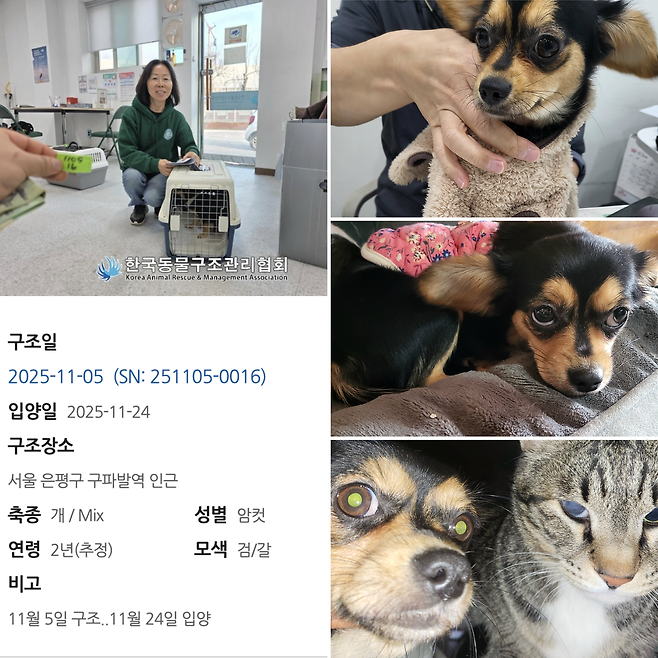
On Nov. 24, 19 days after she was found on a road near Gupabal Station in Seoul, Rebel Rescue picked Charm up from KARMA, where she had been transferred after no owner came forward.
Debate over how to address South Korea’s growing animal welfare challenges is not new. As of December last year, more than 15 million people in the country owned pets, accounting for nearly 30 percent of the national population, according to a report released by KB Financial Group in June. This surge in pet ownership has been mirrored by a booming pet industry, with consumer trends such as pet strollers outselling baby strollers for the first time in 2023.
Yet the rise in pet ownership has been accompanied by a persistent increase in abandonment. From Feb. 5 to March 5 alone, a total of 2,269 dogs and cats were registered at public shelters nationwide — roughly 75 animals per day. Shelter operators say commonly cited reasons include potty training issues, chewing and shedding — often natural instincts reframed as “problematic behaviors” — or losing interest when a breed goes out of fashion.
At the same time, the country’s shelter infrastructure has failed to keep pace. The number of public animal shelters fell from 269 in 2021 to 228 in 2023, intensifying overcrowding at remaining facilities.
Rising care costs have added further strain. Government data show the average cost of caring for a rescued animal at a public shelter rose to 435,000 won ($300) per animal last year, up 31.4 percent from the previous year, and can be significantly higher for animals requiring medical treatment.
Together, these pressures have left municipal shelters struggling to cope, increasingly pushing private rescues and volunteers to absorb the shortfall amid limited public funding — highlighting a widening gap between the popularity of pet ownership and the systems meant to support it when things go wrong.
For Yoo Han-mi, a longtime volunteer who handles medical transport, fostering and nursing, the strain is constant.
“Medical costs are enormous. Volunteers are few,” she said. “Some shelters want to save more animals but just don’t have the conditions to do so. One more rescue always means one more space, one more medical bill, one more person.”
In recent years, policymakers and advocacy groups have explored a range of measures, from expanding public awareness campaigns and strengthening registration requirements to more controversial proposals such as a “pet tax” aimed at discouraging irresponsible ownership. While such ideas have sparked public backlash and remain under discussion, they reflect growing recognition that abandonment cannot be addressed through shelters alone.
Broader conversations around animal rights have also gained momentum, most notably with South Korea’s decision to phase out the dog meat industry, with a full ban set to take effect in 2027 — signaling a shift in how animals are viewed within society.
As debates over responsibility, funding and policy continue, volunteers say the gap between intention and infrastructure remains wide. Still, Lucas believes that even a single rescue can help shift public awareness — and, in some cases, save more than one life.
For volunteers on the ground, that visibility can be the difference between an animal finding help — or being overlooked.
“Her story is sad, but it’s also hopeful,” said Kikki Tso, a volunteer with Rebel Rescue and a military spouse. “I hope people see that the dogs and cats you see are worth saving — and that shelters and rescues play an important role in making that possible.”
Copyright © 코리아헤럴드. 무단전재 및 재배포 금지.