[Contribution] Rethinking welfare through Seoul Stepping Stone Income Project
South Korea’s welfare system stands at a pivotal moment. The country is now a “superaged society,” with more than one in five people over 65 and the highest old‑age poverty rate in the OECD.
Despite high tertiary‑education attainment, many young Koreans remain neither working nor in school.
As technology reshapes labor markets and incomes become more volatile, it is time to reconsider how Korea supports its most vulnerable citizens.
To address these challenges, the Seoul Metropolitan Government, together with an academic research consortium, launched the Stepping Stone Income Project in 2022. Designed as a randomized controlled trial, the SSIP aimed to provide clear evidence for the future of welfare policy.
Over three years, more than 1,500 low-income households received monthly cash transfers, while about 3,000 comparable households served as a control group.
Eligibility initially applied to households earning below 50 percent of the median income and was later expanded to include those earning up to 85 percent; the benefit equaled half of the gap between household income and that threshold — what we called “halving the gap.”
The findings, drawn from households earning below 50 percent of the median income, are revealing. Average household income rose by around 25 percent, while expenditures increased by 11 percent, concentrated in essentials such as food, health care and utilities.
Mental‑health indicators improved during the first year, especially among previously unemployed households, demonstrating how predictable, unconditional income can reduce stress and insecurity.
However, we also observed a decline in work participation. The share of household heads who had worked in the previous week fell by about 14 percentage points.
It is not yet clear whether this change reflects reduced motivation to work or a shift over time toward caregiving, education or health management — an area that requires further research. Importantly, the program did not appear to have any adverse effects on other family members.
We built a quantitative economic model to simulate what might happen if the SSIP were scaled up nationwide. The results highlight familiar trade‑offs: broader coverage lowers poverty, but also reduces labor participation and savings, raising fiscal costs.
A more targeted version -- limited to households below 50 percent of median income -- appears more sustainable and, according to our simulations, performs better than both the current National Basic Livelihood Security System and a universal basic income.
The lesson from the SSIP is not that income support should be withdrawn, but that its design must balance security with self‑reliance. South Korea’s next step should combine stable income protection for the poor with stronger connections to work, training and health services.
Evidence‑based policy experiments like Seoul’s Stepping Stone Income Project show the path forward — where social protection is guided by data, not by ideology.
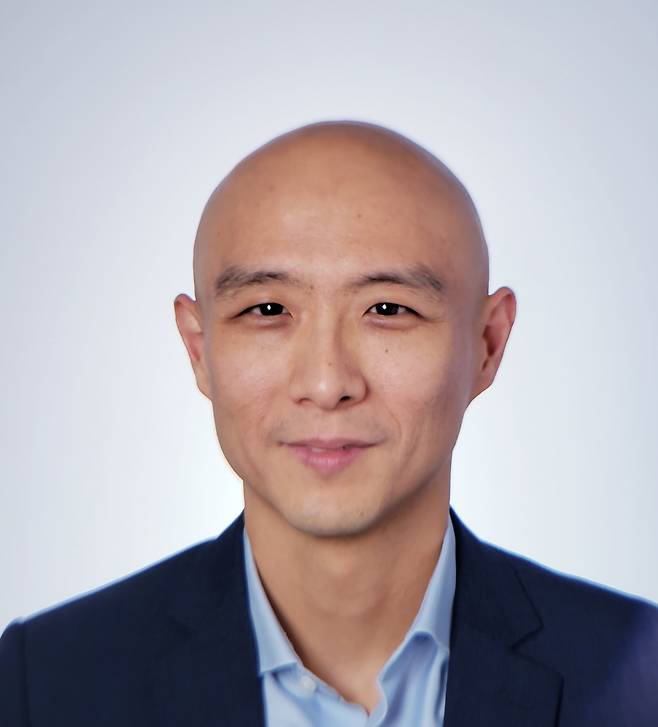
Park Sang-yoon is an Associate Professor in the Division of Social Science at the Hong Kong University of Science and Technology. He currently serves as an Advisory Panel Member for the Seoul Stepping Stone Income Project, and has also worked as a consultant for the International Finance Corporation at the World Bank. -- Ed.
Copyright © 코리아헤럴드. 무단전재 및 재배포 금지.