S. Korea to raise fines sharply for monopolies, cartels
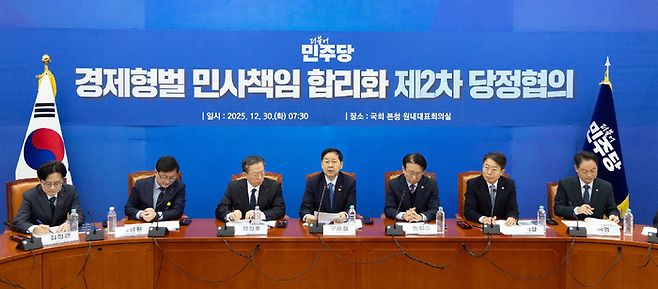
The Fair Trade Commission announced revisions that would lift the maximum fine for market-dominant firms to 20 percent of relevant sales, citing international benchmarks such as the European Union, which allows penalties of up to 30 percent, and Japan, which permits fines of up to 15 percent.
An FTC official said the higher ceiling may appear strict but stressed that enforcement would be calibrated based on the severity and nature of violations.
The move follows growing political pressure after major data-leak incidents involving companies such as Coupang, reflecting President Lee Jae-myung’s view that penalties must be strong enough to threaten a company’s survival when public harm is severe.
Under the plan, cartels that fix prices or output would face fines of up to 30 percent of sales, up from 20 percent. For cases where relevant sales are difficult to calculate, the cap on fixed fines would rise from 4 billion won ($2.8 million) to 10 billion won. Penalties for obstructing transactions—by online platforms, department stores or large retailers—would jump tenfold, from 500 million won to 5 billion won, while prison terms would apply only if corrective orders are ignored.
Fines would also be raised for other violations, including the failure to pay subcontractors after receiving advance payments, improper franchise contracting practices, and lapses by telecom operators in preventing location data leaks. In addition, a new penalty regime will be introduced for violations involving excessive economic concentration, such as illegal practices by holding companies.
The government said the overhaul is designed to strengthen financial accountability for serious misconduct, while reducing excessive reliance on criminal punishment, thereby recalibrating enforcement to enhance deterrence without discouraging legitimate business activity.
At the same time, the reform package eases penalties for minor administrative breaches by shifting certain offenses from criminal sanctions to administrative fines. For instance, if an automaker fails to submit documents verifying compliance with greenhouse gas emissions standards by the deadline, the existing 3 million won criminal fine would be converted into a 3 million won administrative penalty. Similarly, the unauthorized use of business names resembling regulated financial terms such as “financial investment” or “securities” would be downgraded from up to one year in prison to an administrative fine of up to 30 million won.
Copyright © 매일경제 & mk.co.kr. 무단 전재, 재배포 및 AI학습 이용 금지
- [단독] 중국, 대학판 ‘한한령’...한국대학 15곳 학위인정 목록서 제외 - 매일경제
- “새해부터 한국에 50%”…미국처럼 관세 날벼락 때린 멕시코 - 매일경제
- 유부남과 키스…‘상간녀 의혹’ 숙행, 자필 사과 - 매일경제
- “옆집 엄친아 연봉 2억이래” 백수아들 한숨…2030 소득양극화 심화 - 매일경제
- [속보] 배우 안성기, 전날 병원 응급실 이송…현재 중환자실 위중 - 매일경제
- [속보] 올해 소비자물가 상승률 2.1%…5년 만에 최저 - 매일경제
- “서울 자가 부담없이 결혼 준비”…한국男·일본女 ‘결정사’ 붐비는 이유 - 매일경제
- “유복한 환경에도 방황, 부모님께 미안”…고 장제원 아들 노엘, 뒤늦은 후회 - 매일경제
- “멀리 이사가겠다”…‘억만장자세’ 추진에 부자들 화나게 한 이 동네 - 매일경제
- 이번엔 美서 태극기 휘날릴까…외국 베팅사이트, 한국 야구 WBC 7~8위 전망 - MK스포츠