Chinese airlines expand presence in Korea with half-price transit promotions
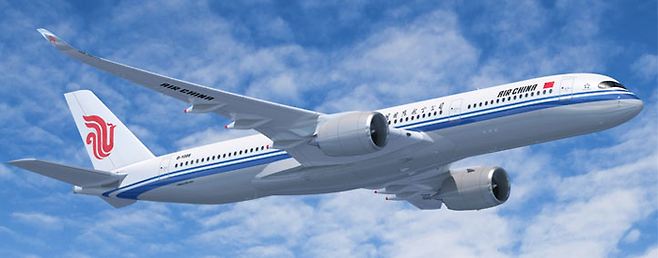
According to multiple sources from the aviation industry on Sunday, Air China and China Southern Airlines are leading this transit business out of Incheon.
Air China, leveraging routes between Incheon/Gimpo and Beijing, has built strength in long-haul services to Europe and North America that pass through Russian airspace.
China Southern Airlines, meanwhile, is solidifying its image as a transit specialist by connecting flights from hubs in southern China – such as Guangzhou – to Europe and Southeast Asia.
Their price competitiveness is overwhelming.
While round-trip tickets from Incheon to Europe or the U.S. typically cost over 2 million won ($1,386) on non-stop flights operated by Korean carriers, fares via China are flooding the market at half price levels of 800,000 won to just over 1 million won.
Data from the Ministry of Land, Infrastructure, and Transport showed that Korean carriers transported a total of 999,455 passengers on Incheon-China routes during October and November, while Chinese airlines carried nearly 1.15 million passengers during the same period.
Chinese airlines accounted for 55.8 percent of passenger market share, while Korean carriers’ share fell 4.2 percentage points on year to 44.2 percent, marking the first time Chinese airlines have taken the lead.
Passenger growth was also far stronger for Chinese airlines at 28.9 percent compared with 19.5 percent for Korean carriers.
Industry analysts attribute this trend largely to growing demand for low-cost transit flights via China on routes departing from Incheon.
The dominance of Chinese airlines is particularly pronounced on European routes.
Since the outbreak of the Russia-Ukraine war, Korean carriers have been forced to detour around Russian airspace, while Chinese airlines can continue to use the shortest routes through Russia, cutting flight times by more than two hours and significantly reducing costs.
This has resonated especially with cost-conscious travelers in their 20s and 30s, accustomed to bargain online shopping platforms like AliExpress and Temu, who prioritize lower prices even at the expense of some inconvenience.
The timing also favors Chinese airlines, as concerns are growing over potential fare hikes on long-haul routes due to reduced competition following the merger of Korean Air Lines Co. and Asiana Airlines Inc.
“While Korean airlines have been reorganizing their long-haul routes after the pandemic, Chinese airlines are using the Korean market as a testbed to accelerate experiments with transit hub strategies,” said an industry official. “If this trend becomes entrenched, it could ultimately affect Incheon Airport’s long-term competitiveness as a global hub.”
Copyright © 매일경제 & mk.co.kr. 무단 전재, 재배포 및 AI학습 이용 금지
- ‘1인당 5만원’ 보상해도 욕먹는 쿠팡, 왜?…쿠팡서 쓸 수 있는 돈 달랑 5천원 - 매일경제
- 용인산단 건물 짓고있는데 공장 이전?…K반도체 무너진다 - 매일경제
- 원화값 올해 평균 1420원대 IMF 넘어 역대 최저치 눈앞 - 매일경제
- “우리 입석인데, 특실 자리 바꿔줘”…커플 요구 거절하자 “싸가지 X나 없네” 욕설 - 매일경
- [속보] 쿠팡 1인당 5만원 보상안 시행...총 1조6850억원 규모 - 매일경제
- “쇼핑은 테무, 여행도 중국걸로”…‘반값 환승’에 한국 하늘길 내줬다 - 매일경제
- “내가 부서지더라도”…린, 이수와 이혼 4개월만 의미심장 글 - 매일경제
- BJ·사업가 주거지로 은밀히 찾아간 간호조무사…마약류 수천회 투약 혐의 구속 - 매일경제
- 1330일 만에 ‘용산시대’ 결별…이재명 대통령 청와대 출근 - 매일경제
- “본격적으로 추진할 것”…강민호 품에 안은 삼성, 이제는 원태인 다년 계약에 올인 - MK스포츠