KRW poised for weakest annual average against U.S. dollar
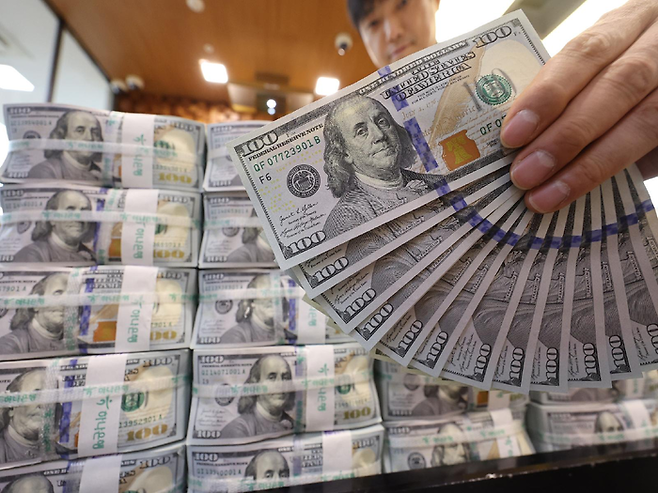
According to Seoul Money Brokerage Services Ltd. on Sunday, the won closed at 1,440.3 per dollar on Friday. The currency had weakened to as low as 1,483.6 on Tuesday, prompting the government to roll out a series of foreign exchange stabilization measures.
Those moves helped trigger a sharp rebound, with the won rising to 1,449.8 on Wednesday and moving further into the 1,440 range the following day.
Observers attributed the recovery to the National Pension Service’s activation of strategic currency hedging and policy measures offering tax incentives for long-term domestic equity investment.
On Wednesday, the NPS decided to operate strategic hedging on a discretionary basis without committee approval, which market participants say helped fuel the won’s rebound.
However, the currency’s annual average is already approaching a record low. As of Friday, the year-to-date average closing rate stood at 1,422.03 per dollar, compared with an annual average of 1,394.9 won in 1998, immediately after the foreign exchange crisis, marking the weakest level on record.
The won’s annual average has been on a clear downward trend in recent years, falling from 1,291.95 in 2022 to 1,305.41 in 2023 and then to 1,363.98 last year.
This year, monthly closing rates have been in the 1,400 range for all months except May through August, underscoring signs that won weakness is becoming entrenched.
Markets see limited near-term downside given authorities’ strong resolve to manage year-end closing levels.
However, questions remain over whether stability driven by official intervention can be sustained into next year. While government measures have eased short-term volatility, they have not addressed the underlying foreign exchange supply-demand imbalance weighing on the currency.
With overseas investment by individuals and companies continuing to rise, many analysts expect the 1,400 won range to become the new normal.
Copyright © 매일경제 & mk.co.kr. 무단 전재, 재배포 및 AI학습 이용 금지
- [속보] 쿠팡, 정보유출 보상 1인당 5만원…1조6850억원 규모 - 매일경제
- 용인산단 건물 짓고있는데 공장 이전?…K반도체 무너진다 - 매일경제
- 원화값 올해 평균 1420원대 IMF 넘어 역대 최저치 눈앞 - 매일경제
- “우리 입석인데, 특실 자리 바꿔줘”…커플 요구 거절하자 “싸가지 X나 없네” 욕설 - 매일경
- “쇼핑은 테무, 여행도 중국걸로”…‘반값 환승’에 한국 하늘길 내줬다 - 매일경제
- “내가 부서지더라도”…린, 이수와 이혼 4개월만 의미심장 글 - 매일경제
- [속보] 쿠팡 1인당 5만원 보상안 시행...총 1조6850억원 규모 - 매일경제
- 1330일 만에 ‘용산시대’ 결별…이재명 대통령 청와대 출근 - 매일경제
- 김건희 특검 180일 수사 마침표…최종 수사결과 발표 - 매일경제
- “본격적으로 추진할 것”…강민호 품에 안은 삼성, 이제는 원태인 다년 계약에 올인 - MK스포츠