The path toward an innovative leading nation
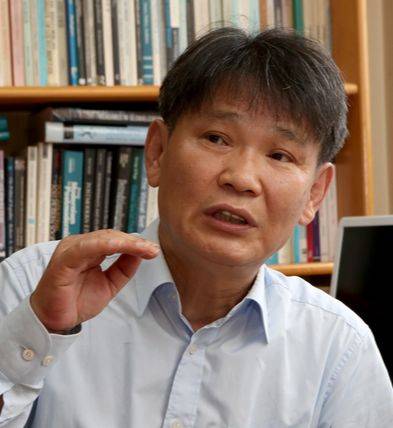
Kim Ho-ki
The author is a professor emeritus of sociology at Yonsei University.
The closing days of 2025 now overlap with the opening of 2026. Several events in the waning year marked historic turning points. On April 4, the Constitutional Court upheld an impeachment motion. On June 4, the government led by Lee Jae Myung took office. On Oct. 29, Korea and the United States concluded tariff negotiations, and on Oct. 31, Gyeongju hosted the Asia-Pacific Economic Cooperation, or APEC, summit. After the winter solstice, the lengthening daylight now guides the country toward a new year.
![President Lee Jae Myung (center) speaks at a briefing on the vision and development strategy for K-semiconductors in the AI era at the presidential office in Yongsan, Seoul, on Dec. 10. [YONHAP]](https://img2.daumcdn.net/thumb/R658x0.q70/?fname=https://t1.daumcdn.net/news/202512/29/koreajoongangdaily/20251229000353297nqlt.jpg)
Looking back, the spirit of 2025 can be summed up as recovery and normalization. That spirit revealed both achievement and limitation. Restoring democratic order after a regressive episode of martial law and rebuilding diplomatic stability through a series of summits demonstrated Korea’s institutional resilience. At the same time, entrenched political polarization, widening asset inequality, a persistent demographic crisis and accelerating regional decline underscored the country’s unresolved structural challenges.
The idea of a “spirit of the times” poses two questions. One asks where we stand. The other asks where we should go. Answering them requires a sober assessment of the structural constraints and path dependencies shaping Korean society, followed by careful choices within those limits. A credible national strategy must rest on an objective diagnosis of the present and a realistic vision of what can be achieved.
As 2026 opens the second quarter-century of the 21st century, global structural constraints can be traced to a new phase that began after the 2008 financial crisis. Prolonged low growth and the normalization of a “new normal,” the U.S.-China economic conflict and the emergence of a new Cold War order, the advance of artificial intelligence and industrial restructuring, the rise of populism and the erosion of democratic norms, entrenched inequality and intensifying social conflict, the spread of the information society alongside a post-truth environment, global population growth and the advent of the 100-year life, deepening climate crises and demands for global governance, the Covid-19 pandemic and rising systemic risks and the parallel strengthening of individualism and tribalism all define this phase.
These uncertainties are expected to persist in 2026. New protectionism and a new Cold War are replacing free trade and post-Cold War optimism. A period marked by the coexistence of war and peace is becoming more entrenched. Twenty-first-century populism, armed with a rigid divide between “elites” and “the people,” is merging with left- and right-wing extremism to threaten pluralistic political orders. At the same time, relentless change driven by the convergence of AI, platforms and collective intelligence is pushing humanity further into a new civilizational era defined by the end of familiar certainties.
Against this backdrop, what should be Korea’s guiding spirit in 2026? Three priorities stand out.
First is becoming an innovative, leading nation. Building on the achievements of an industrial economy and a democratic system, Korea must now pursue innovation-led growth with urgency through a concrete national strategy. Clear road maps for emerging industries such as AI, biotechnology and energy are needed, alongside actionable plans to transform core manufacturing sectors, including semiconductors, automobiles and shipbuilding. Comprehensive reforms in finance, labor, education and regulation must support these efforts. The lesson of the post-financial-crisis era is clear. Without new growth, there can be no new distribution. In an age of intensified innovation competition and accelerating AI adoption, Korea must actively respond to global constraints and seek a productive link between renewed economic growth and a new social contract.
![President Lee Jae Myung shakes hands with Chinese President Xi Jinping during a group photo session at the 2025 Asia-Pacific Economic Cooperation summit at the Gyeongju Hwabaek Convention Center on Nov. 1. [YONHAP]](https://img3.daumcdn.net/thumb/R658x0.q70/?fname=https://t1.daumcdn.net/news/202512/29/koreajoongangdaily/20251229000354820pwsb.jpg)
Second is the democratization of democracy. Today’s democratic crisis stems largely from populism that thrives on hatred and demonization. Such populism divides society into two opposing camps and depletes the social cohesion needed for a renewed social contract. As Korea approaches four decades since democratization, it faces the task of deepening democratic institutions and culture. Constitutional reform and the cultivation of pluralistic public discourse and civic education can no longer be postponed.
Third is a foreign policy centered on national interest. Over the past decade, the global order has shifted from post-Cold War openness to a new Cold War defined by self-help. In response, Korea must pursue pragmatic diplomacy that places national interest first while seeking a stable approach to peace on the Korean Peninsula. Beyond this, just as K-culture has elevated Korea’s cultural standing, the country should aim to become a strategic actor advancing global agendas for peace and shared prosperity.
With local elections scheduled for June 2026, these aspirations may sound idealistic. They are not. Korea has already lost valuable time hesitating at the crossroads of progress and retreat since the financial crisis. There is little time left. The country must move decisively from the past to the future. One can hope that 2026 becomes the first year on the path to becoming an innovative, leading nation.
This article was originally written in Korean and translated by a bilingual reporter with the help of generative AI tools. It was then edited by a native English-speaking editor. All AI-assisted translations are reviewed and refined by our newsroom.
Copyright © 코리아중앙데일리. 무단전재 및 재배포 금지.
- BTS's Jimin, V and Jungkook named to Korea's top 100 richest shareholders under 30 list
- Presidential office to formally return to Blue House at midnight Sunday
- LG Energy Solution agrees to cancel $2.7 billion battery deal with U.S. firm
- North Korea's Kim Chang-son, leader Kim Jong-un’s aide, dies
- Registered foreign nationals in Korea hit record 1.6 million, clustering around Seoul
- 'Relationship poverty' on the rise in Korea as loneliness strikes even those who seemingly have it together
- Instant ramyeon with a side dish of Ferrari? The ‘Poverty Challenge’ sparks online outrage.
- Blackpink to release limited-edition gaming gear in collab with tech company Razer
- Exodus of U.S. clients pushes Korean battery makers to the brink
- President, first lady attend Christmas service in former constituency