Drugmakers push back against government’s generic price cut plan
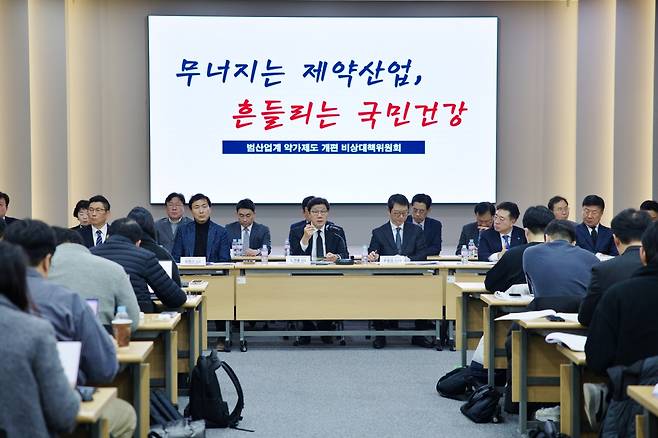
Korea’s pharmaceutical industry is bracing for a major clash with the government over a proposed cut to generic drug prices, warning the move could undermine research investment and trigger significant job losses.
At the center of the dispute is the Ministry of Health and Welfare’s plan to lower the reimbursement price of generic drugs from 53.55 percent of the original branded medicine to 40 percent. The government says the measure is aimed at curbing health care costs and improving patient access, noting that a similar price cut in 2012 helped reduce annual drug spending by about 1.46 trillion won ($1 billion).
“By setting up a reward system that corresponds to the degree of investments for innovation and medical security, we expect (the reform plan) to serve as a stepping stone for the domestic pharmaceutical industry,” the Health Ministry said in a press release on Nov. 28 this year.
The Health Ministry plans to implement the newly revised drug pricing measures in the second half of 2026.
In response to the government’s plan, the pharmaceutical industry quickly formed an emergency committee comprising five organizations: Korea Pharmaceutical and Bio-Pharma Manufacturers Association, Korea Bio-Pharmaceutical Association, Korea Pharmaceutical Traders Association, Korea Drug Research Association and Korea Pharmaceutical Industry Cooperative.
“If we lower the price of generic drugs to 40 percent in accordance with the government’s plan, (the pharmaceutical industry) projects an annual loss of up to 3.6 trillion won,” said Yun Woong-sup, in a press conference at the KPBMA’s headquarters in Seoul on Monday.
“Among (Korea’s) top 100 pharmaceutical companies, the average operating profit rate is 4.8 percent, and the net profit rate is 3 percent right now. Given this, the (government’s) drug pricing revision plan is a declaration to give up the domestic pharmaceutical industry’s future.”
Yun expressed concern over shrinking investment due to the pricing changes, saying drugmakers will become more reluctant to spend on R&D for new drugs.
According to the emergency committee, the government’s proposal to cut generic drug prices will put 14,800 jobs at risk, just over 10 percent of workforce n in the Korean pharmaceutical sector.
The emergency committee also argued that the price cut would shrink the pharmaceutical market and dampen the industry’s competitiveness on the global stage. It also highlighted that the 2012 drug price cut led to short-term savings, but eventually increased spending on drugs by 13.8 percent.
Industry sources said the government’s plan may initially reduce the burden on customers and improve the structure of the National Health Insurance, but that negative side effects could be much more severe.
“If mid-sized pharmaceutical firms have to stop the production of certain generic drugs due to low profitability, patients may have to travel further to find the drugs they need immediately,” said an official at a local pharmaceutical company.
“Another problem is that (the government’s current proposal) could drive some drug makers out of business and leave bigger firms with less money to invest in the development of new drugs. This will lead to an overall lack of new drugs in the industry and the loss of medical sovereignty.”
Copyright © 코리아헤럴드. 무단전재 및 재배포 금지.