When wealthy call themselves poor
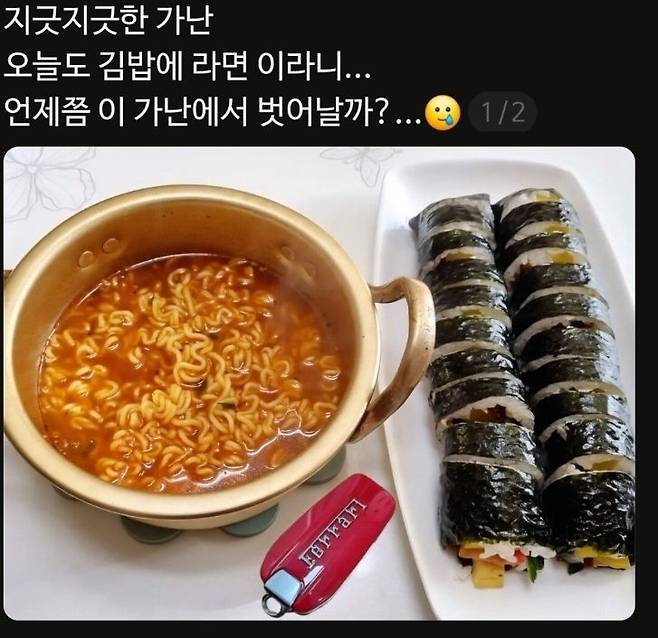
A new South Korean social media trend that pairs conspicuous displays of wealth with ironic references to poverty is drawing backlash for trivializing economic hardship.
Dubbed the "poverty challenge," the trend involves users sharing photos or videos showcasing a luxurious lifestyle — including high-end cars, designer goods and expensive travel — while captioning the posts with phrases such as "this unbearable poverty" or "this exhausting life of poverty."
Recent posts circulating online include images of instant noodles eaten in first class airline cabins described as “severe poverty,” a 15 million won ($11,000) Dior baby stroller framed as a purchase that left a family “broke,” and photos taken from the driver’s seat of luxury sports cars with designer watches visible, accompanied by captions lamenting the lack of money for fuel.
Other examples show spacious living rooms filled with high-priced artwork, captioned with remarks such as, “All I have are a few paintings and a dog,” further fueling criticism.
Online reaction has been largely negative. Many users questioned whether poverty should be used as a joke, saying the posts cross a line.
Some commented that straightforward displays of wealth would be less offensive than framing affluence as hardship. Others said the trend reflects a lack of awareness about the realities of financial distress.
The controversy has also revived references to author Park Wan-suh’s 1975 short story “Stolen Poverty," which critiques how the affluent appropriate the idea of poverty as an aesthetic or narrative device. The comparison has gained traction as many of the trend’s participants appear to be high-income professionals, such as doctors and lawyers.
Critics argue that the trend reduces poverty to a form of entertainment, ignoring the emotional and physical toll it takes on those who struggle to afford necessities such as food, housing and medical care. Several users said the posts felt like mockery rather than humor.
Copyright © 코리아헤럴드. 무단전재 및 재배포 금지.