Faker, anomaly in esports
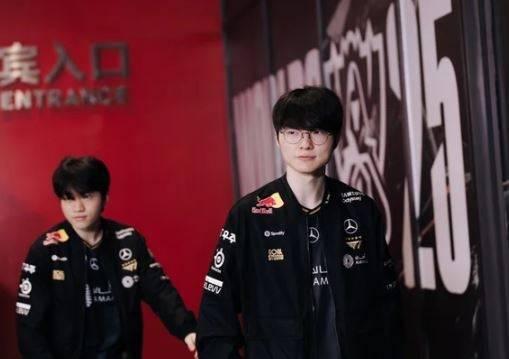
In South Korea, December is traditionally when companies lay out their plans for the year ahead — a moment for roadmaps, restructuring and long-term vision.
In esports, there is one figure whose personal decisions carry similar weight. Lee “Faker” Sang-hyeok, whose career trajectory has long functioned as a barometer for the League of Legends ecosystem, is one of the few individuals whose direction alone can influence the esports industry at large.
On Dec. 18, Lee held a solo press conference reflecting on T1’s 2025 Worlds run, during which he outlined his plans with the organization going forward and even accepted an unconventional challenge: a match pitting T1 against Grok-5, a next-generation AI model developed by Elon Musk’s xAI.
Most notably, Lee stated that his professional career will continue and likely conclude with T1, without a team change along the way. Such permanence is increasingly uncommon in modern esports, where roster turnover is frequent due to performance pressure, chemistry issues or financial incentives.
At 29, Lee represents an anomaly in modern esports. He has spent his entire 12-year professional career with a single organization, not once competing under another banner.
“While I chose T1, T1 also chose me. Competing with a single team for such a long time carries great meaning, and I think there are many positive aspects to it," said Lee.
Lee’s longevity with T1 coincides with a career that has helped define the modern era of esports. He has been central to the organization’s unprecedented sixth World Championship title, earned a gold medal in esports at the Asian Games and become a cultural reference point beyond competitive gaming. But, the road behind that success tells a far more complicated story.
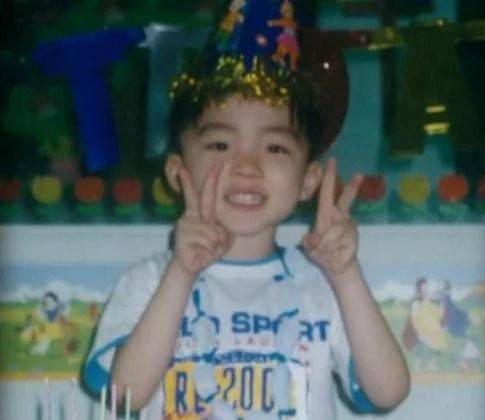
Born into financial hardship, Lee grew up in a household that qualified for basic livelihood assistance. Struggles doubled after his parents’ divorce, when he was left to live with his grandmother, father and younger brother in a crowded home of less than 50 square meters.
Then a computer purchased by his father served as his introduction to online games. Lee has said he quickly recognized his aptitude, seeing himself reaching the top of global rankings in the games he played as part of his pastime. Lee admitted he had been anticipating recruitment into professional esports — and the decisive opportunity arrived during his second year of high school.
Lee’s debut was a meteoric success from the outset. After debuting with T1 in 2013 at age 17, he won the World Championship the same year, going on to secure back-to-back Worlds titles in 2015 and 2016 like shooting fish in a barrel.
But the team's momentum stalled in 2017. T1’s loss in the Worlds final, capped by a crushing 0-3 defeat, marked the beginning of a prolonged downturn. The following year proved even more difficult, with T1 failing to secure major titles, and Lee’s silver medal finish at the 2018 Jakarta-Palembang Asian Games underscoring what is often remembered as the most challenging season of his career.
“Results didn’t come, and it was a really difficult period,” Lee said in a 2020 interview on "You Quiz on the Block." He acknowledged struggling with public criticism and said he sought counseling, working with a sports psychologist to navigate the mental strain.
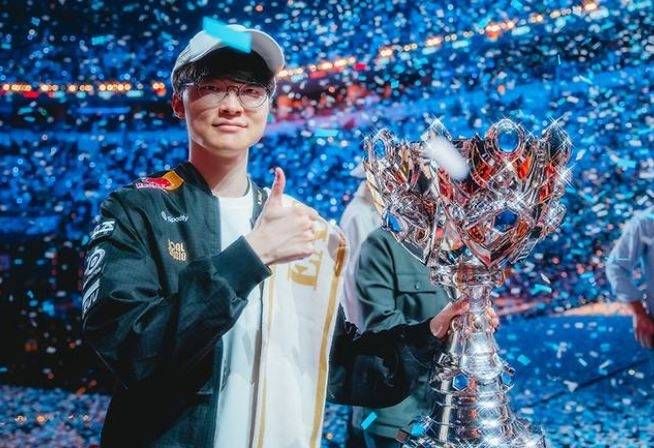
Those struggles would later shape his rebound. Beginning in 2022, Lee reestablished himself at the top level, winning gold at the Hangzhou Asian Games and capturing the 2023 World Championship as the oldest winner in the tournament’s history. He followed that with a legendary record: achieving LoL's first-ever three-peat Worlds wins with subsequent titles in 2024 and 2025.
At last week’s press conference, Lee spoke calmly about how his outlook has shifted over his 12-year career. Reflecting on the 2017 finals loss, he said his understanding of defeat has changed.
“Back then, losing 0-3 made me feel frustrated and resentful,” he said. “Now, defeat is something that pushes me to grow. My passion hasn’t faded — the way I accept loss has changed.”
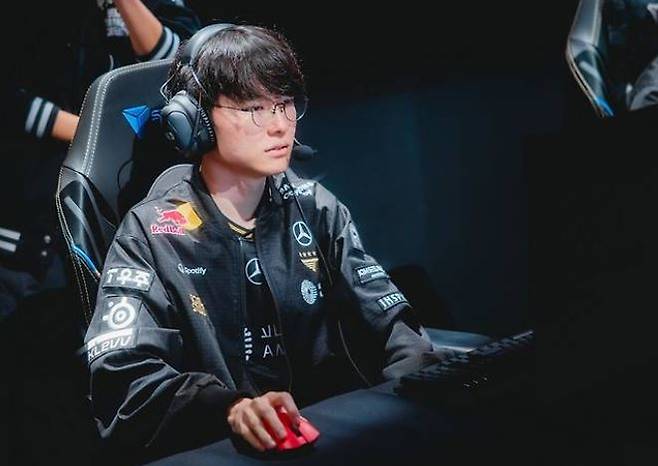
Beyond his competitive record, Lee is often cited for his fundamental reshaping of the middle lane role in LoL.
Before his rise, mid laners were expected to play conservatively, prioritize safe farming and contribute primarily in the later stages of the game. Lee upended that model, with his approach emphasizing aggressive laning and constant pressure, frequently forcing opposing teams to divert jungle resources to contain him. These prolonged, uneven engagements shifted how teams allocated attention and tempo, redefining what was expected from mid-laners — a traditionally restrained role.
His influence extended to champion, or character, selection as well. As Lee ascended to the professional stage, high-mobility, high-risk champions such as Zed surged in popularity for mid laners, while slower champions like Anivia gradually faded from competitive relevance.
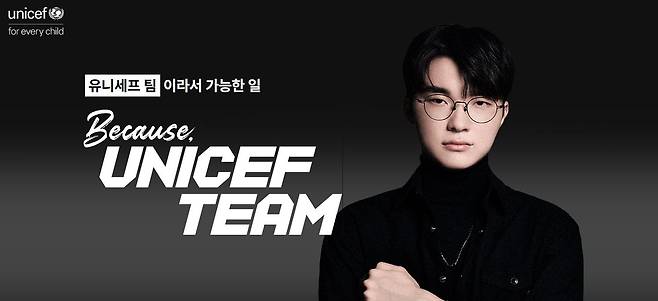
Off the stage, in an industry often marked by controversies related to behavior or online conduct, such as verbal abuse and a lack of professional awareness, Lee is known for a reserved public image, blending a curious mix of donations and reading to set himself apart from established images of gamers.
His known donations — which total some 200 million won ($136,710) — and reported undisclosed donations earned him his spot as a UNICEF ambassador last year, and campaigns associated with him have prompted rapid fan-driven fundraising.
Another defining aspect of his career is his relationship with reading. Lee has repeatedly said that studying, including reading widely, is integral to improving at LoL. He has credited books with reshaping both his competitive mindset, even leading the nation's top book chain Kyobo Book Center to curate a dedicated “Faker’s Recommended Books” section that reflects his wide-ranging interests.
Frugality is another hallmark. Despite reportedly earning around 50 billion won annually, Lee has said he lets his parents manage his finances and lives on a monthly allowance of about 200,000 won.
“I don’t usually spend much money. The only time I might spend around 200,000 won is when I buy necessities like toothpaste or toothbrushes. ... Maybe after I retire, I’ll start spending a little more on myself," he said during a media appearance in 2016.
“I think I'd like to do more donations," Lee added.
Copyright © 코리아헤럴드. 무단전재 및 재배포 금지.