Korean cinema confronts its toughest year in decades
전체 맥락을 이해하기 위해서는 본문 보기를 권장합니다.
"When productions helmed by major directors struggle to attract audiences, the issue may extend beyond promotion," a local production company official said. "The assumption that a big name could guarantee at least 5 million admissions is out the window."
"That approach doesn't work anymore. Audiences have become more sophisticated through streaming, and they're thinking harder about value for money."
이 글자크기로 변경됩니다.
(예시) 가장 빠른 뉴스가 있고 다양한 정보, 쌍방향 소통이 숨쉬는 다음뉴스를 만나보세요. 다음뉴스는 국내외 주요이슈와 실시간 속보, 문화생활 및 다양한 분야의 뉴스를 입체적으로 전달하고 있습니다.
By nearly every meaningful measure, 2025 will be remembered as one of the most challenging years in the history of Korean cinema.
Investment in film production dried up, leading to a sharp decline in wide-release titles. Theater closures accelerated across the country. Audiences continued their migration away from multiplexes. Even the most anticipated productions from celebrated filmmakers failed to generate the enthusiasm that exhibitors had counted on.
If the year demonstrated anything conclusively, it was that directorial prestige and star power no longer translate reliably into ticket sales.
For starters, Oscar winner Bong Joon-ho's "Mickey 17" arrived in February amid considerable anticipation — and for good reason. The Warner Bros. production carried a whopping $118 million budget, featured Robert Pattinson in dual roles alongside an ensemble cast including Steven Yeun, Naomi Ackie, Mark Ruffalo and Toni Collette.

It also marked the director's first feature since "Parasite" swept the Oscars five years earlier, and all eyes were on whether Bong could carry that momentum forward. Expectations ran particularly high on the home front, where industry watchers hoped the sci-fi spectacle might rival "Parasite's" extraordinary domestic run that racked over 10 million admissions.
Yet the final tally fell short of 3.1 million. Globally, revenues of approximately $133 million left Warner Bros. facing losses analysts estimated at $80 million.
Park Chan-wook ("Oldboy," "The Handmaiden") encountered similar difficulties with "No Other Choice," a darkly comedic thriller about a laid-off executive who embarks on serial murder to eliminate his job competition. After premiering in competition at Venice in August, the film made the rounds on the awards circuit, screening at Toronto and Busan before collecting the director prize at Sitges.
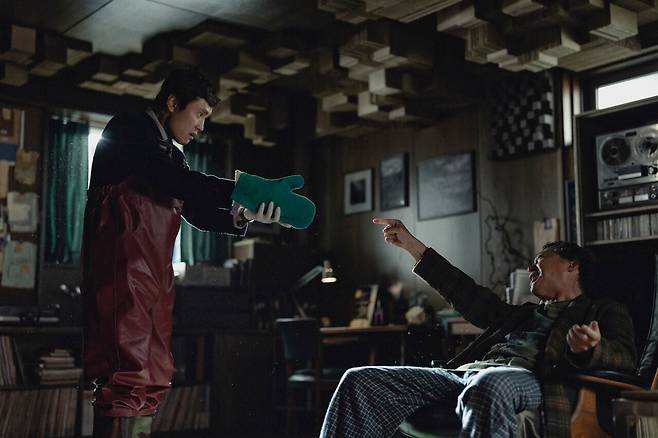
Domestic audiences remained largely indifferent, delivering just 2.9 million admissions. The figure was by no means disastrous, but fell well below expectations for what was supposed to be local distribution heavyweight CJ ENM's flagship release of the year. The entertainment giant has posted losses in its film division for three consecutive years, and recent high-profile releases have consistently underperformed.
Other big-budget productions fared even worse, with 'Omniscient Reader: The Prophecy' offering the year's starkest cautionary tale. Adapted from a popular web novel and starring Lee Min-ho and Blackpink's Jisoo, the fantasy epic opened July 23 and stalled out at barely 1 million, hobbled by poor reviews and backlash from fans over a compressed storyline. Its reported 30 billion won budget had required some 6 million admissions to break even.
The upshot was a grim milestone: the first year since the pandemic without a Korean production crossing 10 million admissions. The figure typically claimed by the biggest tentpole blockbusters has long been considered the standard for mega-hit status here.
"When productions helmed by major directors struggle to attract audiences, the issue may extend beyond promotion," a local production company official said. "The assumption that a big name could guarantee at least 5 million admissions is out the window."
Data from the Korean Film Council, the government body under the Ministry of Culture, Sports and Tourism responsible for film policy, lays bare an industry in retreat. Through November, cumulative admissions totaled 92.4 million — a 16 percent drop from the previous year, when figures were already deeply depressed.
The numbers also reveal a problem that appears distinctly Korean. The pandemic and streaming's growing dominance have battered theatrical markets everywhere, but Korea has been notably slow to bounce back.
Based on 2024 figures comparing revenue to 2019's pre-pandemic levels, the United States and United Kingdom had rebounded to between 70 and 80 percent, while France, Germany and Japan had practically returned to normal. Korea's box office, meanwhile, stagnated at 53 percent.
One explanation may lie squarely with the product itself. With investment drying up, major Korean productions have stuck to a familiar playbook: action-comedies built around star power, crime thrillers cut from the same cloth.
At the same time, audiences accustomed to the endless variety of works offered by streaming platforms have grown pickier about what justifies a trip to the theater.
"The fundamental issue is that films aren't delivering the same dopamine rush," film critic Yoon Sung-eun said. "People will pay 200,000 won for concerts, they'll pack baseball stadiums, but they're not going to cinemas. The industry kept making the same kinds of movies, hoping they'd at least break even.
"That approach doesn't work anymore. Audiences have become more sophisticated through streaming, and they're thinking harder about value for money."
The most encouraging sign came in the summer with "My Daughter is a Zombie." Starring proven box office draw Jo Jung-suk as a single father fighting to protect his zombie-infected teenage daughter, the film attracted 5.6 million viewers to become the highest-grossing Korean production of 2025.

The film was solid family-friendly fare, but it was the timing that proved particularly fortuitous. The July release coincided with an emergency intervention from the government aimed at reviving the struggling theater industry: a ticket discount initiative offering 6,000 won reductions through September.
The program was an instant success, at one point pushing daily attendance up by approximately 80 percent. The Brad Pitt racing drama "F1" rode the same wave, racking up 5.2 million admissions during an unusually resilient late-summer run.
"My Daughter is a Zombie" also reinforced what local distributors have long known. The year's better-performing Korean titles leaned on a similar formula: accessible emotional appeals and uncomplicated entertainment, the very qualities that powered the runaway hit. Comedies stood out from the pack, including "Hitman 2" (2.5 million), "Hi-Five" (1.8 million) and "Boss" (2.3 million during the Chuseok holiday period)."
Netflix's animated musical "KPop Demon Hunters" represented perhaps the year's most significant development, as much for the catchy songs and dance routines as for what it revealed about streaming's growing dominance over theaters.

The numbers speak for themselves: Seven songs from the soundtrack reached the Billboard Hot 100. Dance sequences went viral across social media platforms. Halloween costumes sold out worldwide. By late summer, the film had accumulated 325 million views to become Netflix's most-watched original title in the platform's history.
Despite being a North American production helmed by Korean Canadian director Maggie Kang and produced by US-based Sony Pictures Animation, the film radiates Koreanness more vividly than many Korean productions. This is thanks to Kang embedding the story with authentic details of everyday Korean life, rendered with extraordinary care: traditional medicine clinics tucked into alleyways, public bathhouses, Seoul's historic fortress walls, even napkins placed under chopsticks at restaurant tables.
Netflix has only accelerated its push into Korean-language content of late, demonstrating that films can now bypass cinemas entirely and still become global sensations. The streamer's 2025 slate ranged from supernatural thrillers ("Revelations") to high-school romance ("Love Untangled"), and culminated this month in "The Great Flood," a $22 million apocalyptic spectacle that reached No. 1 in multiple territories despite poor reviews.
"Each major production that bypasses theatrical release represents an additional challenge for multiplexes," an industry official said. "We're watching the balance of power shift in real time."
If any category thrived in 2025, it was animation. Animated franchise installments with established fan communities dominated the box office, giving studios dependable returns at a time when few releases can.

Case in point: "Demon Slayer: Infinity Castle," the latest entry in the wildly popular manga-adapted series, which follows demon slayer Tanjiro and his companions as they infiltrate a labyrinthine fortress to confront the demonic overlord Muzan. The film accumulated 5.68 million admissions after its August opening to become the highest-grossing Japanese animated feature of all time. The franchise has demonstrated remarkable staying power here, with devoted fans making repeat trips that kept the film resilient weeks into its run.
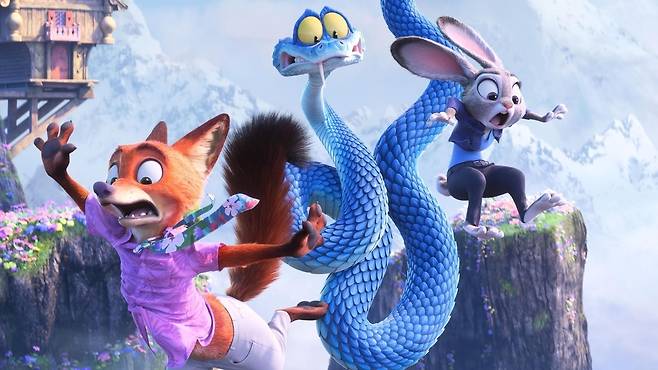
More recently, Disney's "Zootopia 2" has been tearing through records since its late Nov. 26 opening, reaching 6.3 million admissions to claim the year's top position. Nine years after the original, Disney's animated sequel became the first 2025 release to crack 6 million.
Copyright © 코리아헤럴드. 무단전재 및 재배포 금지.