Samsung Bioepis wins Japan approval for Stelara biosimilar
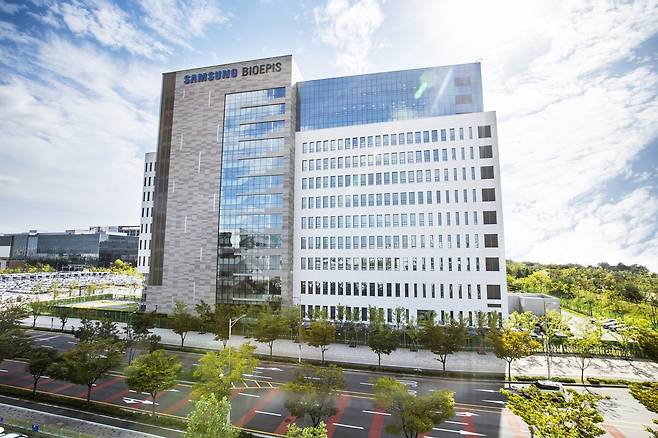
Samsung Bioepis said Tuesday it has received approval from Japan’s Ministry of Health, Labor and Welfare for SB17, or ustekinumab, a biosimilar to the autoimmune disease treatment Stelara.
Stelara, which targets the immune signaling proteins interleukin-12 and interleukin-23, is approved for conditions including plaque psoriasis, psoriatic arthritis and ulcerative colitis. The drug is one of the world’s best-selling biologics, reaching around 15 trillion won ($10.1 billion) in global sales annually.
Samsung Bioepis plans to launch the biosimilar in Japan in May 2026 through local partner Nipro Corp. The two companies signed a commercialization agreement in June, marking the Korean company’s first Japanese partnership.
“The approval will help improve treatment access for patients with autoimmune diseases in Japan and serve as a key foundation for our global expansion,” said Jung Byoung-in, vice president and head of regulatory affairs at Samsung Bioepis.
The approval follows a phase 3 clinical trial involving 503 patients with plaque psoriasis across eight countries between July 2021 and November 2022. The study confirmed clinical equivalence to the reference product in both efficacy and safety, the company said.
Plaque psoriasis — the most common form of the noncontagious, chronic skin disease — accounts for around 80 to 90 percent of all psoriasis cases. The condition affects roughly three percent of the global population, with an estimated 1.5 million patients in Korea.
Samsung Bioepis has already launched the Stelara biosimilar in Europe and the United States under the brand name Pyzchiva through partner Sandoz, and sells the product directly in Korea as Epyztek.
Copyright © 코리아헤럴드. 무단전재 및 재배포 금지.