Colorful knits wrap bare trees in Seoul’s winter scene — here’s how it happens
전체 맥락을 이해하기 위해서는 본문 보기를 권장합니다.
"Seeing people smile and feel joy when they looked at the knitted covers made me incredibly happy. I hope this project helps shed light on the value of hand knitting as an art form."
"The owner of a cafe near the tree I decorated even bought me a cup of coffee to thank me for making the area in front of the shop look nicer. It reminded me how warm the world can be."
이 글자크기로 변경됩니다.
(예시) 가장 빠른 뉴스가 있고 다양한 정보, 쌍방향 소통이 숨쉬는 다음뉴스를 만나보세요. 다음뉴스는 국내외 주요이슈와 실시간 속보, 문화생활 및 다양한 분야의 뉴스를 입체적으로 전달하고 있습니다.
Knitted coats in checks, buttons and festive reds wrapped around bare tree trunks line a quiet street in Seoul's Seochon neighborhood.
Some resemble tiny cardigans, others are dotted with Santa hats or Rudolph faces, while a few take a bolder approach — featuring a stuffed octopus or a phone-booth-inspired design, complete with a corded handset.
When The Korea Herald visited the street of yarn-clad trees on a Tuesday afternoon, passers-by slowed their steps to look closely at the different designs and take photos.
The knitted outfits are part of a “yarn bombing” project that has transformed 78 trees in the neighborhood.
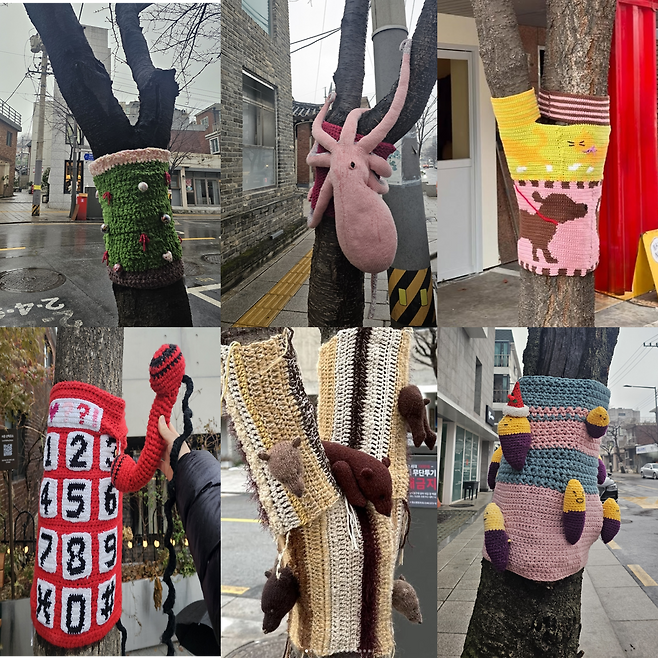
Yarn bombing is a unique form of street art in which knitters and crocheters cover public objects or structures with colorful yarn. When applied to trees, it can help protect them from winter cold and curb pests.
A total of 134 knitters from across the country took part in the project, which was jointly led by hand-knitting-based fashion brands Sineko Studio and Dancing Grandma. Each brand recruited participants, and -- with approval from the Jongno District Office -- installed the hand-knitted covers on trees along a street near Exit No. 1 of Gyeongbokgung Station.
The project kicked off on Nov. 30 and is set to remain on display through February.
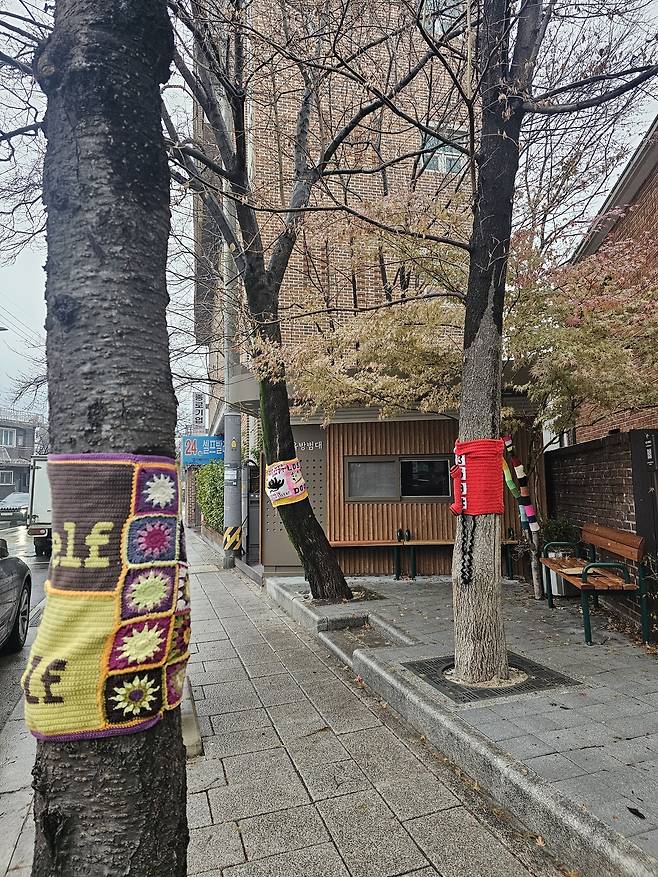
“I usually look at my phone and walk straight ahead, barely noticing the trees. Putting clothes on the trees is a cute idea, and it makes me look around and take in nature more,” said Song Eun-ha, a 33-year-old office worker who lives nearby.
The knit-clad trees are not unique to this neighborhood.
Each year, as trees shed their leaves, similar scenes begin appearing across Seoul and in other parts of South Korea.
On a street in Jongno 5-ga, about five subway stops away from Seochon, 40 trees are dressed in vivid knitwear through a project, now in its third year, led by Seoul Yeondong Church.
In Songpa-gu, around 130 trees at Wirye Lake Park are adorned with hand-knit pieces made by some 60 volunteers over nearly three months starting in August. The works recreate scenes from picture books, featuring moons, stars and clovers that spark a sense of childlike wonder.
Farther south on Jeju Island, members of Jeju Seongan Church in Ara-dong, along with local residents, have decorated some 20 street trees with knitted covers every year for the past five years.
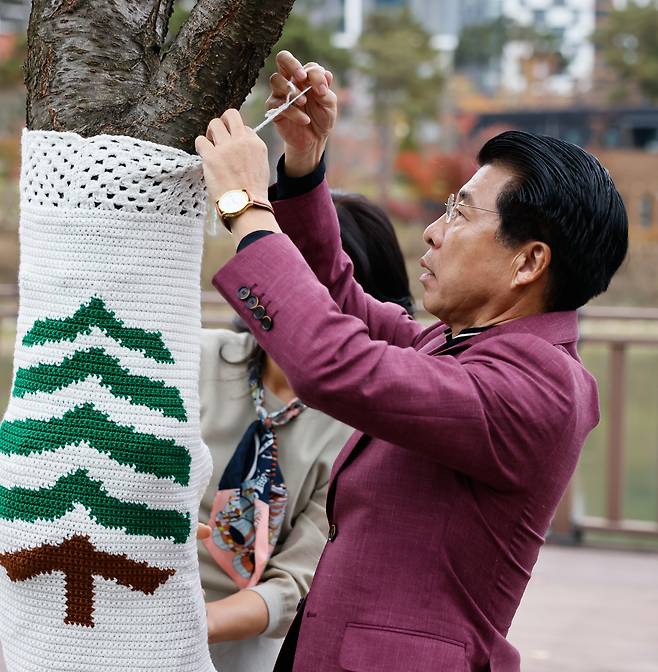
Yarn bombing originated in Texas in the early 2000s, where knitting crews began wrapping public structures with yarn as an alternative to illegal graffiti.
In Korea, tree knitting is believed to have gained popularity in the 2010s among art schools and knitting communities. Its low cost and simple techniques have made it an accessible volunteer activity for people of all ages and a broader community effort in late fall and early winter.
“A single 50 gram ball of yarn typically costs between 5,000 and 10,000 won, depending on the material, such as wool or cashmere,” said an official at Seoul Yeondong Church.
“Knitting needles can be bought for as little as 500 to 1,000 won. More than the cost, it’s easy to learn, so anyone can do it with a bit of practice, which makes it easy to recruit volunteers of all ages thanks to the low barrier to entry.”
Building on this cross-generational appeal, the Seochon yarn bombing project sought to elevate the craft from a personal hobby to public art open to all ages, according to Choi Suu-la, CEO of Dancing Grandma.
“The project brought together an incredibly diverse group of knitters, from people in their early 20s to seniors aged 84, both professional and amateur, to dress the trees of Seochon,” Choi told The Korea Herald.
Launched in August 2020 on the idea of making products people would want to use even when they become grandmothers, the brand offers a wide range of knitted items, from hats, bags and earmuffs to coasters and umbrella handles, Choi said.
“Seeing people smile and feel joy when they looked at the knitted covers made me incredibly happy. I hope this project helps shed light on the value of hand knitting as an art form.”
Threads of connection
The knitted covers warmed not only the trees, but also the hearts of people caught up in the rush of everyday life.
“I saw people pause, chat with one another and snap photos in front of the pieces. The project turned a place people usually just pass through into somewhere they could slow down and connect," said Joo Min-kyung, a 32-year-old knitter in Anyang, Gyeonggi Province, who took part in the project.
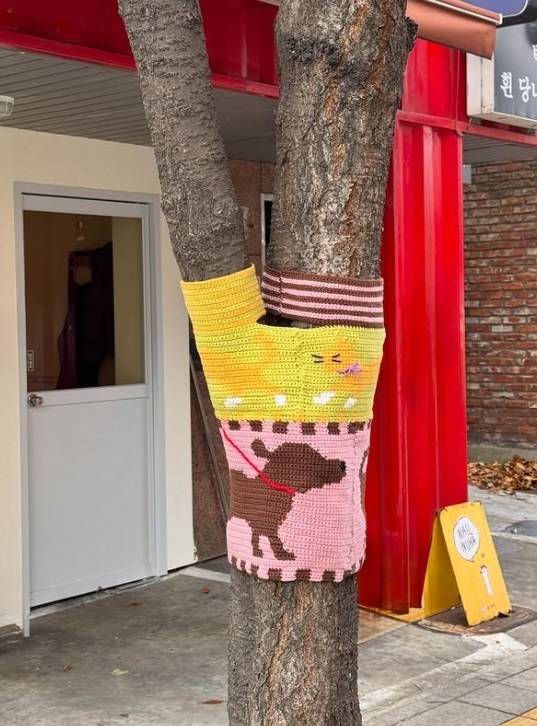
Joo, who previously knitted as a hobby before starting to sell her handmade items online earlier this year, created a tree knit cover titled “Long Long Friends,” featuring images of dogs and cats.
“I remember an elderly woman who stopped during her walk to look at my work and said, ‘The trees must feel warm because of this.' I was touched by the kindness in the way she thought about the tree," she added.
A total of 360 grams of yarn was used for her piece, which took three days to complete.
Lim So-young, a 33-year-old fashion brand owner who designed a tree knit inspired by lost-and-found flyers, said the project helped her feel connected to people she otherwise might never have met.
“I knitted patterns of adorable animal companions onto a background shaped like a lost-and-found flyer. These days, some people use these flyers to show just how cute their pets are,” she said.
“The owner of a cafe near the tree I decorated even bought me a cup of coffee to thank me for making the area in front of the shop look nicer. It reminded me how warm the world can be.”
Another participant, Chung In-young, 32, who practices knitting as a hobby, said she hopes the Seochon yarn bombing project will grow into a cultural festival.
“I once thought it was simply about knitting pieces, but through the project I came to see it as a form of art that demands time, effort and genuine care. It would be great if it could grow into a festival that brings new energy to the local community, where people of all ages come together over a shared love and passion for knitting," she said.
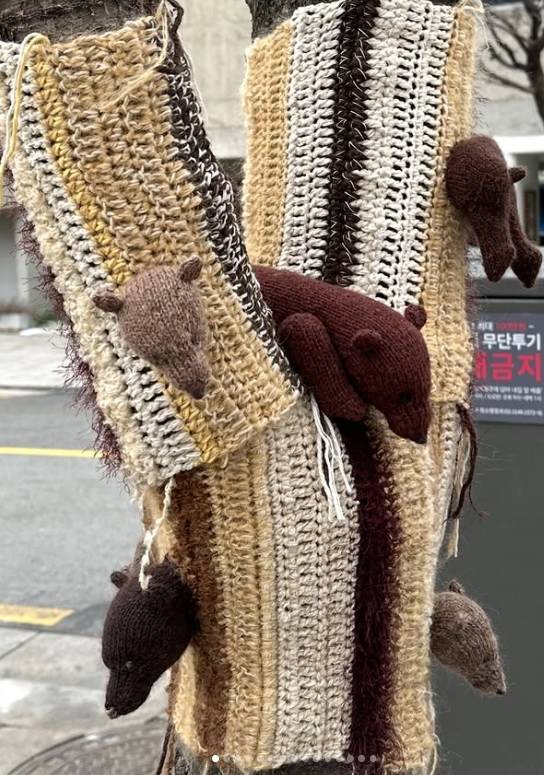
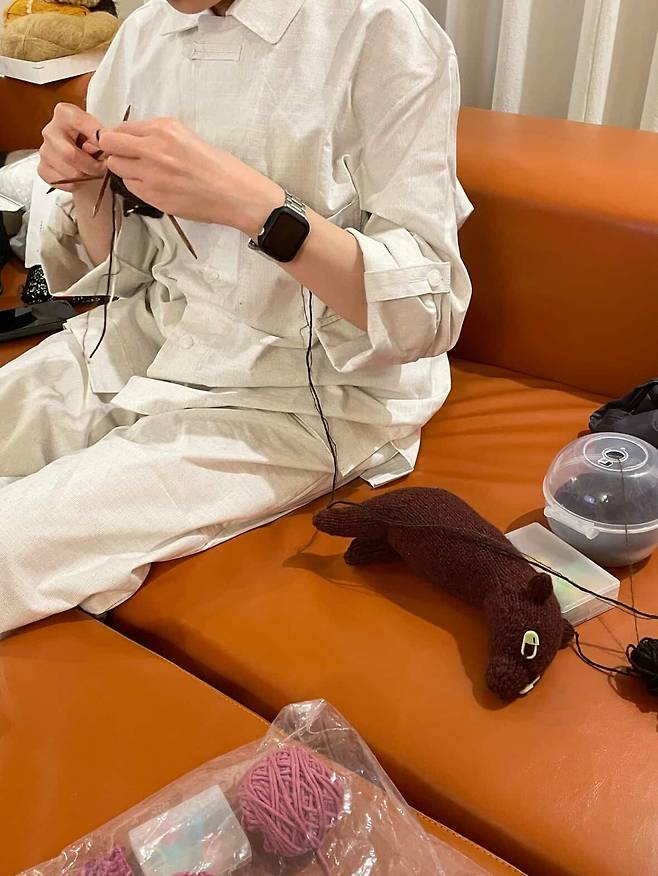
Her piece, titled “Popgom,” features three to four bears peeking out from between the tree branches. The name combines the Korean word for bear with the idea of popcorn popping.
“I hoped the tree might give passersby a small moment of comfort during their hectic day,” she added.
Copyright © 코리아헤럴드. 무단전재 및 재배포 금지.