TikTok vows investment in youth safety, data protection amid global push to restrict minors' social media use
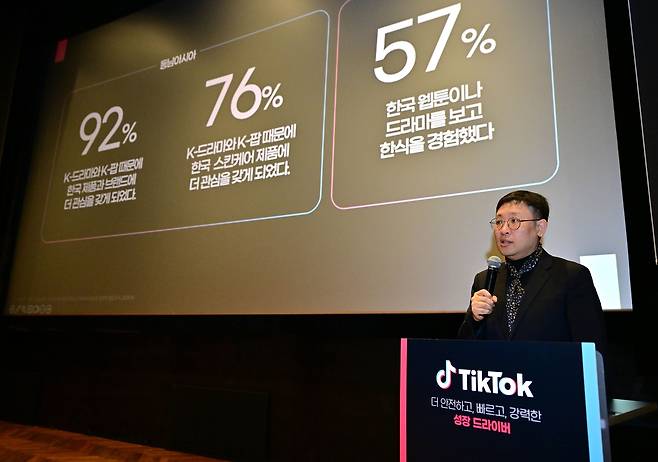
Debate among platform operators this year has centered on tightening restrictions on minors’ social media use and intensifying scrutiny of data protection -- sharpened in Korea by Coupang’s recent high-profile personal information leak. Against this backdrop, TikTok Korea reiterated at its 2025 TikTok Media Day in Seoul on Thursday that it invests billions of dollars annually in trust and safety, with safeguards for minors in place since early 2021, and will continue strengthening its technology and monitoring systems.
The event, held under the theme “The Growth Driver: Safer, Faster, Stronger,” reviewed TikTok’s performance over the past year while underscoring the platform’s growing role in expanding the global reach of Korean culture and businesses.
In the opening session, Yang Soo-young, outreach and partnerships manager for TikTok’s Northeast Asia Trust and Safety team, outlined the company’s long-term commitment to platform safety.
“TikTok invests more than $2 billion (2.8 trillion won) annually in trust and safety,” Yang said. “This includes strengthening technology, expanding content review and moderation teams, and building the infrastructure needed to protect user privacy and security.”
Yang added that the investment extends beyond baseline protections to features designed to help users better understand content and mitigate potential risks. These include systems to detect and label AI-generated content, as well as tools such as the “Family Pairing” function, which allows parents and guardians to manage their children’s accounts. TikTok has also worked with external experts to refine safety policies and promote broader digital literacy.
The renewed emphasis comes as governments worldwide move toward stricter regulation of social media platforms. Australia on Dec. 10 blocked social media access for about one million children under 16. Malaysia plans to introduce a similar ban next year, while the European Parliament passed a resolution in November calling for a minimum social media age of 16.
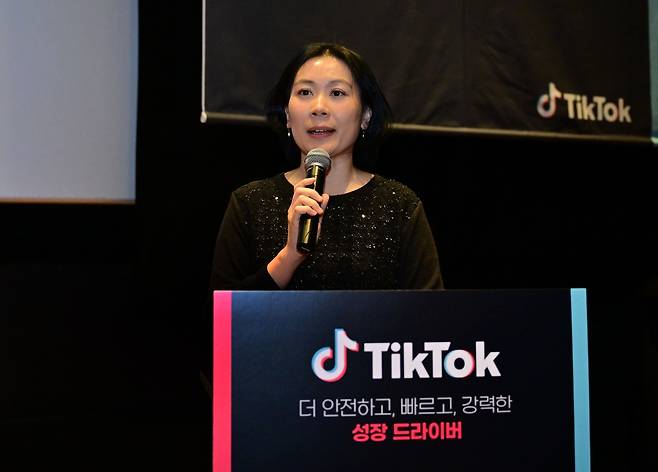
In Korea, policymakers have so far favored partial regulation rather than an outright ban. Rep. Cho Jung-hun of the main opposition People Power Party proposed amendments last year that would cap daily social media use for minors, but the bill has remained stalled for more than a year.
A TikTok Korea official said the company has not introduced measures directly tied to Korea’s ongoing legislative discussions, noting that age-based protections already operate globally.
“If discussions around regulation become more concrete, we will closely review the direction and consider what additional steps may be needed,” the official said.
Since January 2021, TikTok has applied age-based safeguards by default at the account creation stage. Accounts for users under 16 are automatically set to private, with direct messaging restricted. Content created by users under 16 cannot be downloaded and is excluded from recommendation feeds, while accounts for users under 18 are subject to a default daily screen-time limit of 60 minutes.
Parents and guardians can further manage minors’ usage through the Family Pairing feature, which offers more than 20 adjustable settings related to safety, well-being and privacy, including screen-time limits and content filters.
In November, TikTok expanded its screen-time tools with a new “time management and well-being” feature. The update introduced mindfulness tools such as breathing exercises, calming sounds and positive journaling, alongside gamified challenges that reward users for meeting daily and weekly usage goals or maintaining consistent bedtimes.
According to TikTok’s Community Guidelines Enforcement Report released in October, more than 99 percent of content removed for policy violations in the second quarter was detected proactively before being reported by users. More than 90 percent of that content was taken down before it received a single view.
Copyright © 코리아헤럴드. 무단전재 및 재배포 금지.